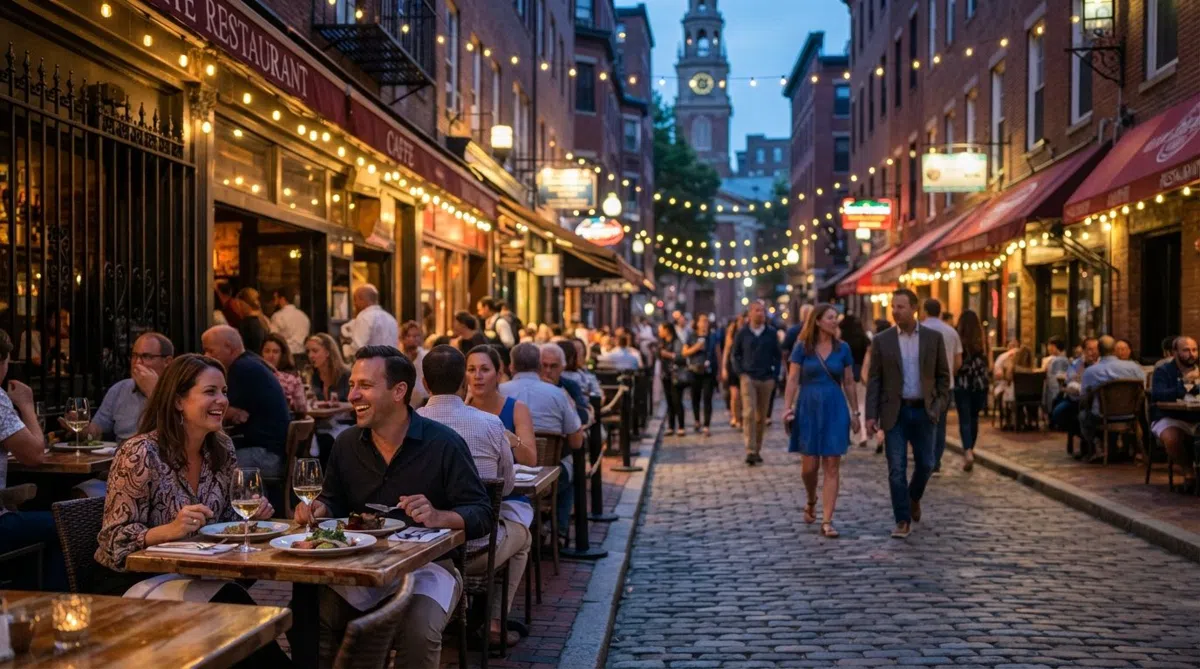
The cobbles under your feet were laid in the 1980s. The church they curve around has stood on that spot since the early thirteenth century, and the gap between those two facts is the whole point of the Nikolaiviertel: Berlin's oldest street plan, rebuilt from almost nothing on ground the war had cleared. Know that going in and the quarter becomes one of the more interesting half-days in Mitte. Arrive expecting an untouched old town and you will feel short-changed before lunch.
What you are actually walking through
Berlin started here, on the eastern bank of the Spree, in the shadow of a church dedicated to the patron saint of merchants and sailors. By 1945 almost none of it was left standing, and for decades afterwards the site sat as an open gap near the river. The quarter you walk today was rebuilt in the 1980s for the city's 750th anniversary, and it went up three different ways at once: a handful of genuinely old or re-erected buildings, a few scrupulous reconstructions of lost ones, and new houses built with the standard East German concrete panel system, then dressed in gables, shutters and pastel render so they would read as historic from the street.
None of that is a complaint. The Nikolaiviertel is an honest hybrid rather than a convincing fake, and learning to tell the three categories apart (the real stonework, the copy, the panel block in costume) is the most rewarding thing you can do here. Look at the window reveals and the roof junctions. The old ones are shallow and awkward; the 1980s ones are neat.
The scale matters too. You can walk the quarter end to end in ten minutes. Everything described below sits within about 300 metres of the central church square except the deliberate walk-outs at the end, and none of those is more than a six-minute stroll. You will not get lost here, which is exactly why the place rewards a plan rather than a wander.
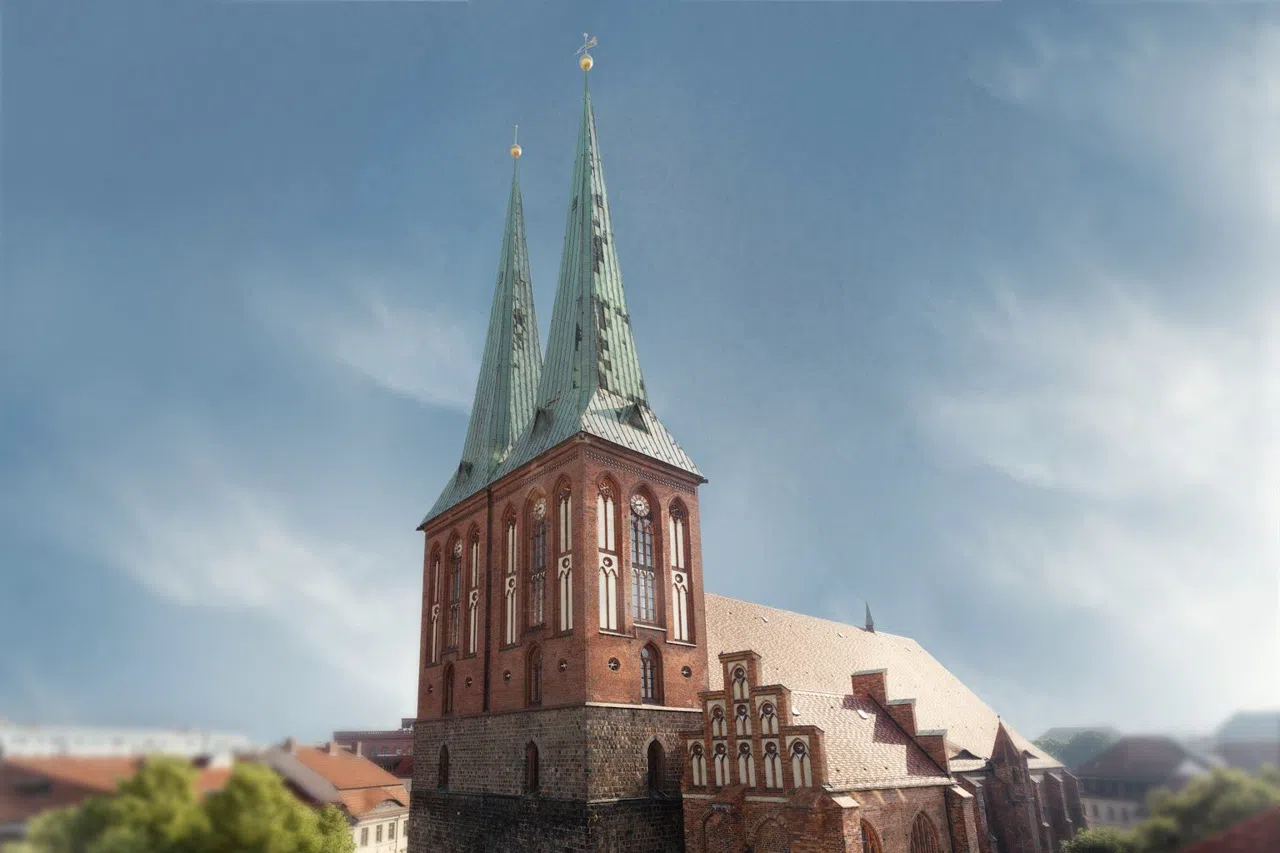
The church the city grew around
Museum Nikolaikirche (Nikolaikirchplatz, dead centre of the quarter) is the anchor, and not only architecturally. It no longer works as a parish church; it works as a museum of Berlin's own origins, which makes it the one building here that explains everything outside its doors. Inside you get the Beyer crypt, the coin hoard found in the spire, and a funerary section billed as a Pantheon of Berliners, a room of monuments to the people the city decided to keep.
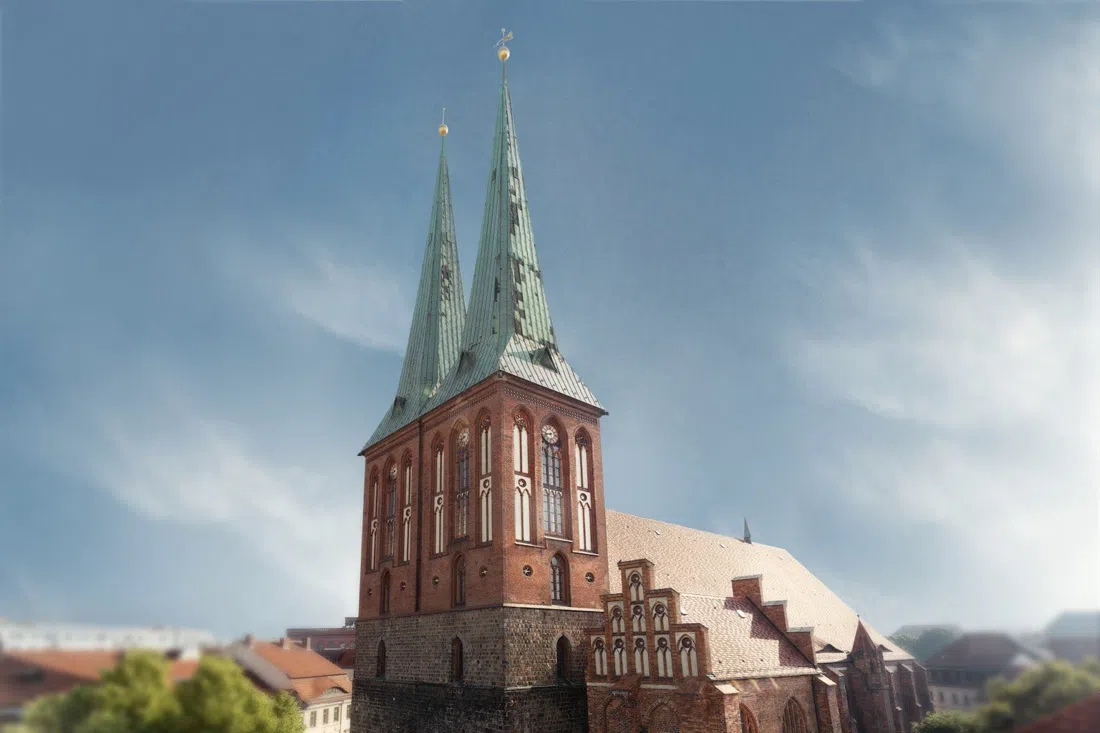
Entry is €7 for adults and free for under-18s, and it opens daily 10:00 to 18:00. That daily opening is the most useful scheduling fact in the quarter, because the two townhouse museums close on Mondays and the church does not. Build the day around it.
Give it 45 minutes to an hour. Groups are fine here: guided group tours can be booked through Stadtmuseum Berlin, and the nave is open-plan enough to absorb a walking-tour party without anyone shuffling sideways past a display case.
The three-museum ticket and the houses it opens
Museum Ephraim-Palais (on the Poststraße corner, two minutes from the church) has been called the most beautiful corner of Berlin for well over a century, and the story behind that is the quarter's story in miniature. It was a jeweller's palace of 1766, demolished in 1936, its stonework put into storage, and the stored stone survived the war to be reassembled on a site near the original in 1987. Three floors of galleries sit behind it. Entry is €7, under-18s free, and it closes on Mondays, so plan group visits Tuesday to Sunday.
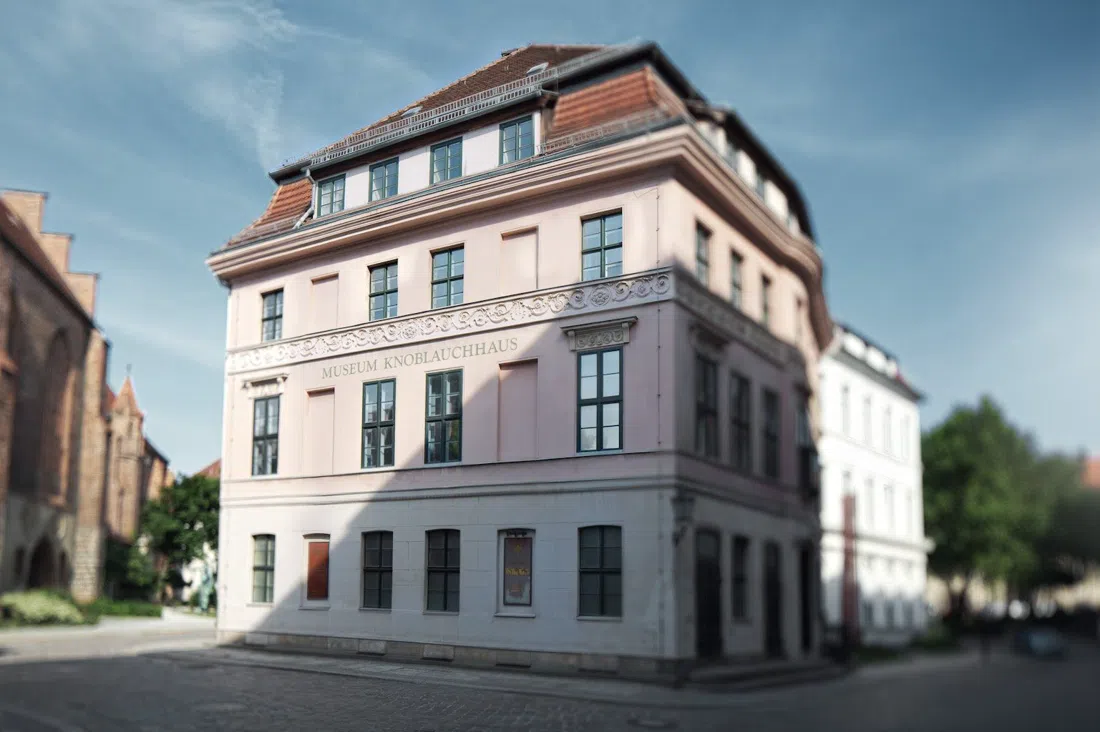
Museum Knoblauchhaus (Poststraße, a few doors along) is one of the very few houses in the Nikolaiviertel that is genuinely old rather than reconstructed. It shows early-1800s Berlin domestic life through the Knoblauch family and their circle, which included Humboldt and Schinkel. It is also the quietest room in the quarter and, for my money, the best wet-weather hour here. Same €7, same free entry for under-18s, also closed Mondays. It is a real house with narrow stairs and small rooms, so a large party has to split and go through in waves; a group of twenty will ruin it for itself and for everybody else.
All three are covered by a €15 combi-ticket valid over two consecutive days. Bought separately they come to €21, so the saving is modest but real, and the two-day validity is the useful part: do the church and one house in an afternoon, sleep, and take the second house next morning when the rooms are empty.
Forty minutes you did not plan for
Hanf Museum Berlin (southern edge of the quarter, towards the river) is Germany's only museum devoted entirely to hemp, and it is not the novelty stop the subject suggests. The displays cover botany, industry, textiles and law: rope, fabric, seed oil, legislation. It makes for an odd and genuinely informative 40 minutes inside an otherwise medieval-themed district.
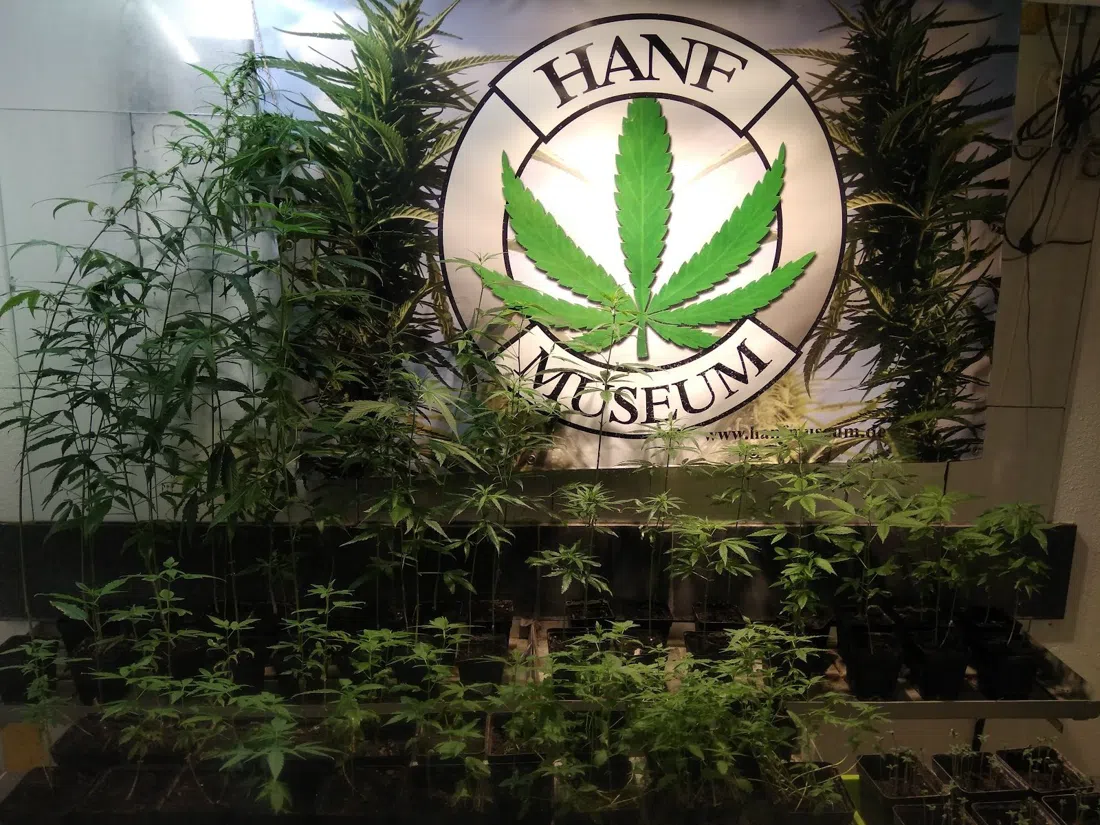
Entry is €6 adult, €4 reduced, free for under-10s. It closes on Mondays and opens Tuesday to Friday 10:00 to 20:00, Saturday and Sunday 12:00 to 20:00. Those late hours are worth noting: nothing else in the quarter is still letting people in at seven in the evening. Small groups and school parties are taken by arrangement on +49 30 2424827.
How to route half a day
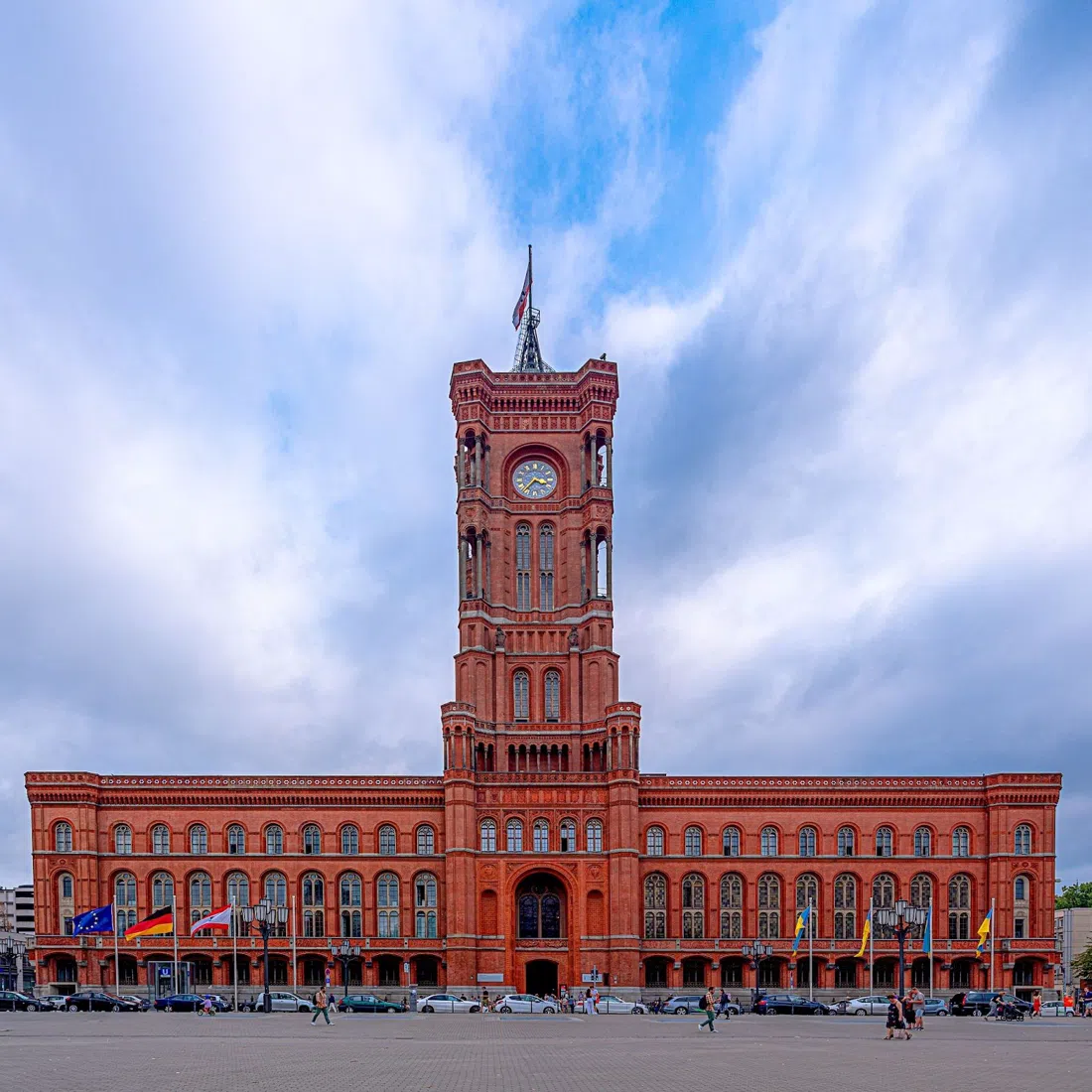
The efficient version starts underground. Come up at the U5 station beneath the Rotes Rathaus (Rathausstraße, two minutes from the church square), spend half an hour in the foyer with the free self-guided brochure and whatever rotating display on Berlin's political history is up, then walk south into the cobbles. Church first, at opening. One townhouse museum second. Lunch third. Then the walk-outs north and east while the light is still usable.
That is about four hours at a civilised pace, five with a tower slot, and a full day only if you intend to eat slowly twice. Anyone trying to do the quarter in 45 minutes between other sights will see pretty gables and nothing else, which is how the Nikolaiviertel earned its reputation as a tourist trap. It isn't one. It is a place that gives up nothing to a rushed visitor.
Eating here with a group
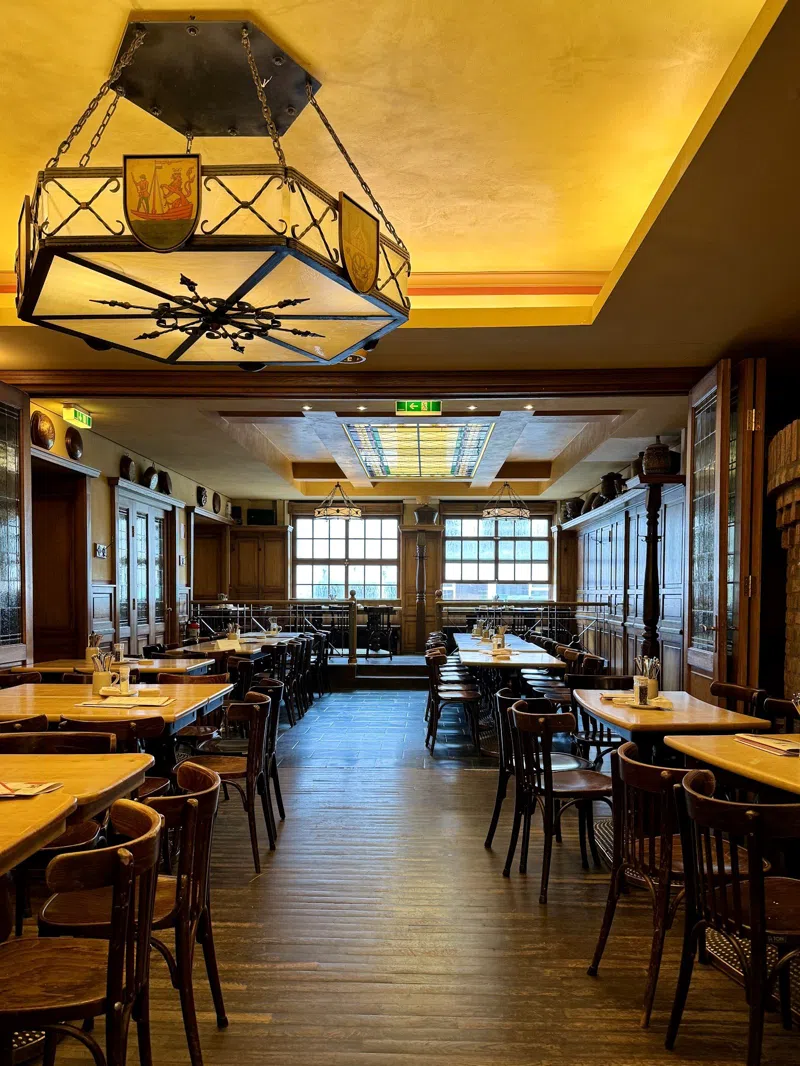
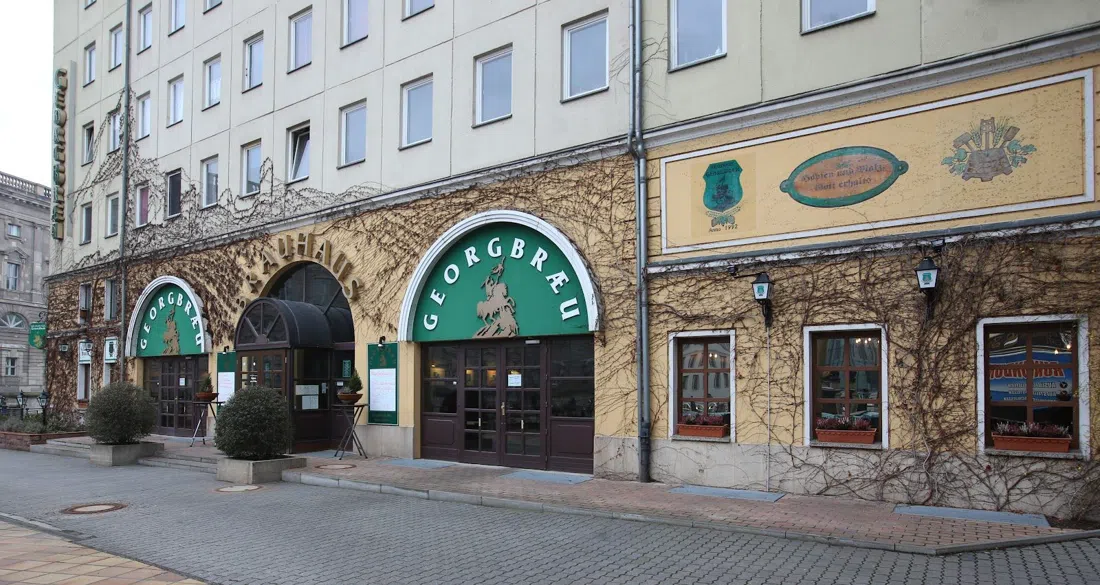
Brauhaus Georgbräu (Spreeufer, on the river side of the quarter) is the obvious answer for anything over about eight people. It is the quarter's own brewery, with eight separate rooms plus a terrace over the water, and that layout is what makes it work: a party of twenty goes into a room rather than across the middle of everyone else's dinner. Mains run roughly €13 to €22 and the house beer comes by the half-litre or by the metre. It opens daily from around midday to midnight, but the beer garden is seasonal, and in winter the indoor rooms hold the place up.
Gasthaus Mutter Hoppe (just off the church square) is the strongest large-group option after that: multiple rooms, used to coach and tour parties, open 11:30 to midnight daily, mains roughly €15 to €25. It is deliberately old-Berlin and busy with visitors, and I am not going to pretend otherwise. The portions are honest, and live piano or a band plays Friday and Saturday evenings from about 19:00, the only scheduled atmosphere in the quarter after dark.
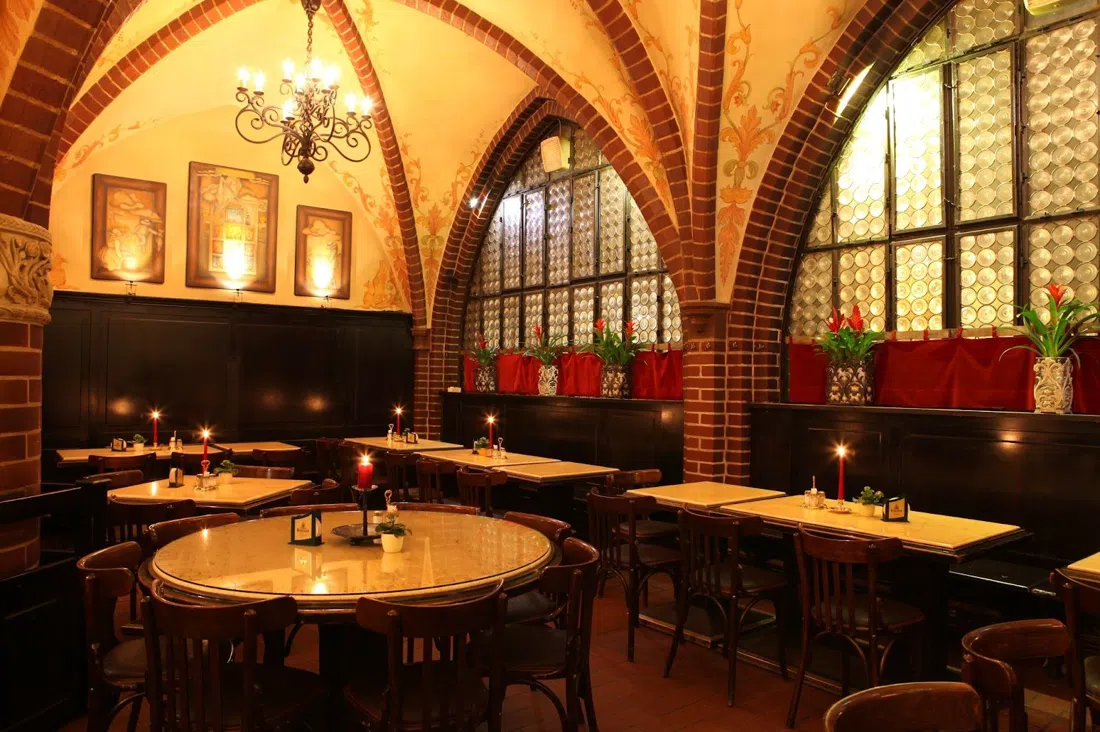
Zur Gerichtslaube (Poststraße, in the reconstructed arcade of Berlin's medieval courthouse) is the most architecturally serious dining room in the district. Sentences really were handed down in the original of this hall, and the vaulting alone justifies a drink even if you don't eat. Berlin and Brandenburg mains are roughly €14 to €24. The booking policy catches people out: no reservations for small parties, so a pair waits at the bar, while groups should phone +49 30 2415697 well ahead.
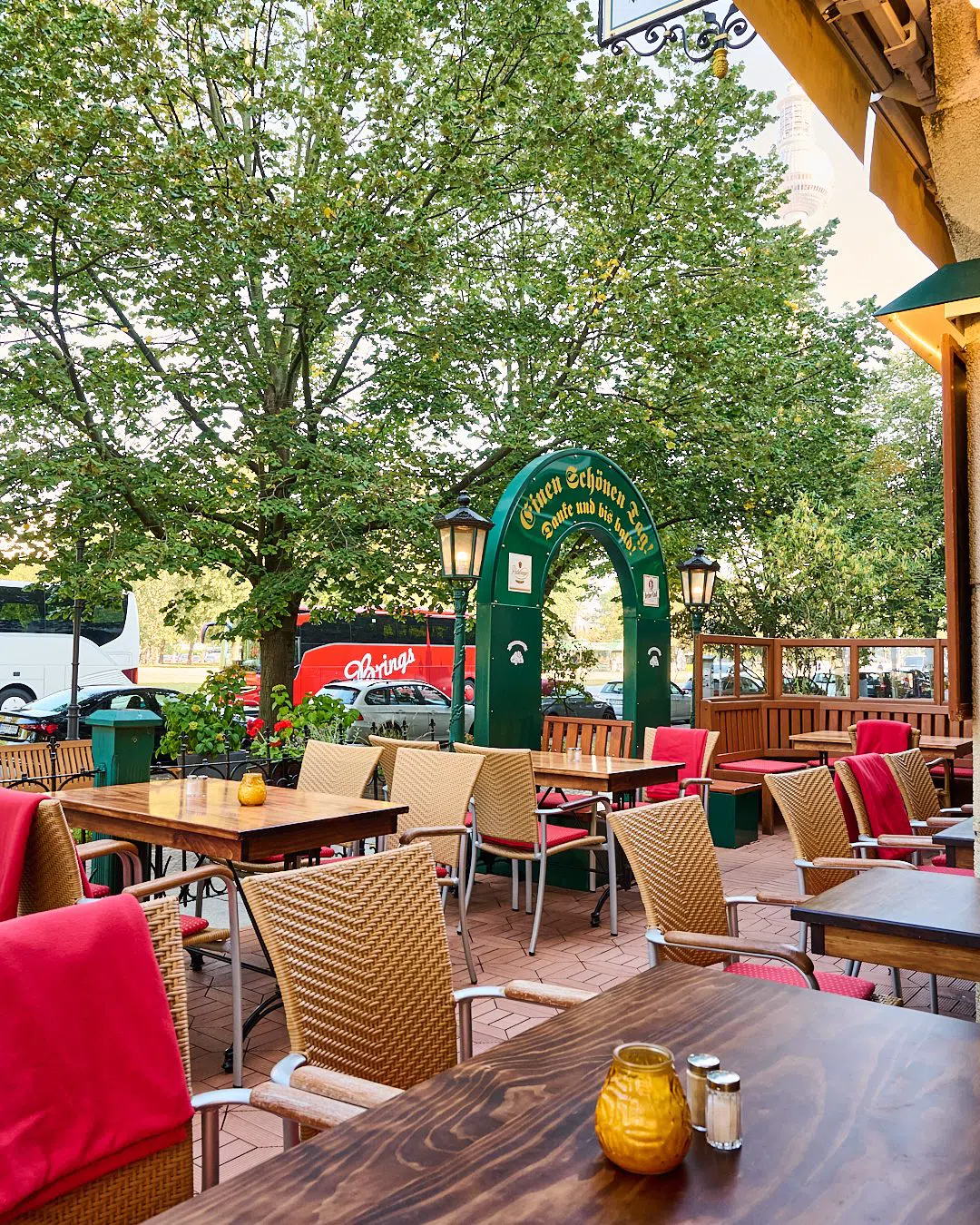
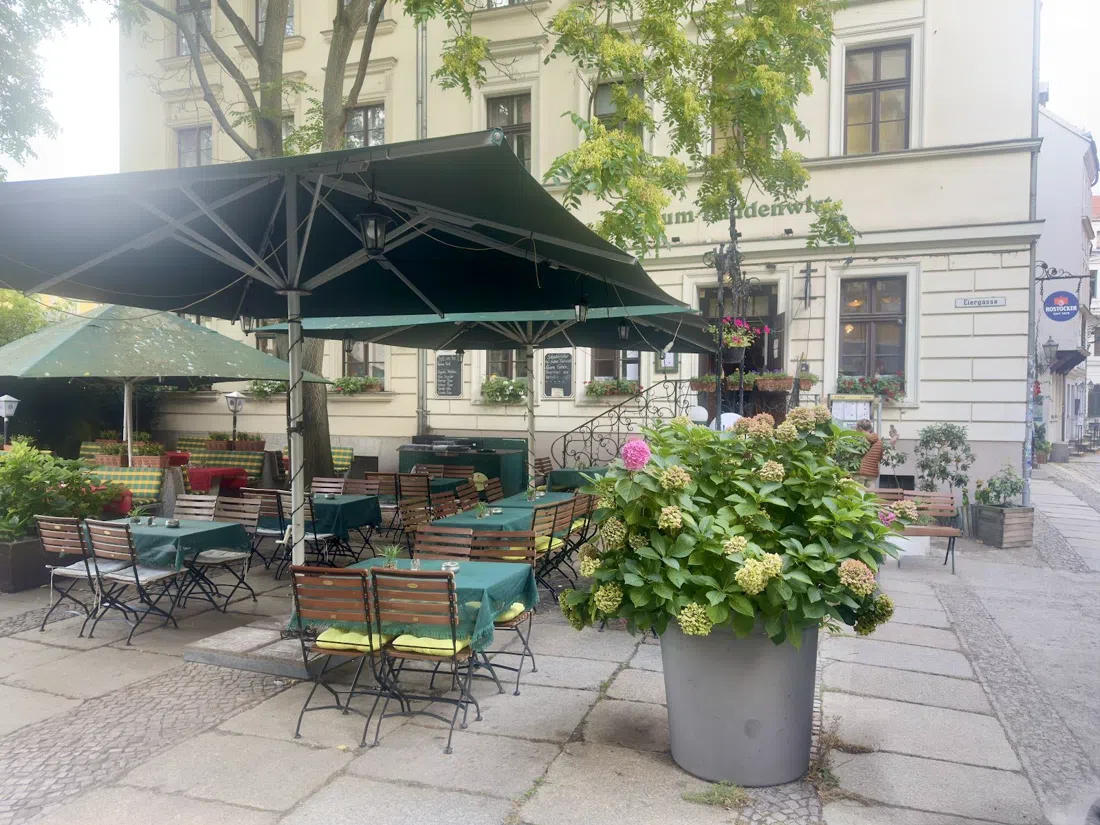
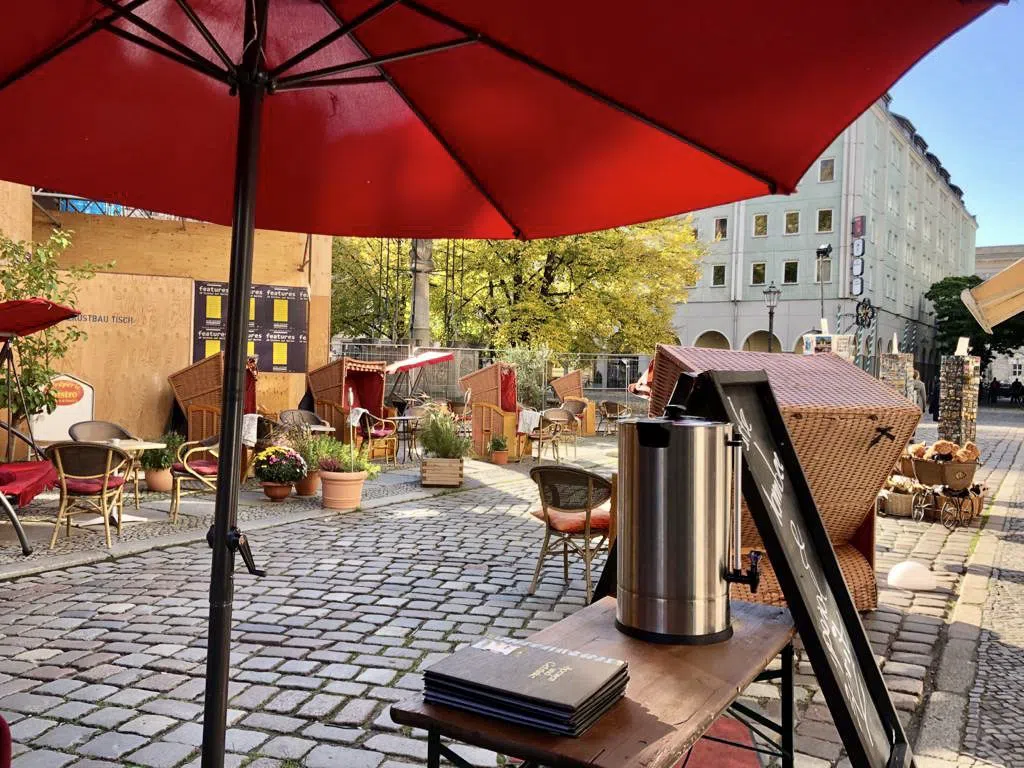
Zum Paddenwirt (facing the church square itself) has the best seat for watching the quarter work, because the garden looks straight at the church. Home-style Berlin mains are roughly €11 to €19, and it opens Sunday to Thursday 12:00 to 22:00 and Friday to Saturday 12:00 to 23:00. It takes groups outdoors comfortably in season; call +49 30 28444689 to hold the garden for a party.
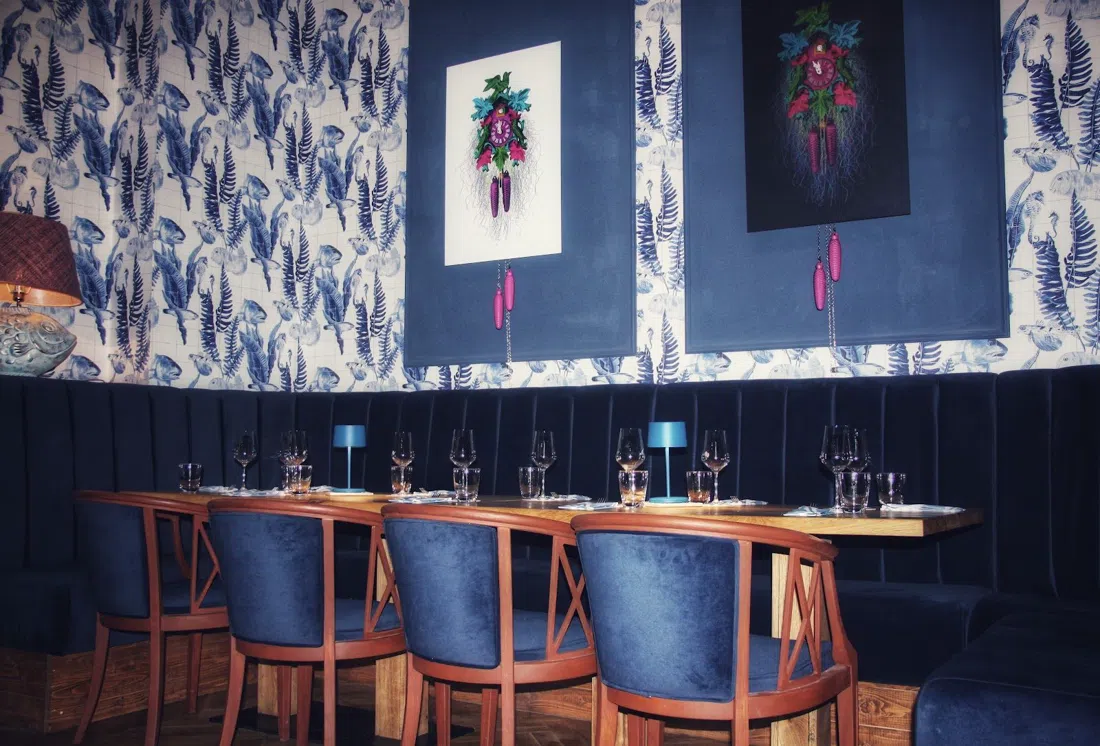
Fischer & Lustig (in the quarter, with a tree-shaded beer garden) is the newest serious kitchen here, open since 2022 and a sister to Jäger & Lustig over in Friedrichshain. It suits anyone who wants regional cooking without the pork-knuckle theatre: fish and regional mains roughly €16 to €28, Monday to Saturday 11:30 to 00:00 and Sunday 11:30 to 23:00. Reserve on +49 30 568 299 90, and note the kitchen closes at 22:00, so a late group sitting does not work.
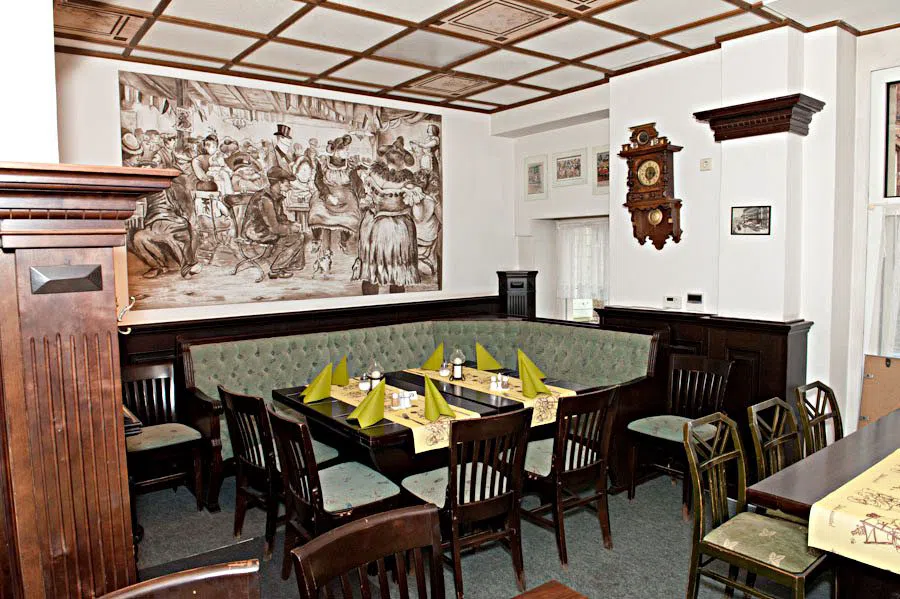
Zille-Stube (a short walk from the church square) is explicitly set up for company dinners and family reunions, family-run by the Papes with real Zille originals on the walls rather than reprints. Old-Berlin specialities run roughly €13 to €22, and it opens from 12:00 on Monday and Tuesday and Thursday to Sunday. It closes on Wednesdays, the other scheduling trap in the quarter after the Monday museum closures.
Where two people should sit instead
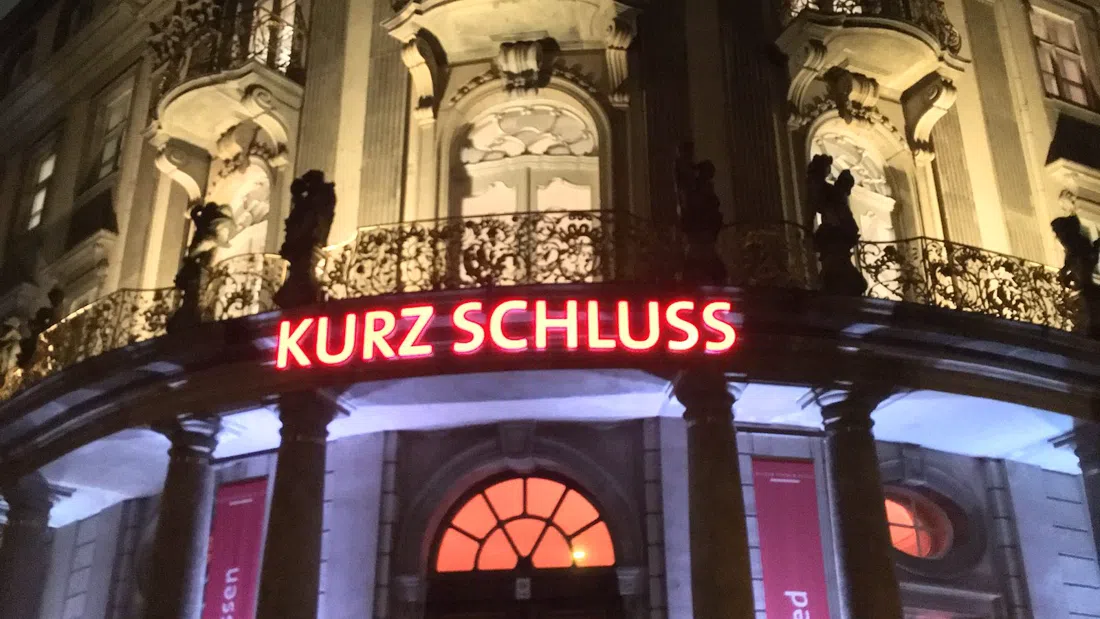
Zum Nussbaum (corner site, north end of the quarter) is the most atmospheric room in the district, a faithful rebuild of the 1507 Fischerinsel tavern where Zille drank from 1906. It is also tiny: a handful of tables, no group facilities of any kind, and no amount of charm will conjure a sixth chair. It opens daily 12:00 to 22:00, and arriving before 18:00 is the only reliable way in. Pub plates run roughly €9 to €16, beer €4 to €5. Couples and pairs only, or expect to stand.
Café & Crêperie an der Nikolaikirche (beside the church) is the sensible cheap stop between museums: cake, crêpes and soup for roughly €4 to €10, with a cheesecake range it has built a reputation on. The room is small, which makes it fine for a handful of people and hopeless for a coach party. It opens daily 11:00 to 19:00, so it shuts well before the restaurants and works for daytime only.
The deliberate walk-outs
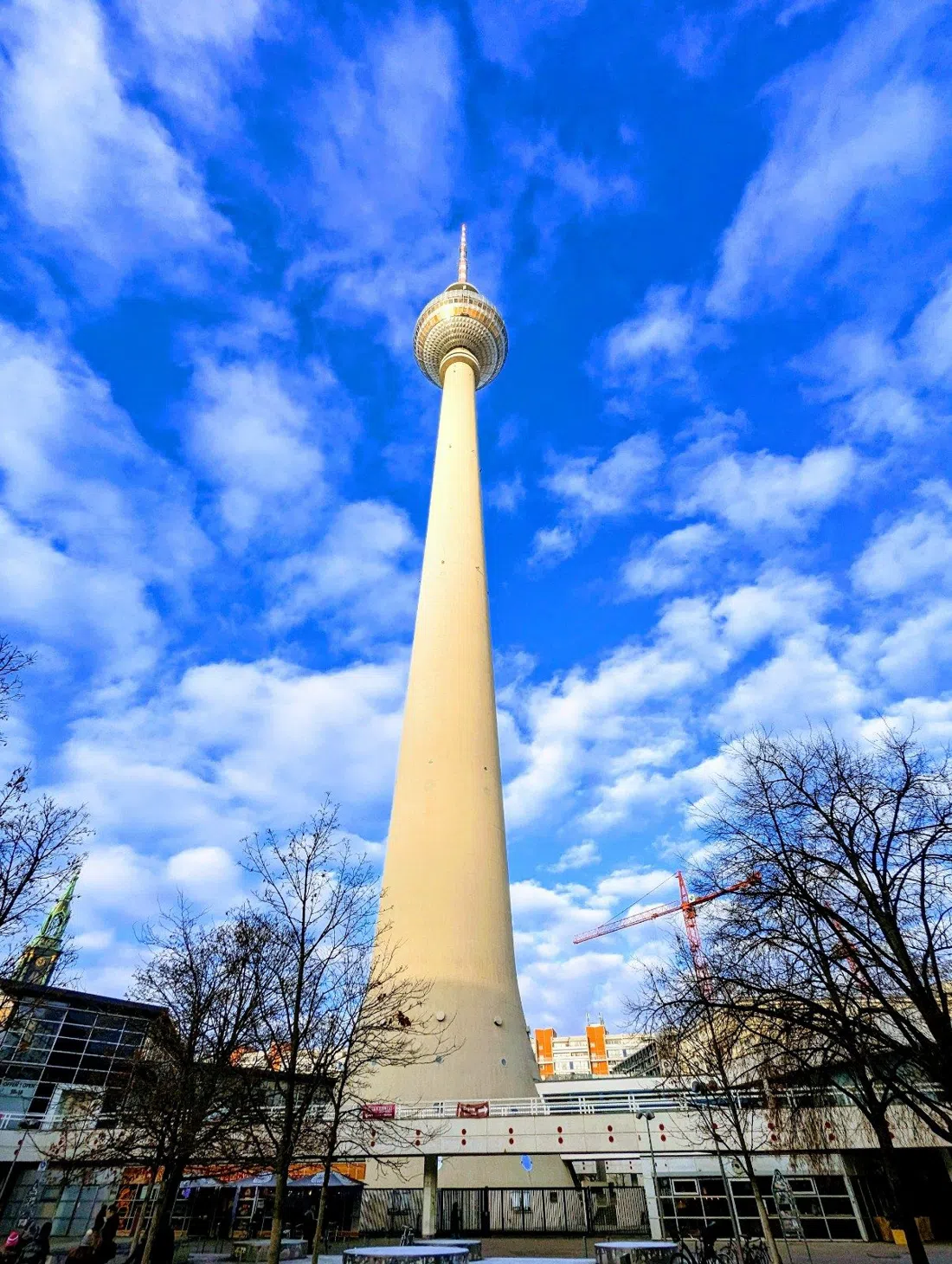
Berliner Fernsehturm (550 metres from Nikolaikirchplatz) is the only place you see what the quarter actually is: a small pocket of pitched roofs in a sea of post-war blocks. That view reframes everything you have just walked through. The observation deck starts from about €20 booked online, and the faster entry with the Sphere Bar from about €27.50 for adults and about €17.50 for children aged 4 to 14. Entry is by timed slot, which is the whole queue strategy: book the slot, turn up for it. Groups must book one slot together through the group desk on +49 30 247575875 or they get split across the hour. The tower closes on 16 March and 23 November 2026 for private events.
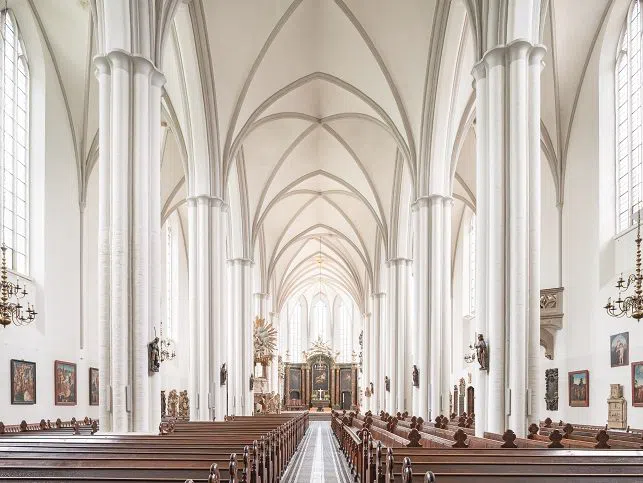
Marienkirche (five minutes north) is Berlin's other surviving medieval church and the right pairing with the Nikolaikirche if you want to see what the city's two oldest buildings have in common. It is free, open 10:00 to 16:00 from January to March and 10:00 to 18:00 from April to December. It is also a working church, so services and concerts close it without notice; confirm on the day.
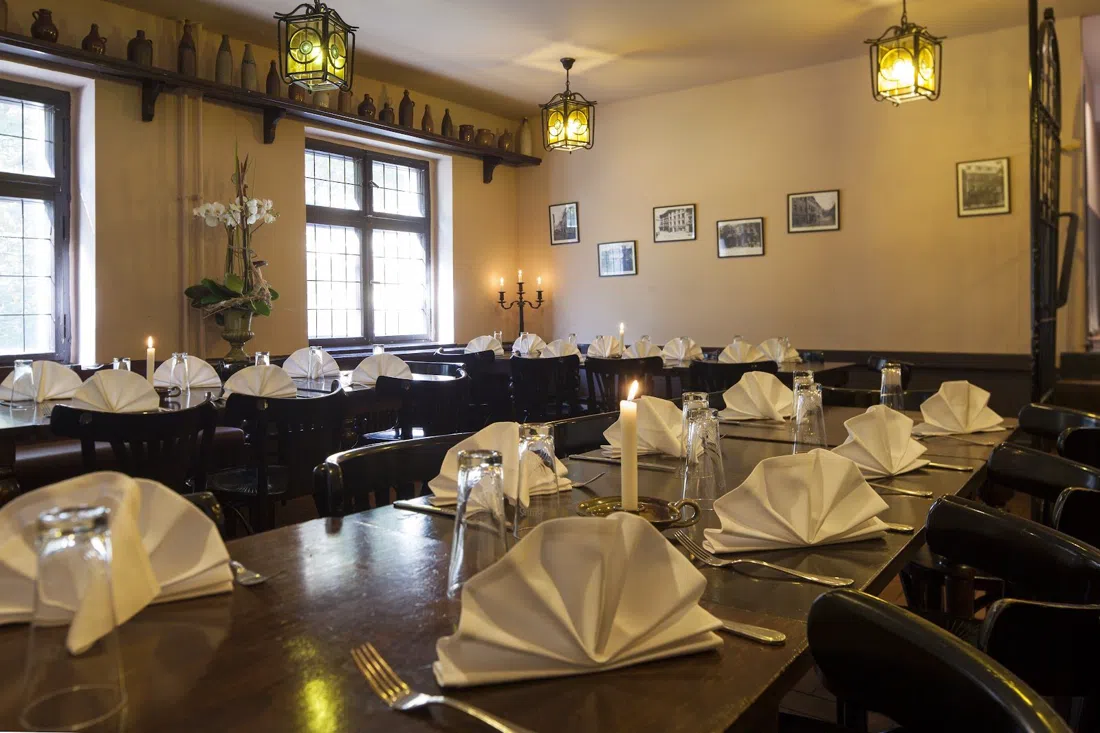
Zur Letzten Instanz (Waisenstraße, six minutes east) is the oldest eating house in Berlin, serving on the same site since 1621 and still family-run after a handover to the current generation in 2020. Standing in those small rooms over two floors is the sharpest contrast available with a quarter that is largely a 1980s reconstruction: the real thing, a few streets away. Berlin mains run roughly €16 to €26. It takes modest groups by reservation only and cannot handle a large party.
Tickets, queues and whether to book anything
The quarter itself is free and always open; there is no gate and no ticket for the cobbles. The museums are walk-up affairs with no meaningful queue, and if you find a line at the Nikolaikirche desk it will be one school party deep. The only place where booking changes your day is the television tower, where timed entry means a slot bought at the door may be two hours away.
A guided option exists, and it is worth being straight about what it buys you. There are 12,902 traveller reviews across the bookable tours covering this quarter, with the top one rated 4.9 out of 5 from 10,286 reviews; they run seven days a week and start from 23 USD per person. A good guide sells interpretation rather than access, since you can walk in for nothing, and interpretation is what this place needs: which house is original, which is a copy, which is a concrete panel building wearing a gable. You cannot read that off the street without being told. If you would rather not be told, bring the combi-ticket and read the museum captions instead.
Access, stairs and the things that shut without warning
The cobbles are the real obstacle. They are uneven, and anyone pushing a buggy or using a wheelchair should expect slow going across the squares. Knoblauchhaus is the hardest interior, with narrow period stairs and small rooms, while the Nikolaikirche nave and the Ephraim-Palais galleries are far easier. Marienkirche is in active use and can close for a service at no notice. The Rotes Rathaus is a functioning seat of government, free to walk into during office hours but liable to shut to visitors at short notice when official business needs the building. If any of the three matters to your day, ring or check before you set off.
Is it worth it
Yes as a two-to-four-hour segment of a Berlin itinerary, no as a day's destination in its own right. It suits anyone interested in how cities get rebuilt and what gets decided in the rebuilding, families who want a short, walkable, low-cost block of sightseeing, and groups who need a reliable large table within sight of a medieval church. It does not suit travellers hunting an authentic medieval old town. That is not what this is, and the one place in the area that genuinely dates back is the 1621 eating house on Waisenstraße.
Best time to go
Go on a weekday, Tuesday to Friday. Monday closes both townhouse museums and the hemp museum; Wednesday closes Zille-Stube. Arrive for the Nikolaikirche's 10:00 opening and you will have the nave more or less to yourself for the first half-hour, which is when the funerary monuments are at their best. Mid-afternoon light hits the Ephraim-Palais facade well, so save that one for later if photographs matter to you.
From about 18:00 the museums are shut and the pubs and restaurants take over the quarter. That is the window for Zum Nussbaum if you can get in before the rush, or for Friday and Saturday at Mutter Hoppe, where the live music starts around 19:00. In summer the river terrace at Georgbräu and the gardens at Zum Paddenwirt and Fischer & Lustig are the whole appeal; in winter they are closed or thinned out and the indoor rooms are the point. Rain is easy here: Knoblauchhaus plus the hemp museum fills three dry hours without a repeat, and the tower has nothing to show you through cloud, so swap it for a long lunch.
Practical notes
The nearest metro is Rotes Rathaus on the U5, 100 metres from the quarter, and the whole district sits inside a five-minute walk of that one exit, so there is no transport puzzle to solve. Carry cash: small old-Berlin pubs and cafés are the places most likely to meet you with a card-free till, and €50 to €80 per person covers a sit-down meal and a round comfortably.
On budget, there are three honest tiers. Free gets you the cobbles, the Marienkirche and the Rotes Rathaus foyer, about a half-day with nothing spent. The €15 combi-ticket adds the church museum and both townhouses over two days. A tower slot at €20 to €27.50 plus one sit-down meal at €13 to €25 puts a full day somewhere around €45 to €70 a head, drinks aside.
For where to sleep within walking distance of all of this, start with a Berlin hotel search, and for how this quarter fits into the rest of the city, the Berlin guide covers the districts around it.