The Berlin issue
Walking Berlin at Night Through the Festival of Lights
Ten nights, 33 lit buildings and a four-hour window each evening: how to plan the projections, the dinner before them and the club after.
By Robin van der MeerThe slow way through a fast city
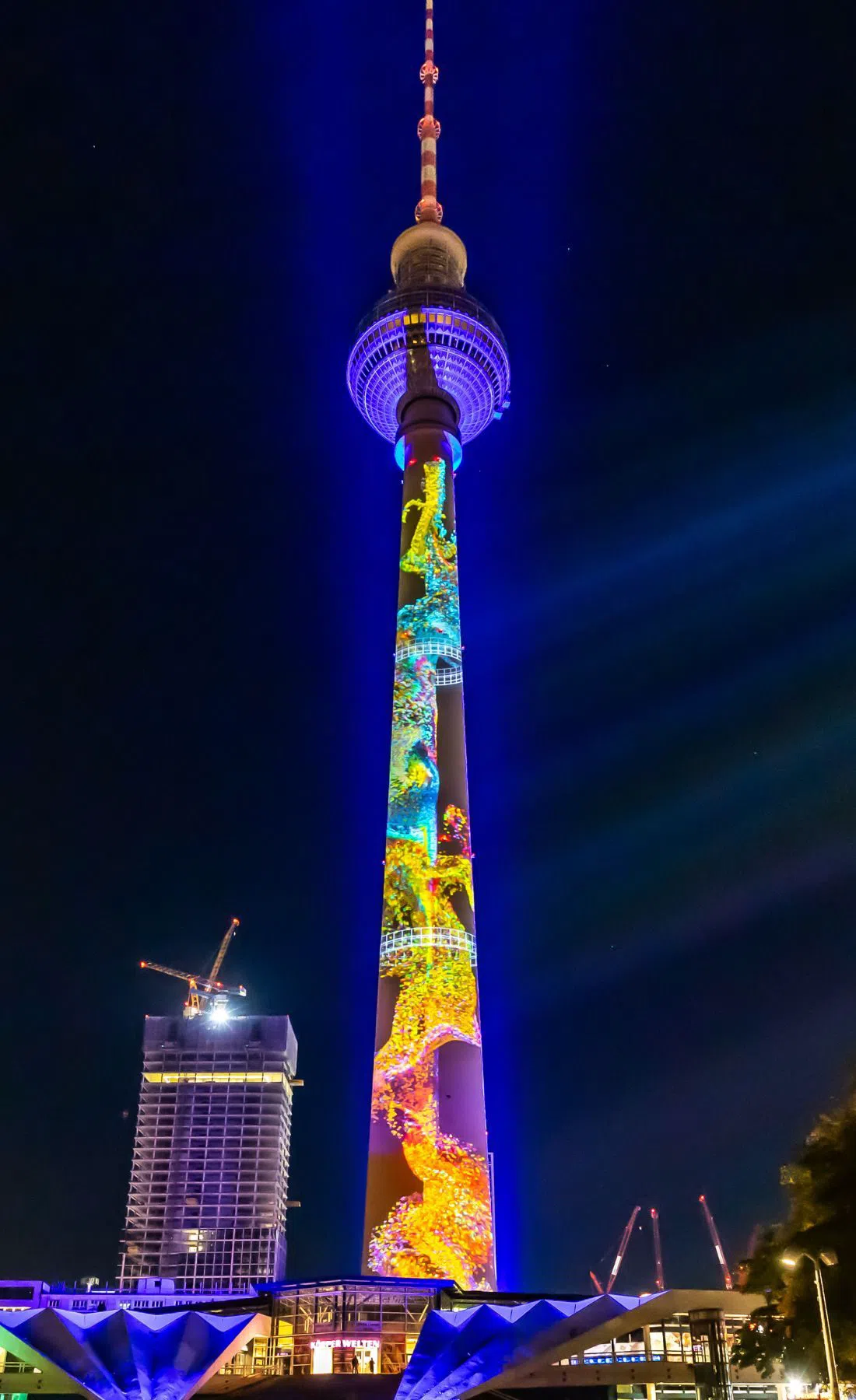
For ten nights each October the Festival of Lights hands 33 Berlin façades over to projection artists. The whole thing switches on at 19:00 and off again at 23:00, a four-hour window in a city whose evening has barely cleared its throat by then. The plan that works treats the lights as one act in a longer evening: knowing which sites reward standing in front of them, which read better from a boat or from a bar sixty metres up, and what to do with the hours on either side.
The 2026 edition runs from 9 to 18 October under the theme 'Colours of Love'. Anything projected onto a public building is free and needs no ticket. Anything with a seat in it does, and the seated things sell out first, so book those before you book a restaurant, a boat or anything else. If this is a first trip and you want the daytime half of the city as well, the wider Berlin guide covers it.
Start at the Gate, then walk away from it
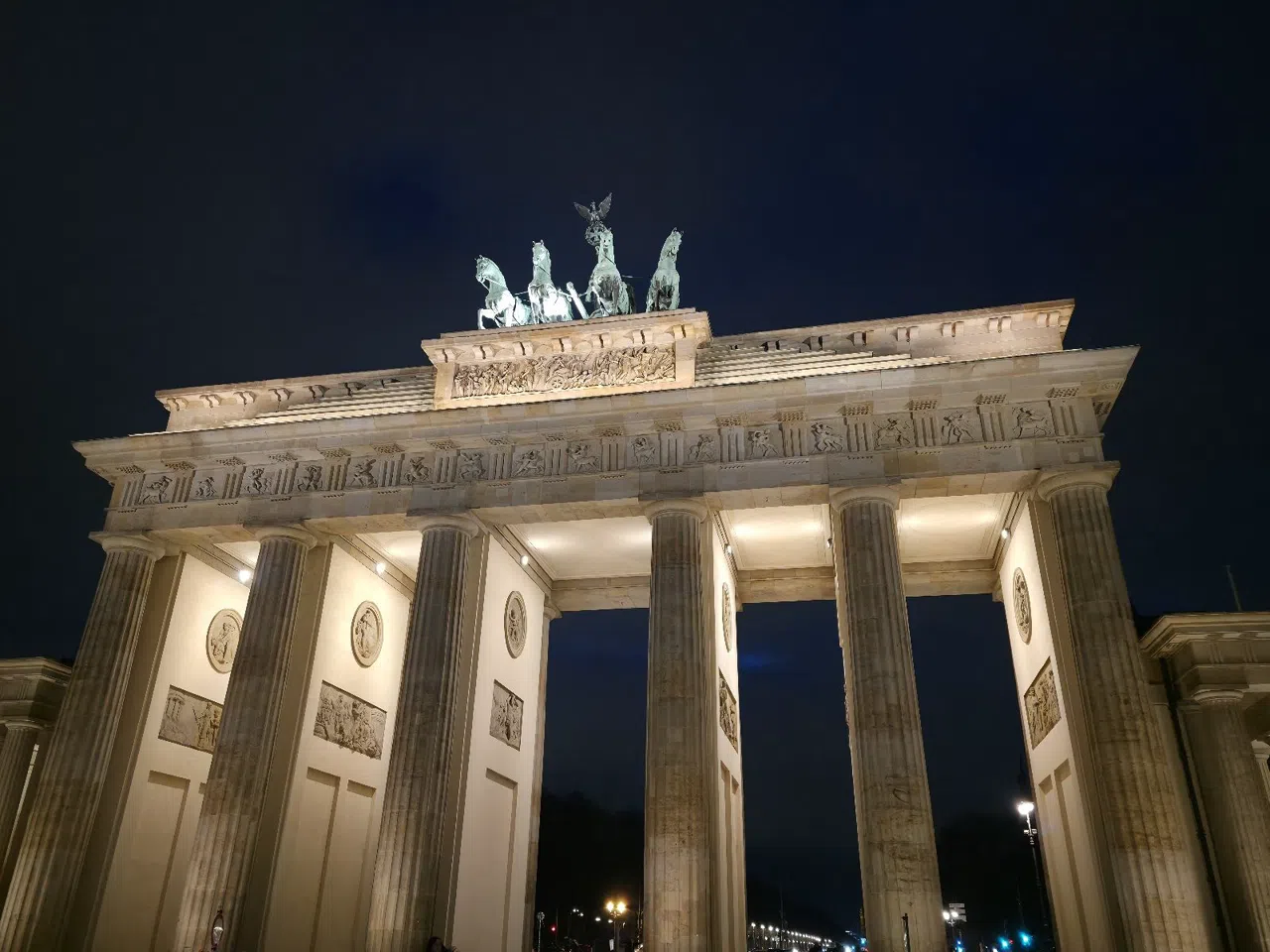
Brandenburg Gate (Mitte) is the festival's centrepiece and the reason most visitors are standing where they are standing. The 3D video mapping runs on the stone nightly from 19:00 to 23:00 across all ten nights, it is free, there is no ticket and no door, and a group of any size can turn up. What a group cannot do is stay together once the square fills. Phone signal collapses in the crush and a dropped pin will not rescue anyone, so either arrive before 19:00 and hold a spot, or agree a physical meeting point and a time before you separate.
Treat it as the opening act. The mapping cycle repeats and you will have seen it inside twenty minutes, while the rest of the festival is strung out east of you along a route that thins with every block. From the Gate, Unter den Linden runs straight east towards Museum Island and the cathedral, then on to the Nikolaiviertel and Alexanderplatz; further east again, the Oberbaum Bridge sits over the river. That line is the spine of the whole thing, and walking it in the lit hours is the cheapest good night in Berlin in October.
Plan your Berlin trip
Live prices from our booking partners.
Free cancellation on many rooms. We may earn a commission when you book.
Covering several lit sites without walking
If your party includes anyone who does not want three hours on cold pavement, put them on the water instead. Reederei Riedel (boarding in central Mitte) runs its 'Berlin leuchtet' light cruise as a two-hour sailing past the riverside sites: the cathedral, Museum Island, the Nikolaiviertel, the Oberbaum Bridge. It is the only way to take in that many festival landmarks in one sitting without a single kilometre on foot. Expect roughly €25 to €35 for the sailing.
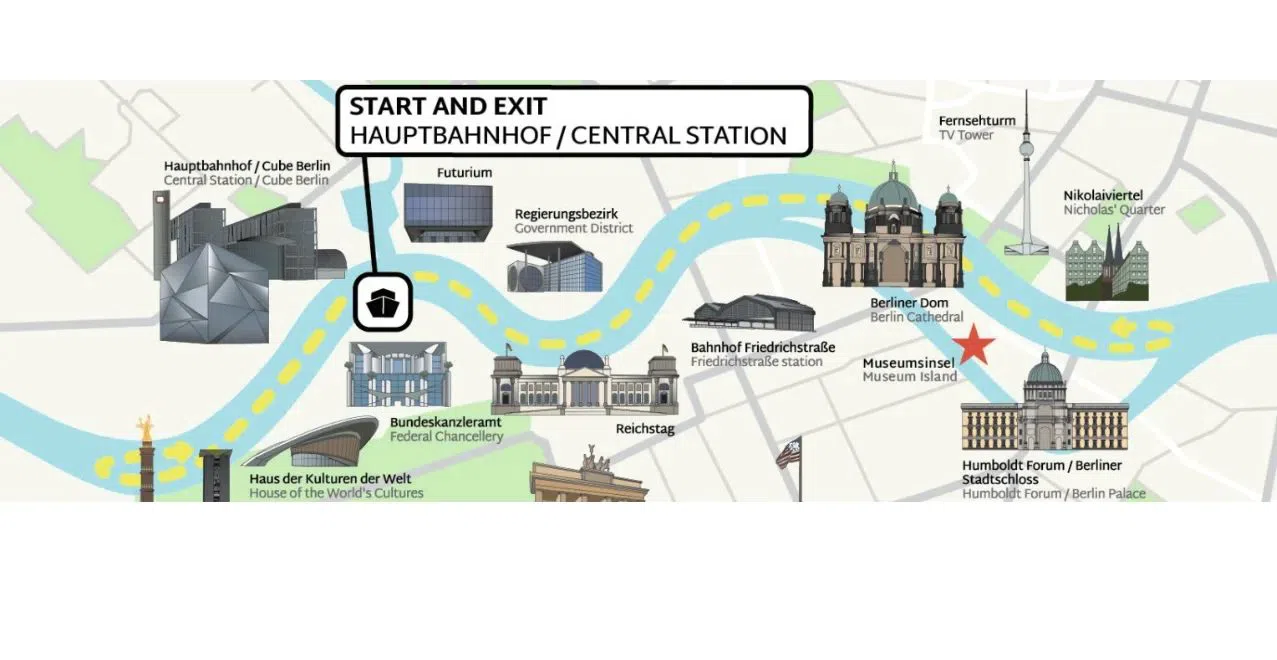
It is also the easiest option here for a large party. Standard departures will seat a big group together, and the whole boat can be chartered if you are enough people to justify it. The catch is timing. The first nights of the festival sell out, and a two-hour cruise eats half your lit window, so it works best as the whole evening and not as one stop among several. Book it before you leave home.
The high views
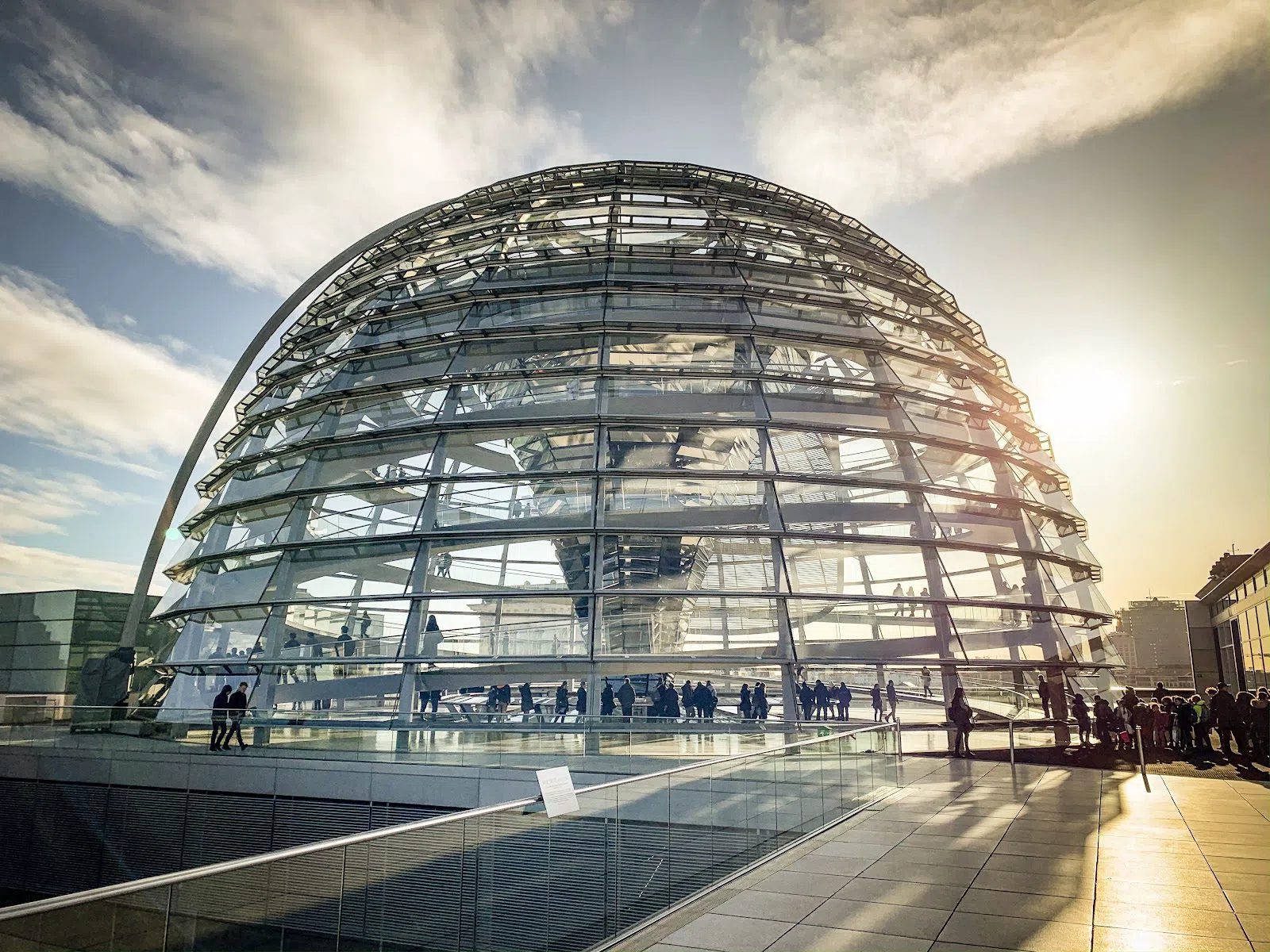
Two towers stay open late enough to matter. Reichstag Dome (government quarter, Mitte) is free and open to midnight with last admission at 21:45, and the evening slots are the ones worth having: you are inside Norman Foster's glass spiral looking down over a lit government quarter. Every visitor must register by name in advance, a group has to be on one booking, and passports are checked at security, so nobody gets in on a whim. One hard date to note is the maintenance closure from 19 to 30 October 2026, which makes the festival window the last chance to go up that month.
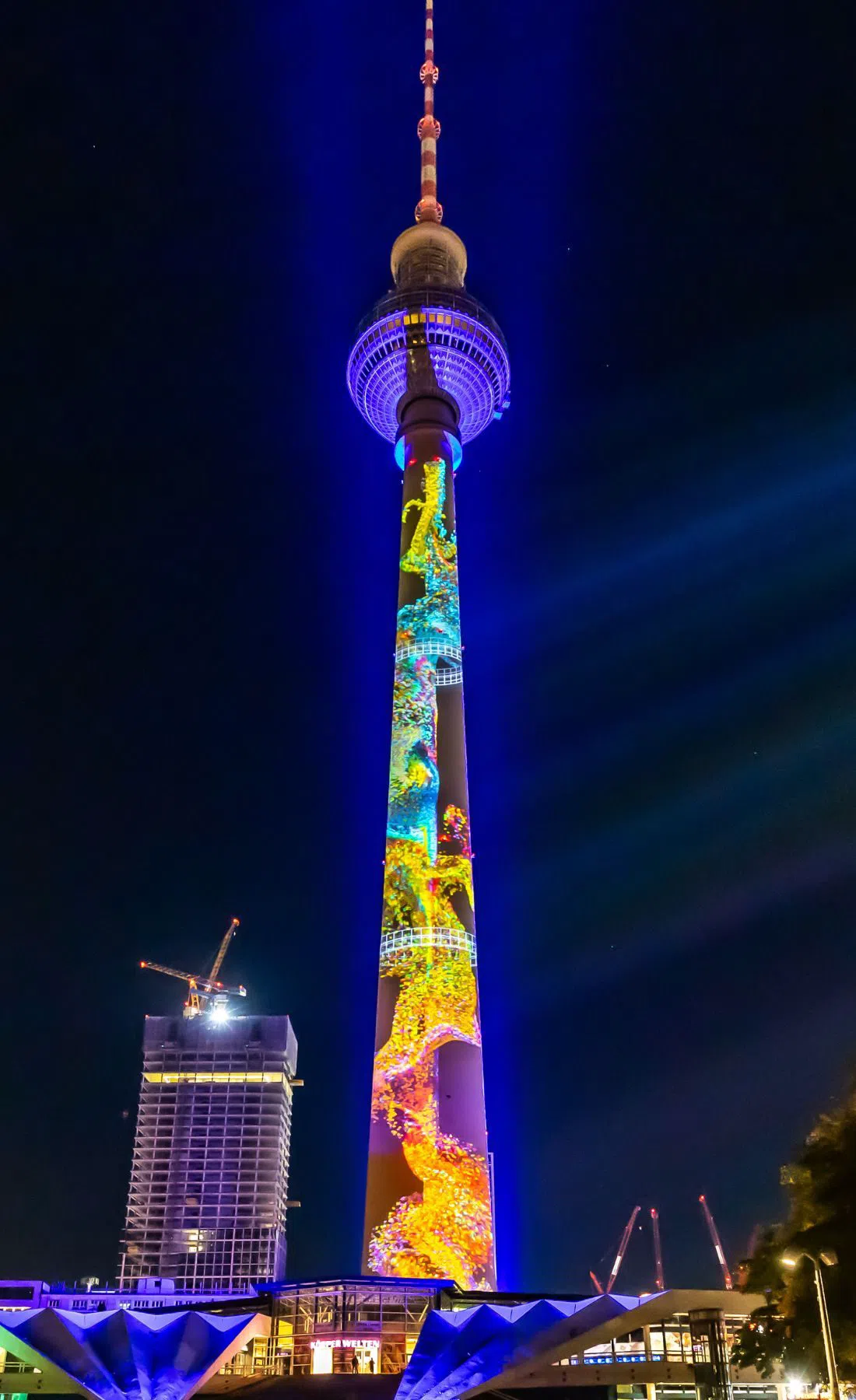
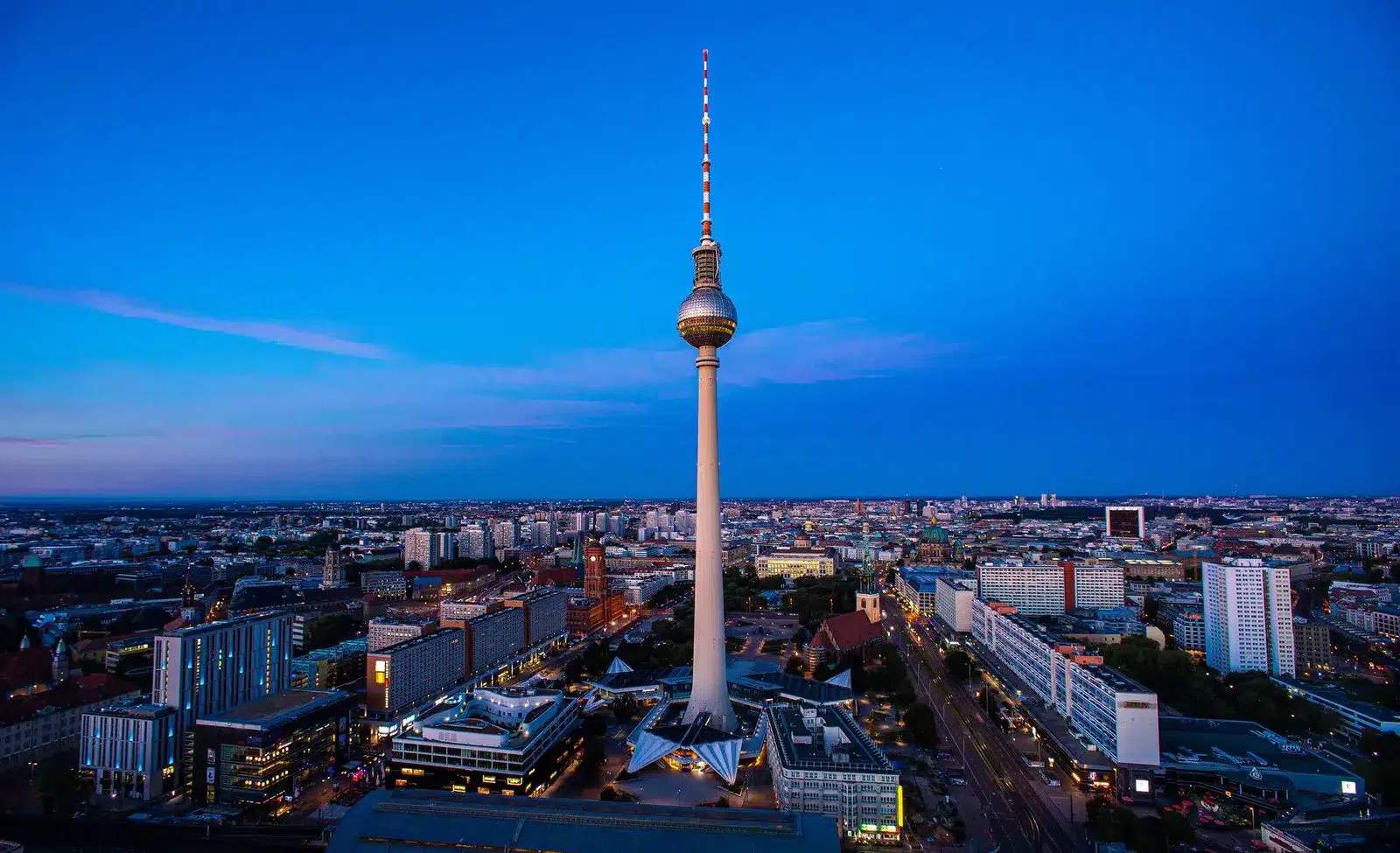
Berlin TV Tower (Alexanderplatz) is the other, open from 09:00 to 23:00 through October and therefore one of the few genuine viewpoints still serving once the lights are on. Entry starts around €25 and rises if you want a table; the Sphere restaurant tier revolves, and the window seats are booked in advance or not had at all. Turn up without a timed slot and you queue at ground level. Groups are fine with timed tickets. The pleasing part is that the tower is itself a projection target during the festival, so you are drinking inside an exhibit.
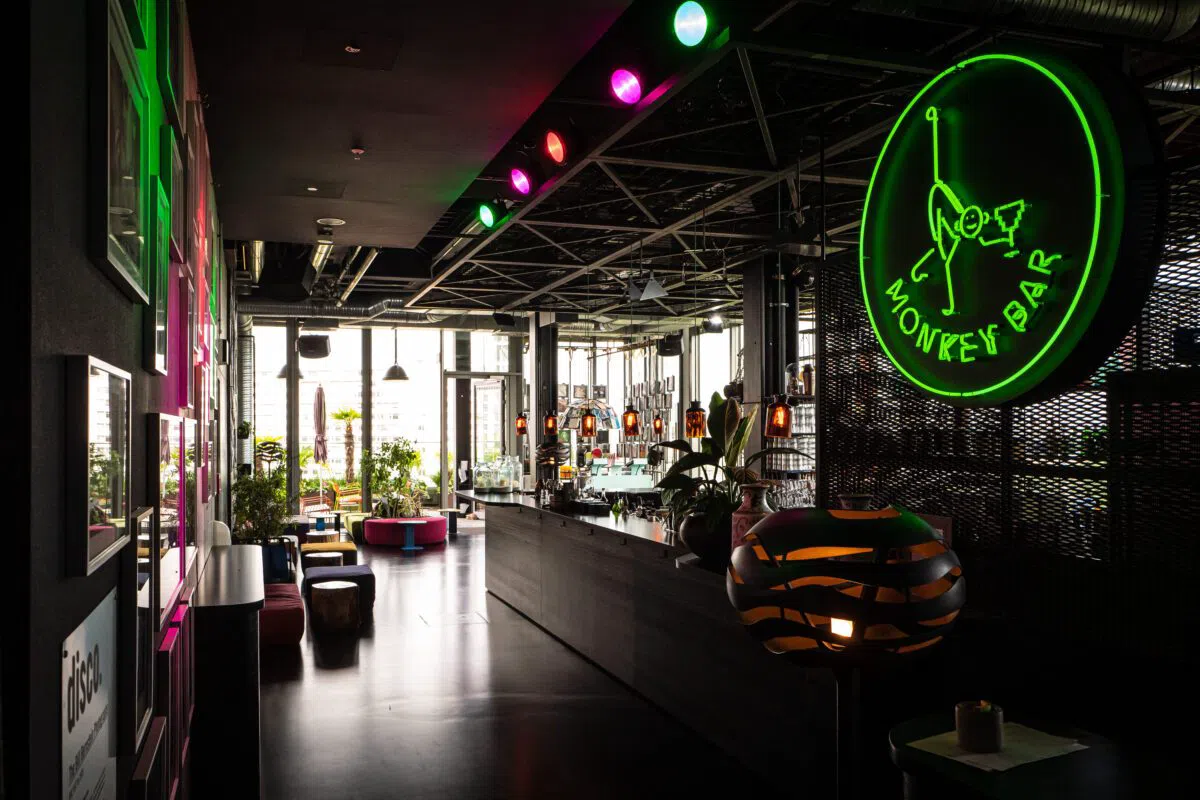
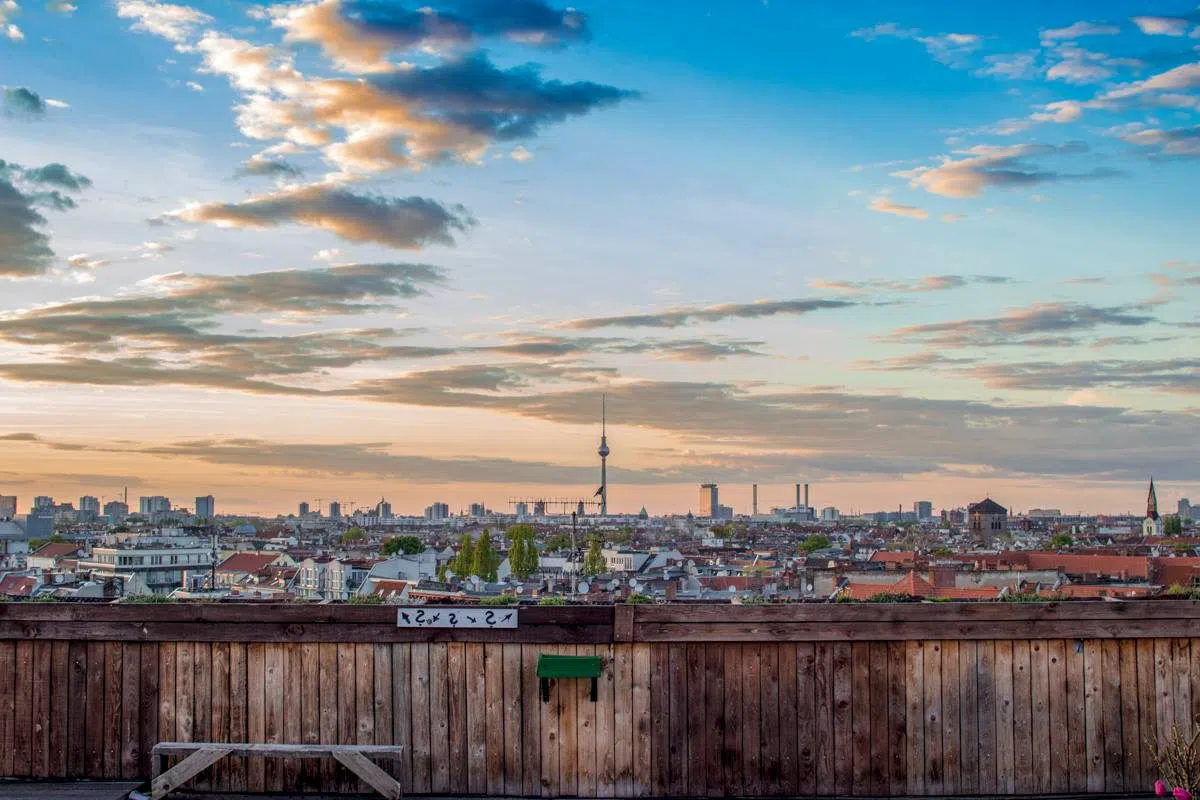
Rooftop bars do the same job for less money. Klunkerkranich (Neukölln) sits on top of a shopping-centre car park and is the least polished and the most enjoyable of them: a small door fee, no table service, you queue at the bar, and by October the heated winter terrace and indoor huts are what keep it usable. It stays open March to December, but hours are event-driven and weekend-weighted by late autumn, so check the site on the day itself instead of trusting last week's opening time. Monkey Bar (City West, Charlottenburg) is the opposite in tone: cocktails at roughly €14 to €18, DJs most nights, open daily to 02:00, and a strange view down into the zoo with the city behind it. Reserve online. A couple or four will fit; a party of ten should book the event space instead of arriving hopefully. It is also the one reason to cross west on a festival route that otherwise never leaves Mitte.
Eating on a festival clock
The lights start at 19:00, which means dinner is either early or late, and the venues that handle that well are not the ones with a tasting menu.
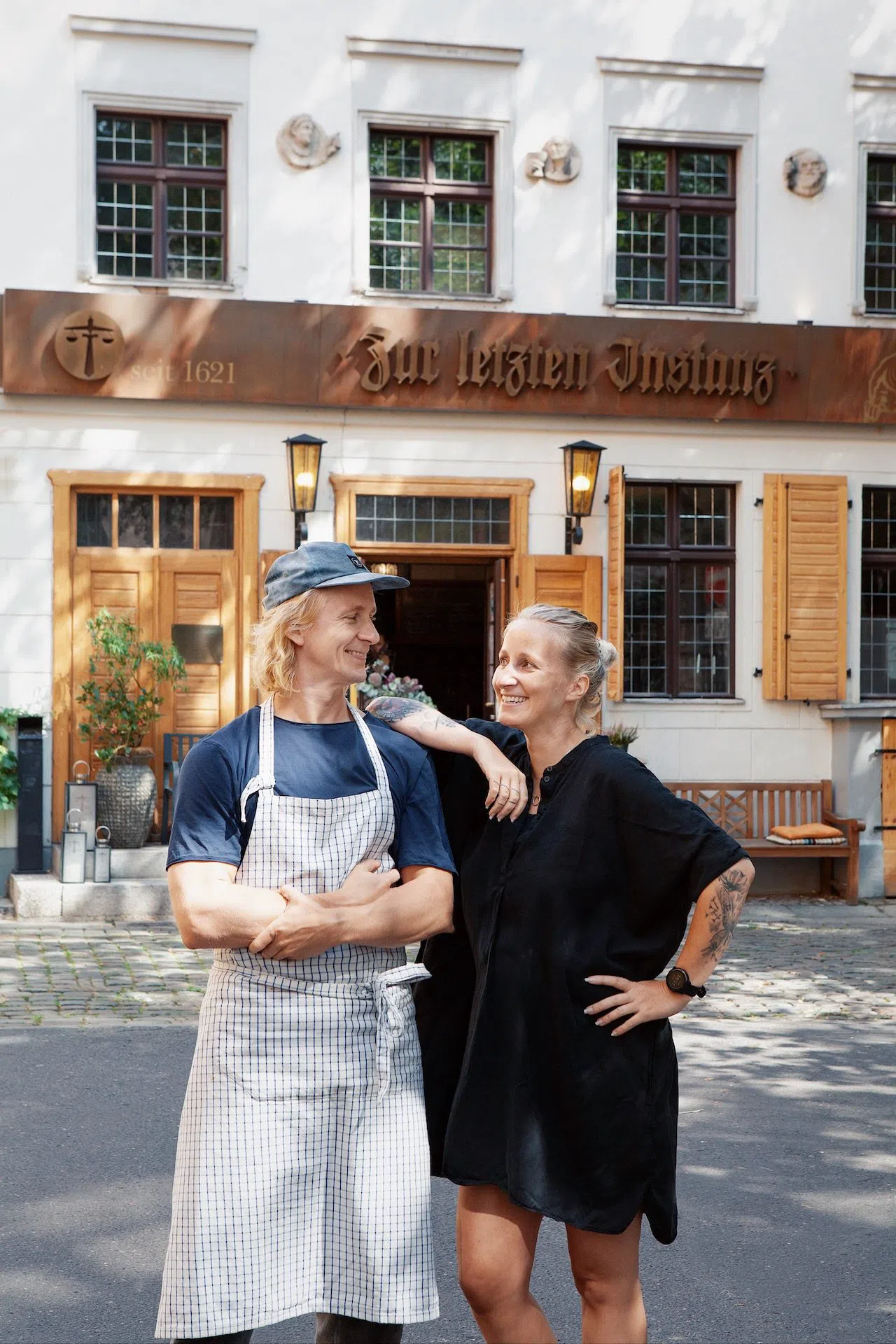
Zur Letzten Instanz (Nikolaiviertel, Mitte) has been serving since 1621 and opens from 17:30, Monday to Saturday. That early start is the point: eat at 17:30, be out before the lights, and walk directly into the Nikolaiviertel, which is a festival site with its own installations. Reservations are essential and are taken by phone or email, not through an app, and a separate Separee room takes private groups of four or more. It closes on Sundays, which in 2026 includes 18 October, the festival's final night.
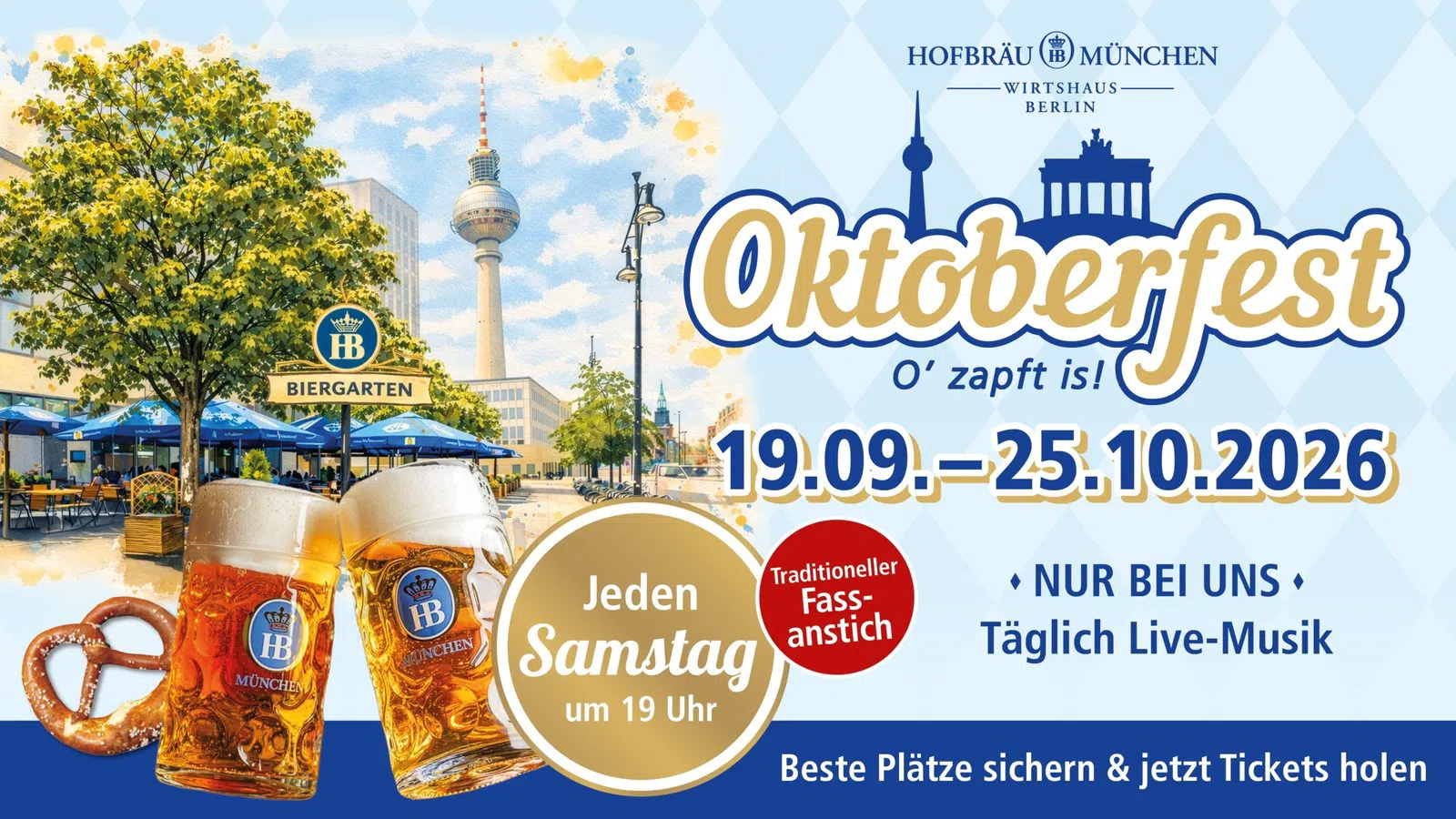
Hofbräu Wirtshaus Berlin (Alexanderplatz) is the easiest room in the city for a crowd, and worth knowing about precisely because it never says no. Europe's largest tavern absorbs walk-ins, books large parties, and applies no door policy of any kind. It opens evenings from 18:00, to midnight on Friday and Saturday, and its Oktoberfest programme runs from 19 September to 25 October 2026, so it overlaps the entire festival. It is two minutes from the illuminated TV Tower and St Mary's Church, which makes it the practical answer when a group of twelve needs feeding and nobody has booked anything.
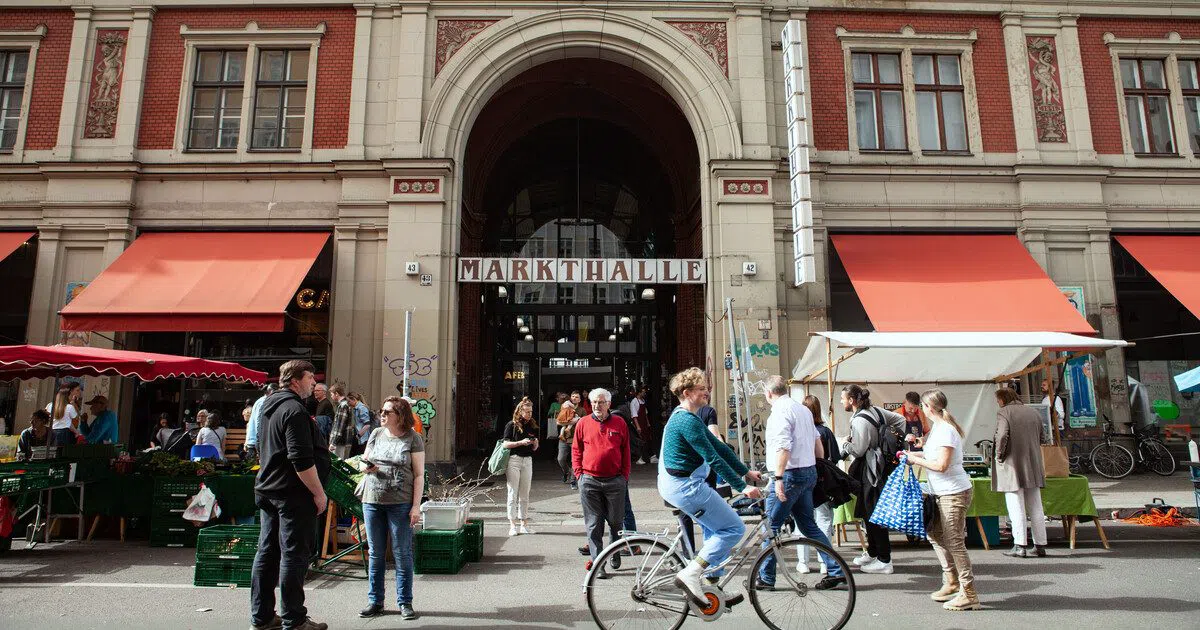
The best-value night of the ten falls on a Thursday. Markthalle Neun (Kreuzberg) runs Street Food Thursday from 17:00 to 22:00 every week, which inside the festival window means 15 October, with cooks from across the world set up under the iron roof of a listed Victorian hall. Most plates land between €6 and €12. There is no booking and no door; a group grazes independently and regroups, which is the right way to use it, because after 19:00 it is shoulder to shoulder. It is a short hop from the lit Oberbaum Bridge, so the two pair naturally.
Rooms where the show is indoors
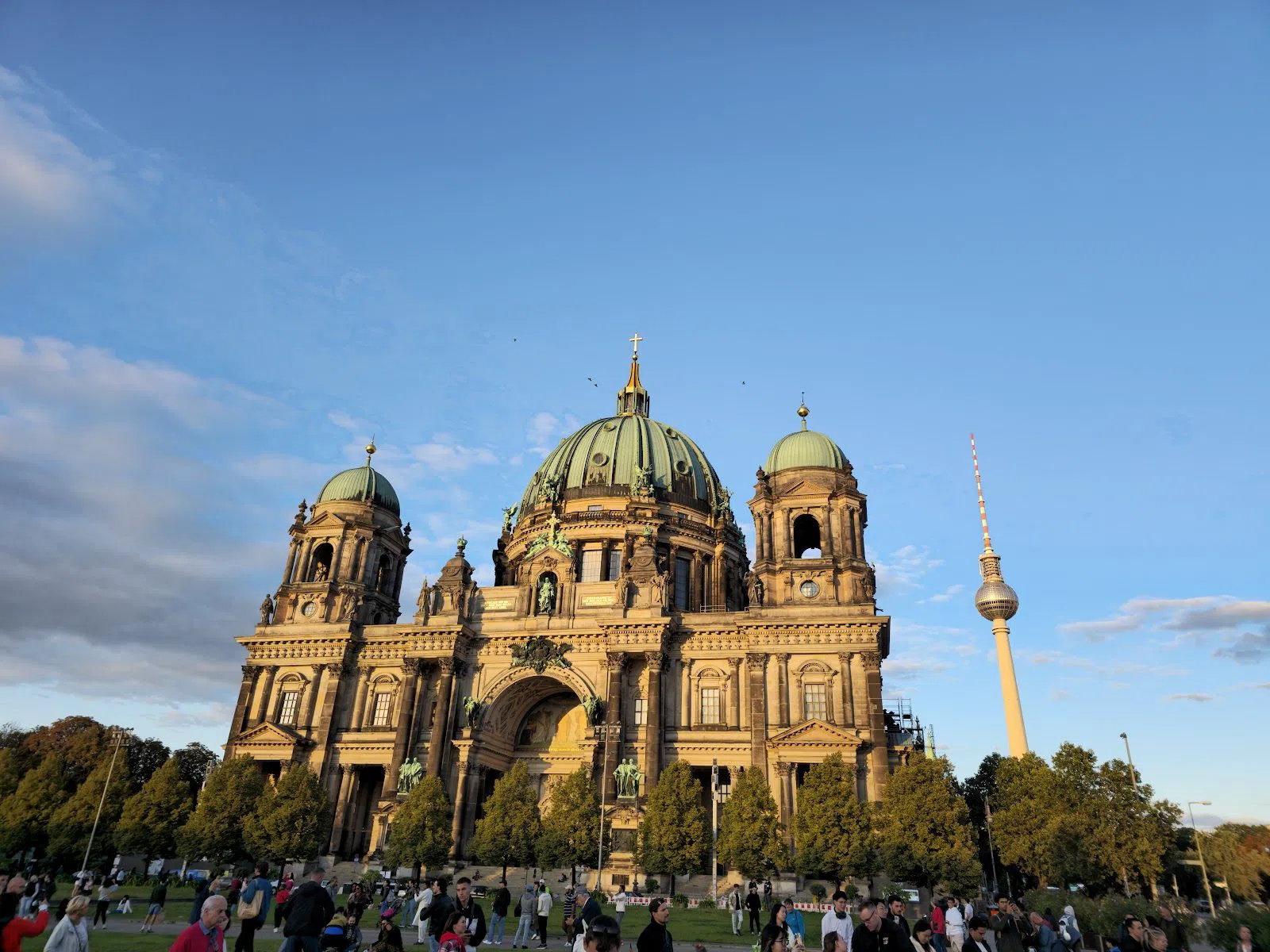
The single most distinctive ticket of the ten nights is at the Berliner Dom (Museum Island, Mitte), where Festival of Lights in Concert runs from 13 to 17 October 2026. Westbam, Alle Farben, Klangkarussell, Anja Schneider, Chris Bekker and Ukãi Ndame play ambient sets under projection mapping inside the cathedral, with the building itself played as the instrument. Tickets run roughly €30 to €60, the slots are 60 minutes, and they sell out. Groups are fine so long as everyone is booked onto the same performance; there is no walking up on the night.
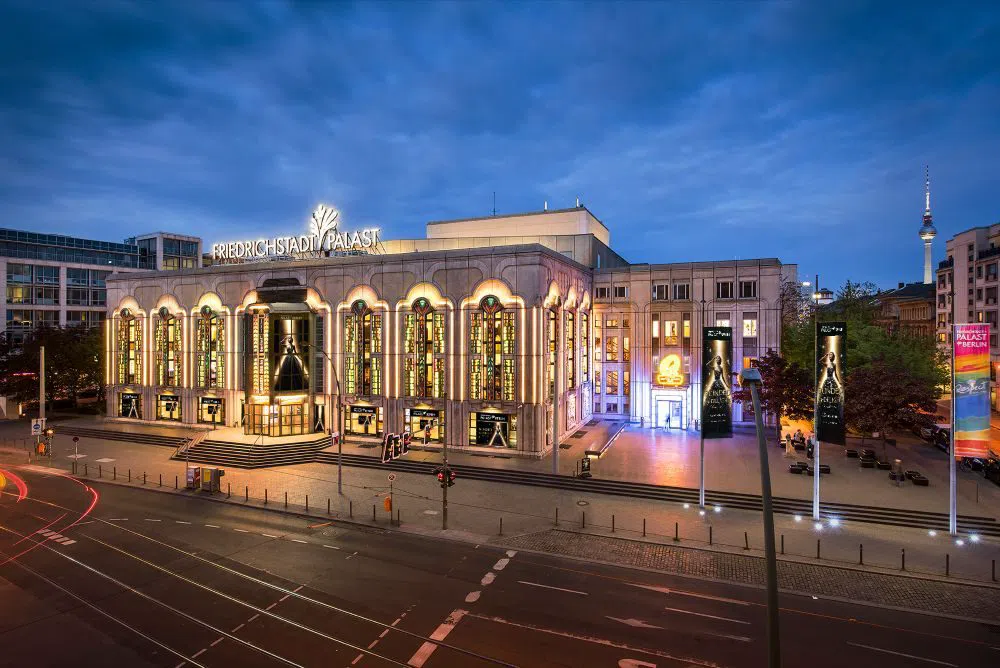
Friedrichstadt-Palast (Friedrichstraße, Mitte) is the city's largest-scale spectacle and needs no German at all. The current Grand Show, BLINDED by DELIGHT, has costumes by the US designer Jeremy Scott and plays through October, including 16 and 17 October inside the festival window. Tickets start around €64, the house seats over 1,800, and group rates and VIP packages exist. This is a room built for coach parties and it handles them without fuss.
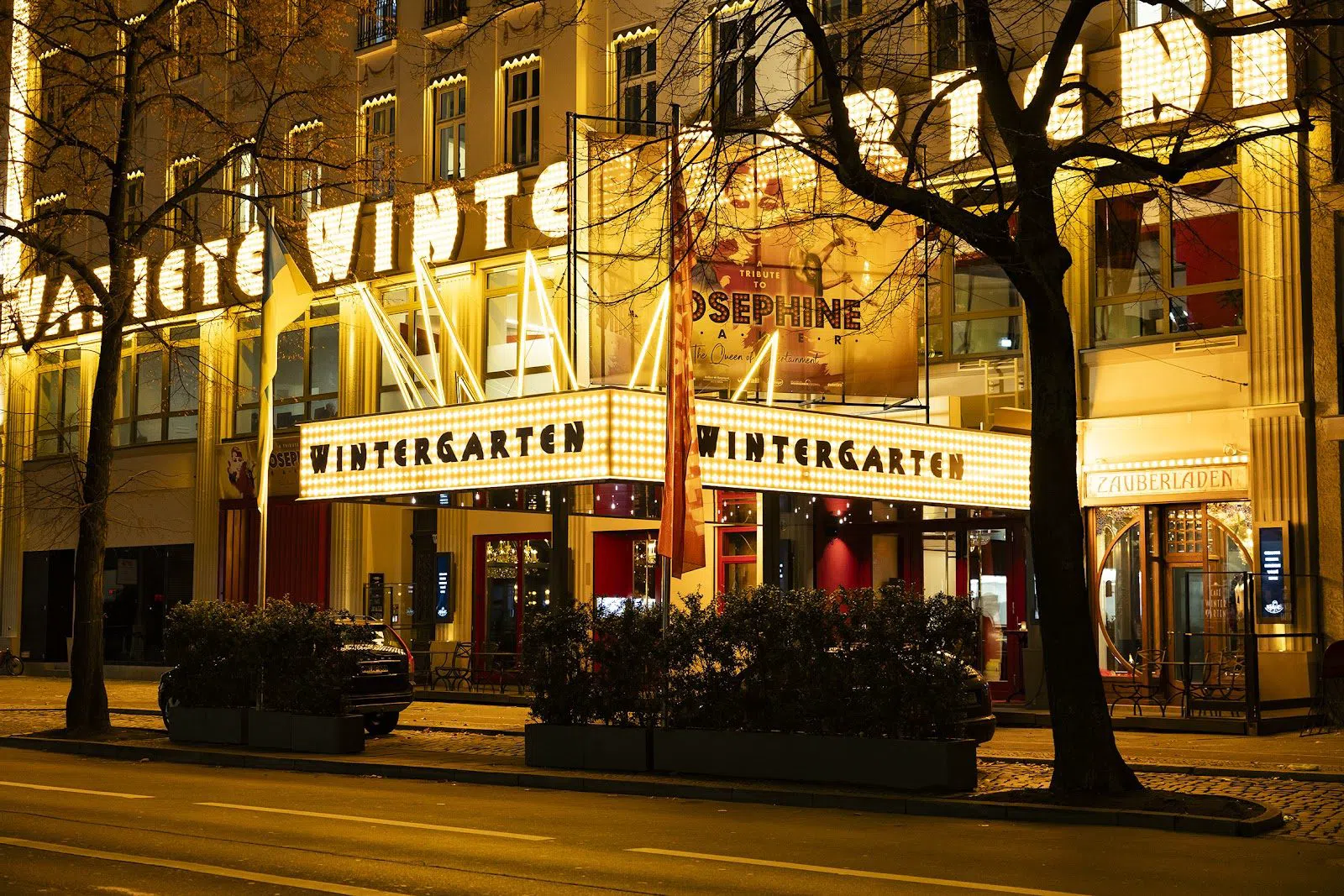
Wintergarten Varieté (Potsdamer Straße, Tiergarten) is the smaller, closer, more old-Berlin alternative. Its new production, DISCO, opened on 26 August 2026 and runs through the autumn: acrobatics, dinner and dancing built around tables instead of rows. From about €80, more with the dinner package, which should be booked in advance. If your group would rather eat while they watch than sit in a stalls seat, this is the one.
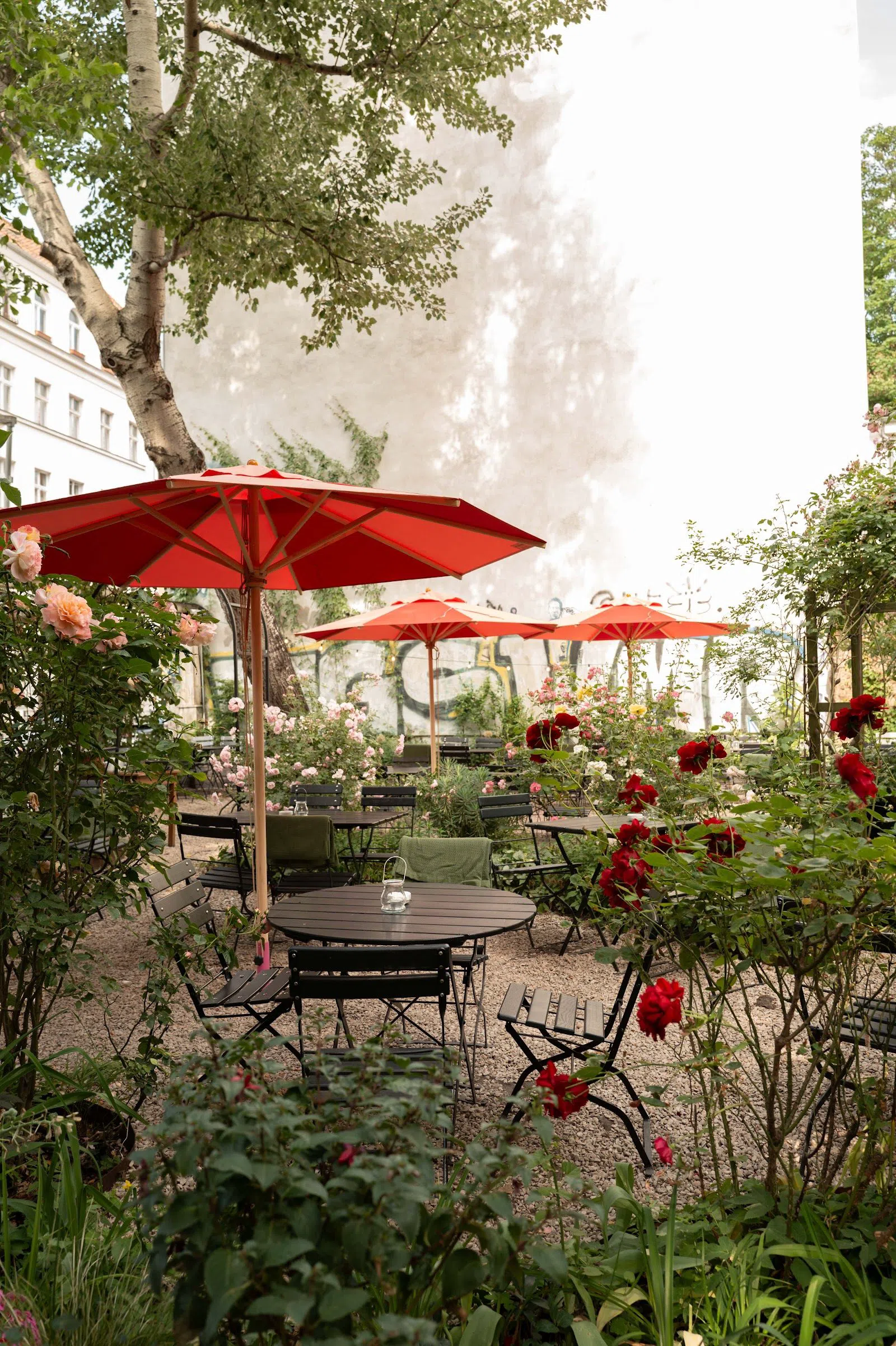
Clärchens Ballhaus (Auguststraße, Mitte) is the rare Berlin night out with no door risk and no age problem. The historic dance hall reopened after a full renovation in 2024, with the mirrored hall upstairs back in nightly use, and it runs salsa, tango, swing and waltz nights with beginner classes alongside a proper restaurant. Long tables, food service, mixed ages, reserve for dinner. If you are travelling with parents and teenagers in the same party, this is where the evening survives.
After the lights go off at 23:00
At 23:00 the projections stop and several thousand people walk off the same square at once. Have somewhere to go.
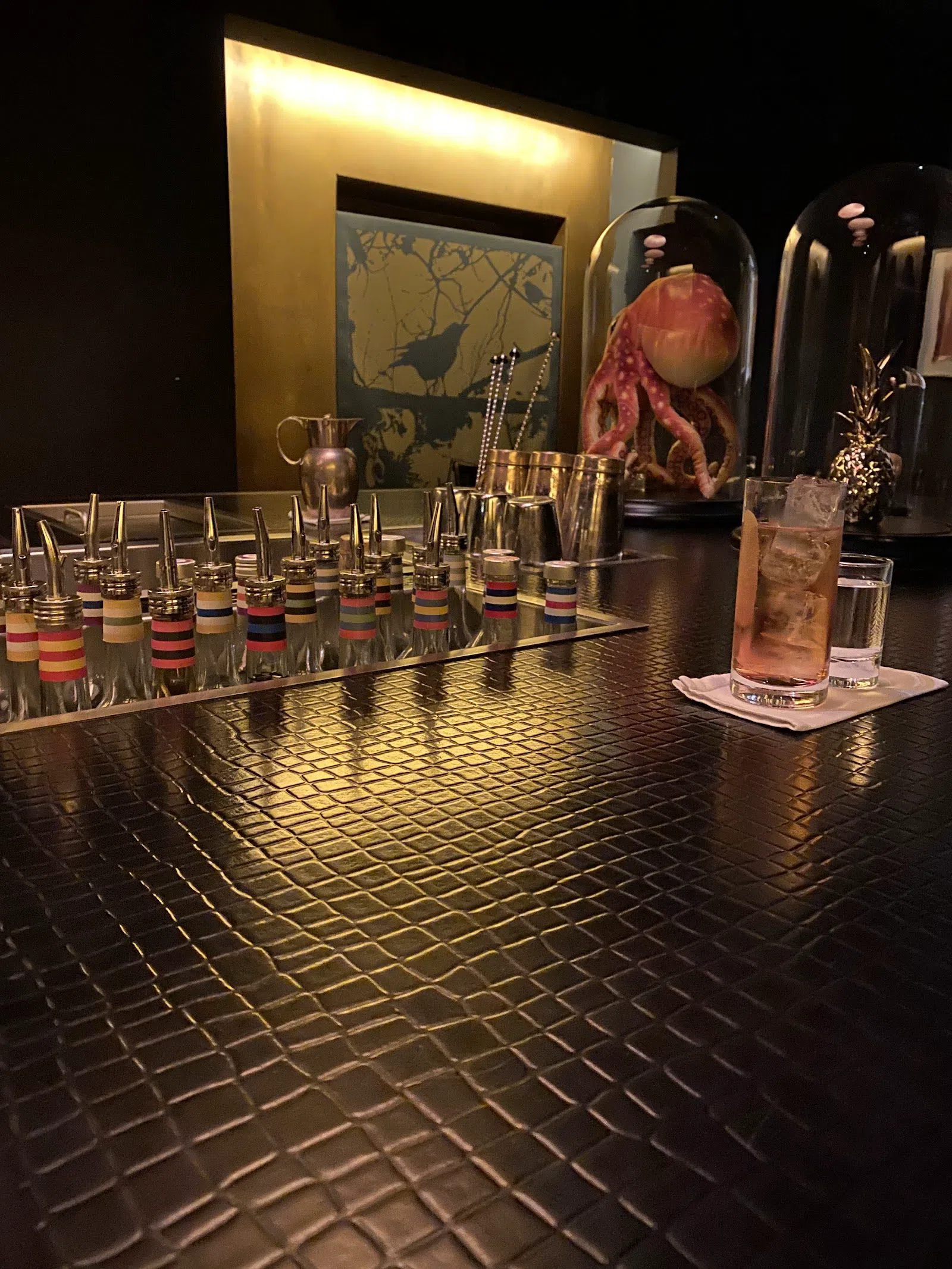
For two people, Buck and Breck (Brunnenstraße, Mitte) is the right last stop and the wrong one for six. Fourteen seats in total, a buzzer, no signage, no phones, cash only and no cards, open daily from 19:00 to 02:00, cocktails around €16 to €20. It is a fixture on the international bar lists and it works because it is small; arriving as a group of five is simply asking someone to turn you away.
For a club night, be honest with yourself about the door. Berghain (Friedrichshain) is actively hostile to groups. Go in pairs at most, split up in the queue, expect entry around €20 to €25, and understand that phone cameras are stickered over at the door and no photography is permitted inside. Klubnacht still runs from Saturday midnight straight through Monday morning across the main floor, Panorama Bar and Säule, which within the festival window means the nights of 10 and 17 October. Include it only if everyone accepts that rejection is routine and that nobody is jumping the queue.

Sisyphos (Rummelsburg) is the realistic recommendation. It has by far the friendliest serious door in the city, entry runs about €15 to €20, phones are stickered at entry, and it opens on Friday evening and does not stop until Monday afternoon, a sprawl of indoor and outdoor floors that behaves more like a festival site than a club. It is the honest choice for visitors who want a real Berlin club night without gambling the whole evening on one bouncer's mood.
Practical notes
Getting around is mostly walking. The lit spine from the Brandenburg Gate to Alexanderplatz is walkable end to end in well under an hour, and walking it is the point: the U-Bahn and S-Bahn skip everything worth seeing on that stretch. Save transport for the outliers, which are Neukölln, City West, Kreuzberg and the eastern clubs. Night services run on the weekend, and a day ticket costs less than two single fares.
Berlin is still not a card city at the margins. Buck and Breck is cash only, Klunkerkranich's door fee and bar are easiest in cash, and the market stalls at Markthalle Neun vary stall by stall. Carry €50 to €100 in notes per person for an evening and you will never be the problem in the queue.
On timing, book the ticketed things first, meaning the cathedral concert, the boat, the Reichstag registration and the revue, because those are the ones that close. Eat at 17:30 or after 23:00, not at 20:00. Give the Brandenburg Gate twenty minutes, not two hours. And remember the dome shuts on 19 October, so the festival dates are the last window that month.
On budget, a free night is genuinely possible: the Gate, the walk east, the Nikolaiviertel and the Reichstag dome cost nothing beyond transport. A mid-range night of dinner, a cruise or a tower and a rooftop drink lands around €70 to €90 a head. A ticketed night with a Grand Show or the cathedral concert and dinner runs €120 to €160. For beds, staying anywhere in Mitte puts you inside the lit route and saves an hour of transit each evening; compare rates on Berlin hotel search and book early, because the festival dates move the whole city's occupancy.
Before you go
When exactly is the Festival of Lights in Berlin in 2026, and does it cost anything?
It runs from 9 to 18 October 2026 under the theme 'Colours of Love', with 33 illuminated sites lit nightly from 19:00 to 23:00. Every projection onto a public building, including the Brandenburg Gate, is free: there is no ticket to buy and no door to get past. You only pay for the extras, which are the cathedral concert, the boat cruise, tower entry and the theatre shows.
What is the best way to see several festival sites in one evening?
Reederei Riedel's two-hour 'Berlin leuchtet' cruise passes the cathedral, Museum Island, the Nikolaiviertel and the Oberbaum Bridge in one sailing for roughly €25-35, and it is the only way to cover that many landmarks without walking. On foot, the equivalent is the straight line east from the Brandenburg Gate along Unter den Linden to Museum Island and Alexanderplatz. The first nights of the cruise sell out, so book ahead.
Can I get into Berghain with a group during the festival?
Realistically, no. Berghain is actively hostile to groups, so go in pairs at most, split up in the queue, and accept that rejection is routine and there is no jumping the queue. Sisyphos in Rummelsburg has the friendliest serious door in the city, entry around €15-20, and runs from Friday evening to Monday afternoon. For a group that wants a real Berlin club night, that is the one to aim for.
Is the Reichstag dome open during the Festival of Lights?
Yes, and the evening slots are the ones to take: it stays open to midnight with last admission at 21:45, and it is free. Every visitor must register by name in advance, groups must all be on the same booking, and security checks passports. It then closes for maintenance from 19 to 30 October 2026, so the festival dates are the last chance that month.
Where should we eat if the lights start at 19:00?
Eat early or late, not at 20:00. Zur Letzten Instanz opens at 17:30 Monday to Saturday beside the Nikolaiviertel, so you finish before the lights and walk into a festival site; reservations are essential and taken by phone or email. Hofbräu Wirtshaus Berlin opens from 18:00, takes any group size and needs no booking, and on Thursday 15 October, Markthalle Neun's Street Food Thursday runs 17:00-22:00 with plates at €6-12.