The Berlin issue
Sunday Digging in Berlin's Flea Markets and Vintage Shops
The Berlin market circuit: where to go, what it costs and what time to arrive, plus the vintage shops that cover the six days a week the markets are shut.

By Giulia FerreroEating Berlin one market stall at a time
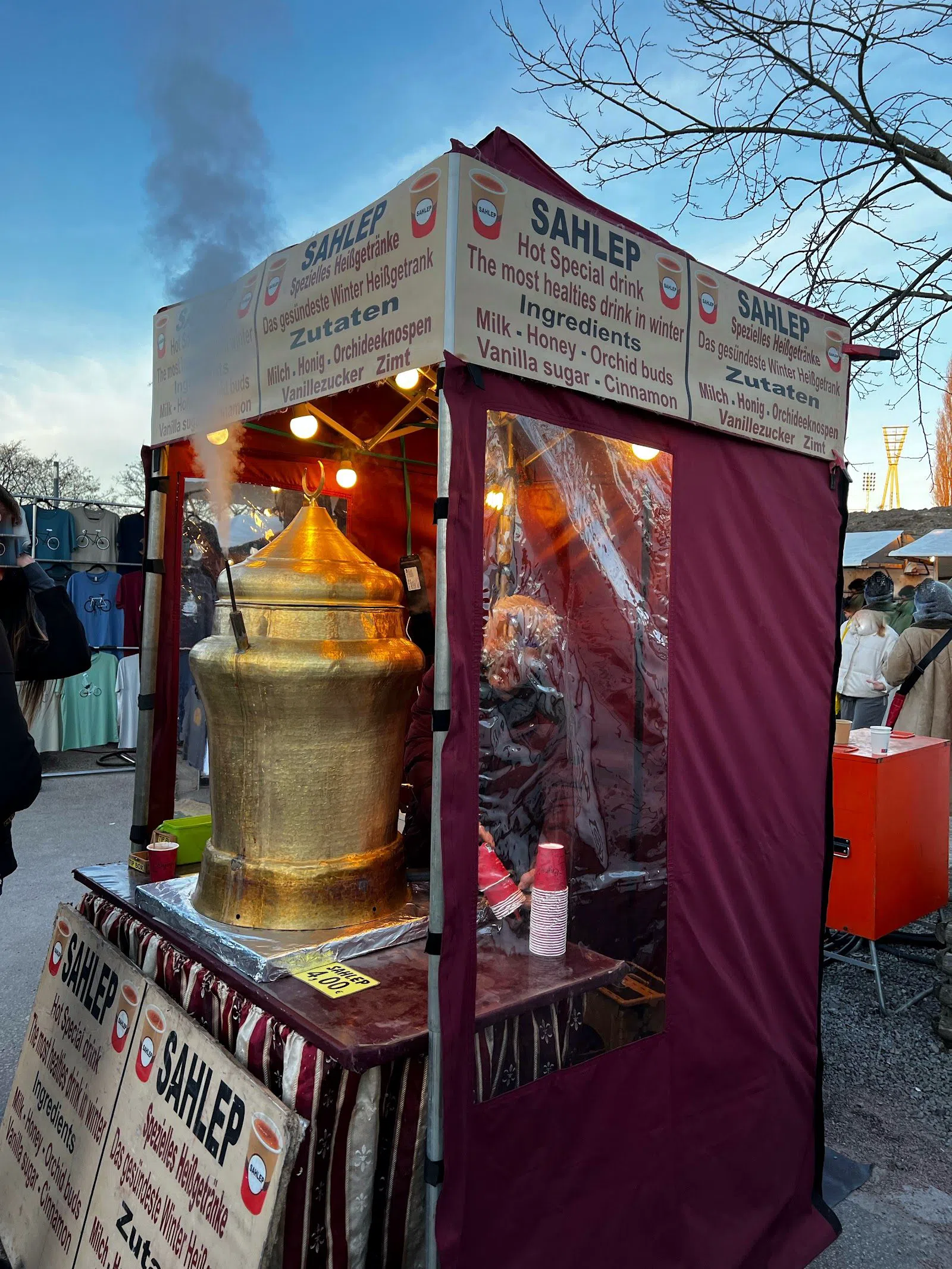
By nine on a Sunday the aisles at Mauerpark still smell of wet grass, and the dealers are unwrapping newspaper from glassware they carried in at seven. By two the same aisles are shoulder to shoulder and the things worth buying have gone home in somebody else's tote bag. Berlin's second-hand trade lives in that gap: a few honest early hours in the open air, then a long afternoon of walking it off.
Two markets and ten minutes of pavement between them
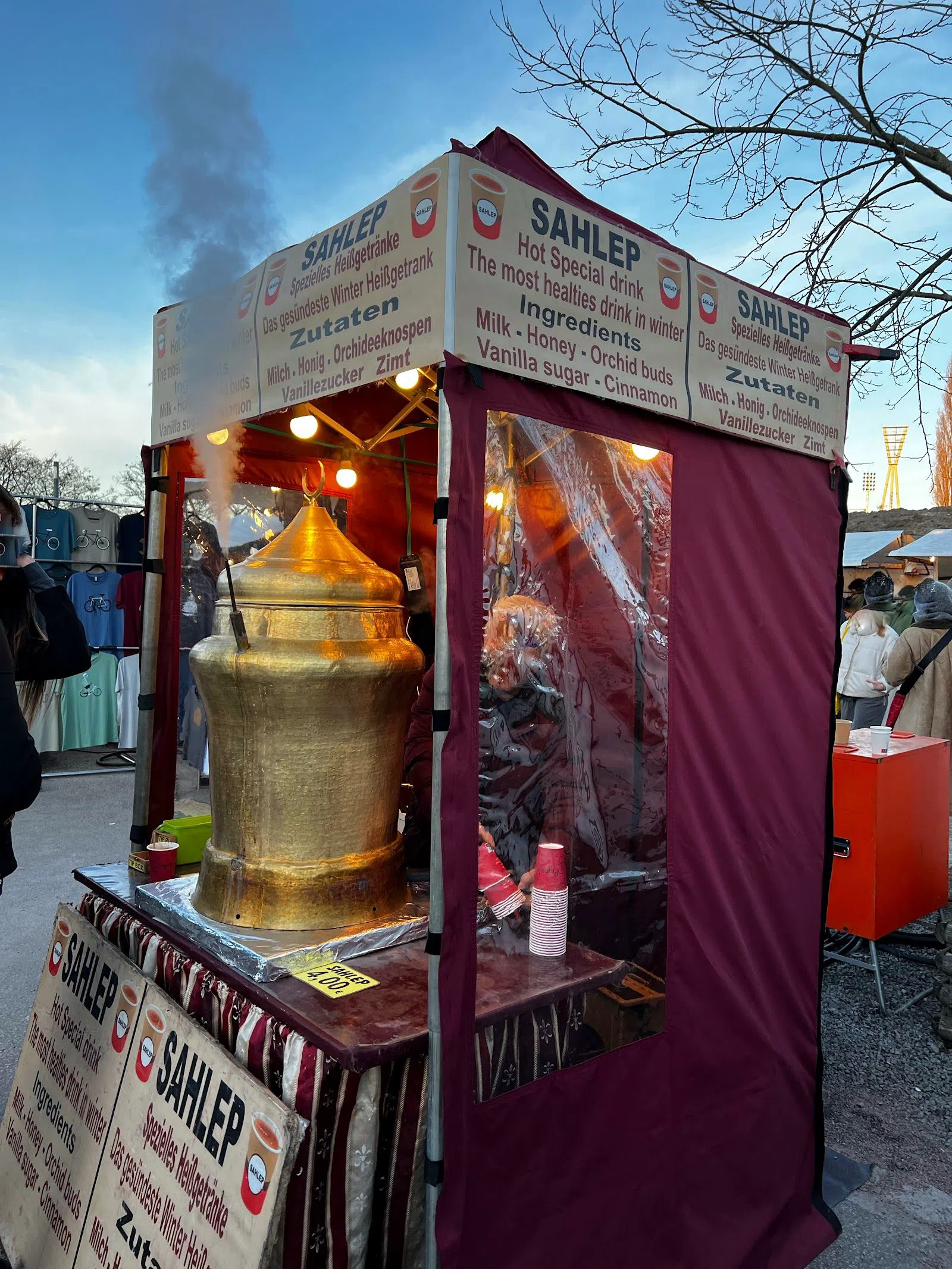
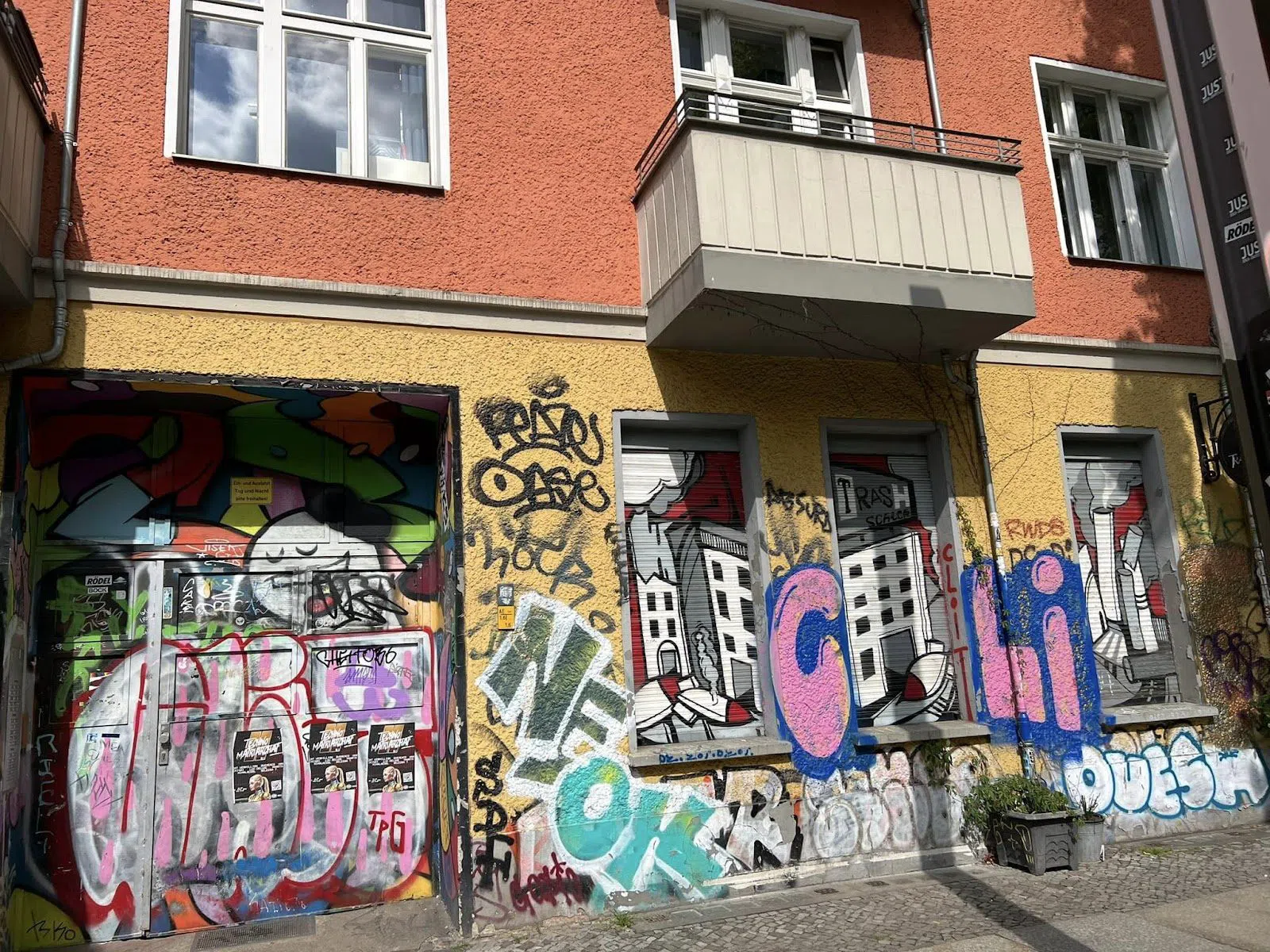
Flohmarkt am Mauerpark (Prenzlauer Berg) is the one everybody has heard of, and it earns the reputation: up to 3,000 vendors on a good Sunday, laid down the slope beside the old death strip. Entry is free and there is no door policy of any kind, but there is a clock. Arrive between 9 and 11am. By 2pm it is a crowd-crush, and the vintage worth carrying (denim, leather, workwear) was picked over long before the first tour group arrived. Most stalls sit between EUR 5 and 40; the furniture tent runs higher and will want cash without discussion. Groups are fine here in principle, but the aisles clog solid after midday, so more than four of you should agree a meeting point before you split up. If you do stay into the afternoon, the Bearpit karaoke in the amphitheatre starts around 3pm from spring to autumn and is worth twenty minutes even if you have no intention of singing.
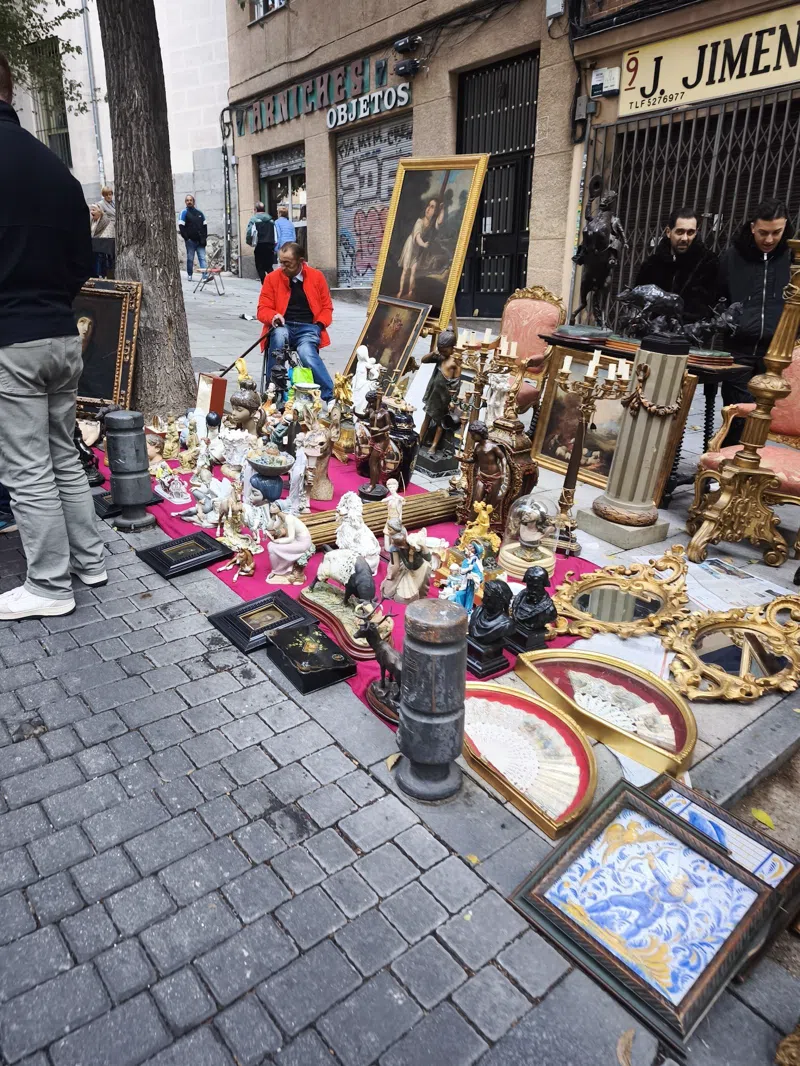
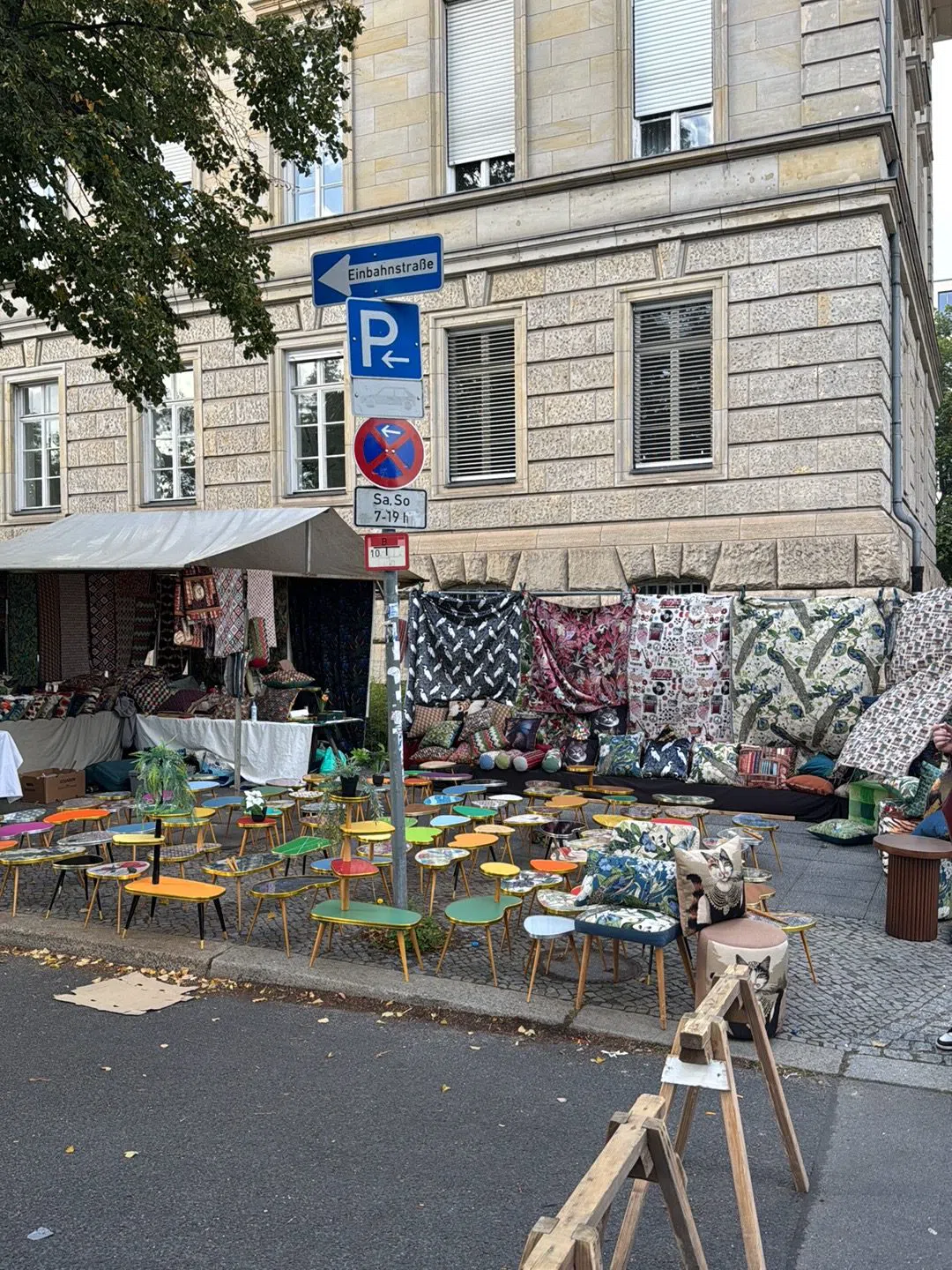
Ten minutes' walk away, Flohmarkt am Arkonaplatz (Mitte, on the Prenzlauer Berg edge) is the better market and almost nobody photographs it. Sundays, 10am to 5pm year-round, closing at 4pm in winter, free. It is small enough to walk properly in an hour, and it has the best hit rate in the city for mid-century lamps, clocks and GDR ceramics, generally EUR 10 to 80. Because it is small, a party of more than six will fill an aisle and annoy the dealers standing behind it; split into pairs and regroup at a Kastanienallee café. The natural Sunday is Mauerpark early, Arkonaplatz at eleven, coffee at noon.
Plan your Berlin trip
Live prices from our booking partners.
Free cancellation on many rooms. We may earn a commission when you book.
The serious end of the trade
If you want objects rather than atmosphere, Trödelmarkt Straße des 17. Juni (Tiergarten) is where the real dealers are. It has run since 1973 and it shows: porcelain, cut glass, coins, prints and actual furniture rather than festival jackets. Free, Saturdays and Sundays, 10am to 5pm in summer and closing at 4pm in winter. Bric-a-brac starts around EUR 5; genuine antiques run EUR 20 to 500 and well past it. The stalls are laid out in a straight line along a broad street, which makes this the easiest of the big markets to walk as a group without losing anyone in a side aisle. Expect firmer prices than at the neighbourhood markets. These sellers know precisely what they are holding, and an offer of half will end the conversation rather than start it.
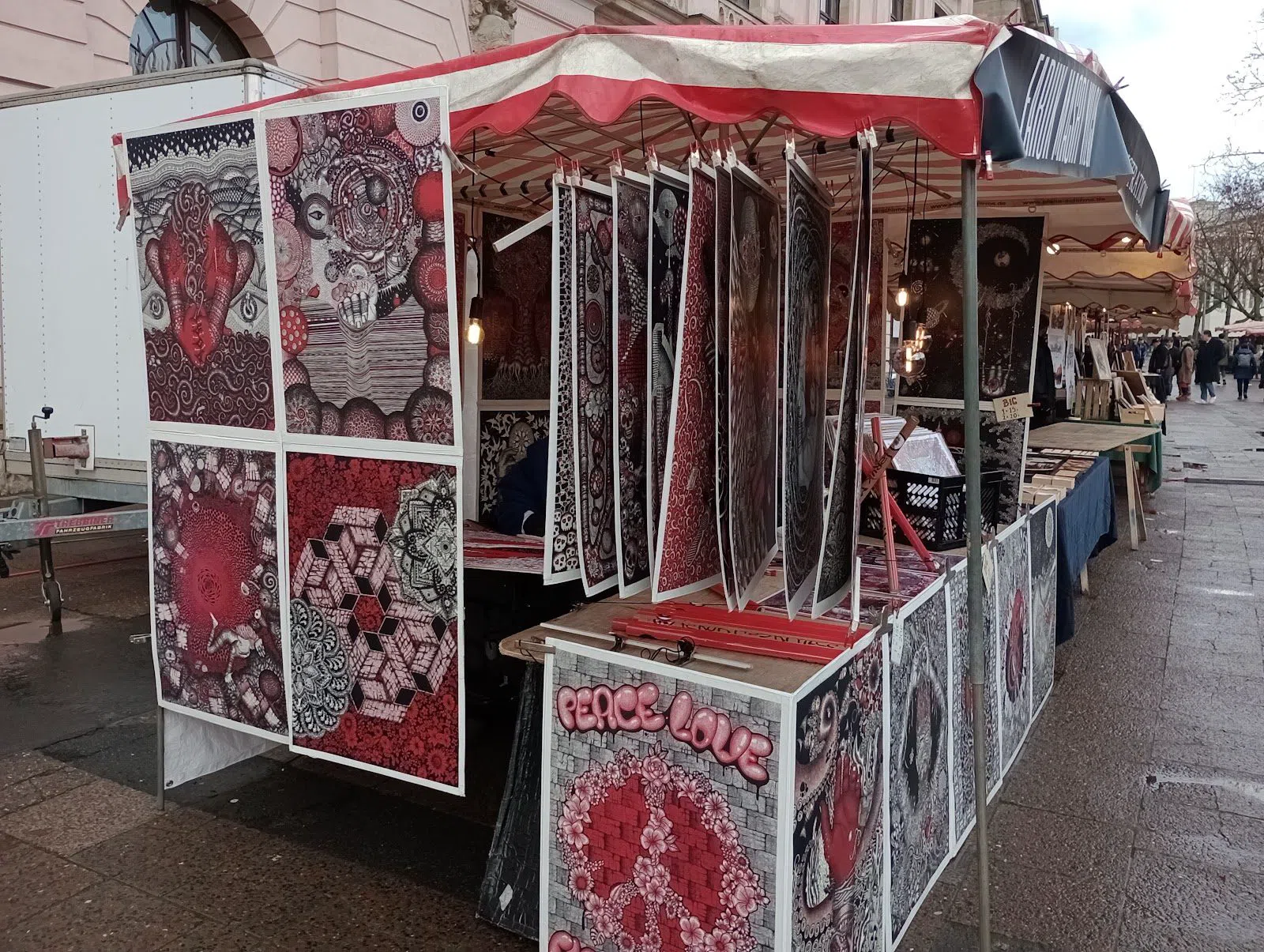
Antik- und Buchmarkt am Bodemuseum (Mitte) is the other collectors' market, and the only one that folds neatly into a museum day. Around 60 dealers have held this riverside pavement since 1992, selling books, records, old coins, vintage postcards and antique jewellery with the Bode Museum's dome directly across the canal. Saturdays, Sundays and public holidays, 10am to 5pm, free. Books start at EUR 2, collectors' items run EUR 50 to 300. The pavement is narrow. Walk it in a line rather than a huddle and let people past; the dealers here have watched a great many groups block their own table for half an hour.
When your one free day is a Saturday
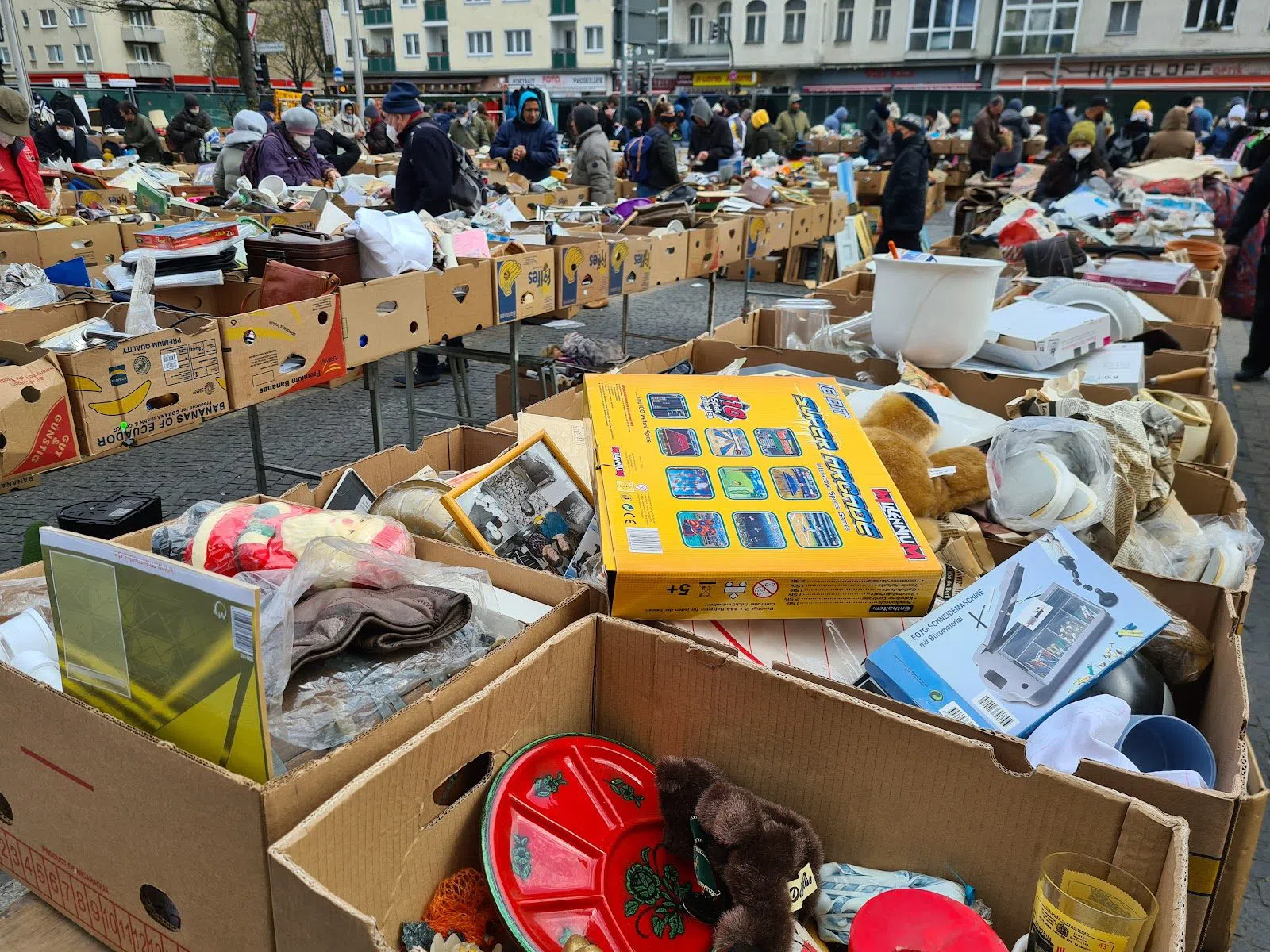
Flohmarkt am Rathaus Schöneberg (Schöneberg) is the answer to a Saturday. It runs both weekend days, 8am to 4pm, free, on a large flat civic square that gives you more room per person than any other Berlin market: genuinely comfortable with a group, and workable with a pushchair. It trades household goods and clothing rather than treasure, mostly EUR 1 to 30, and that is the appeal. This is the market where you find the EUR 4 enamel pot you go on to use for years. Two dates to write down for 2026: it does not run on 19 and 20 September, when the square is given over to the Berlin elections, and it is closed on 15 November for Memorial Day. On any other Saturday it pairs cleanly with Straße des 17. Juni and the Bode Museum market, both of which also trade Saturdays, and the three of them fill a day without a single Sunday-only stop.
A canal, every second Sunday
Nowkoelln Flowmarkt (Neukölln, on the Maybachufer canal path) is the prettiest market in the city and the easiest one to turn up for on the wrong weekend. It runs every second Sunday, 10am to 5pm, roughly late March to early November. In 2026 the dates include 20 September, 4 and 18 October and 1 November. Check before you build a day around it, because on an off-Sunday the towpath is simply a towpath with a good view. Private sellers only, no new manufactured goods, so what is on the blanket is somebody's wardrobe or somebody's studio: clothing and art mostly EUR 3 to 30, with gentle haggling expected. It is free and open-air, but genuinely single-file in stretches, so walk it in twos. Six people moving as a block will hold up the whole path and know it.
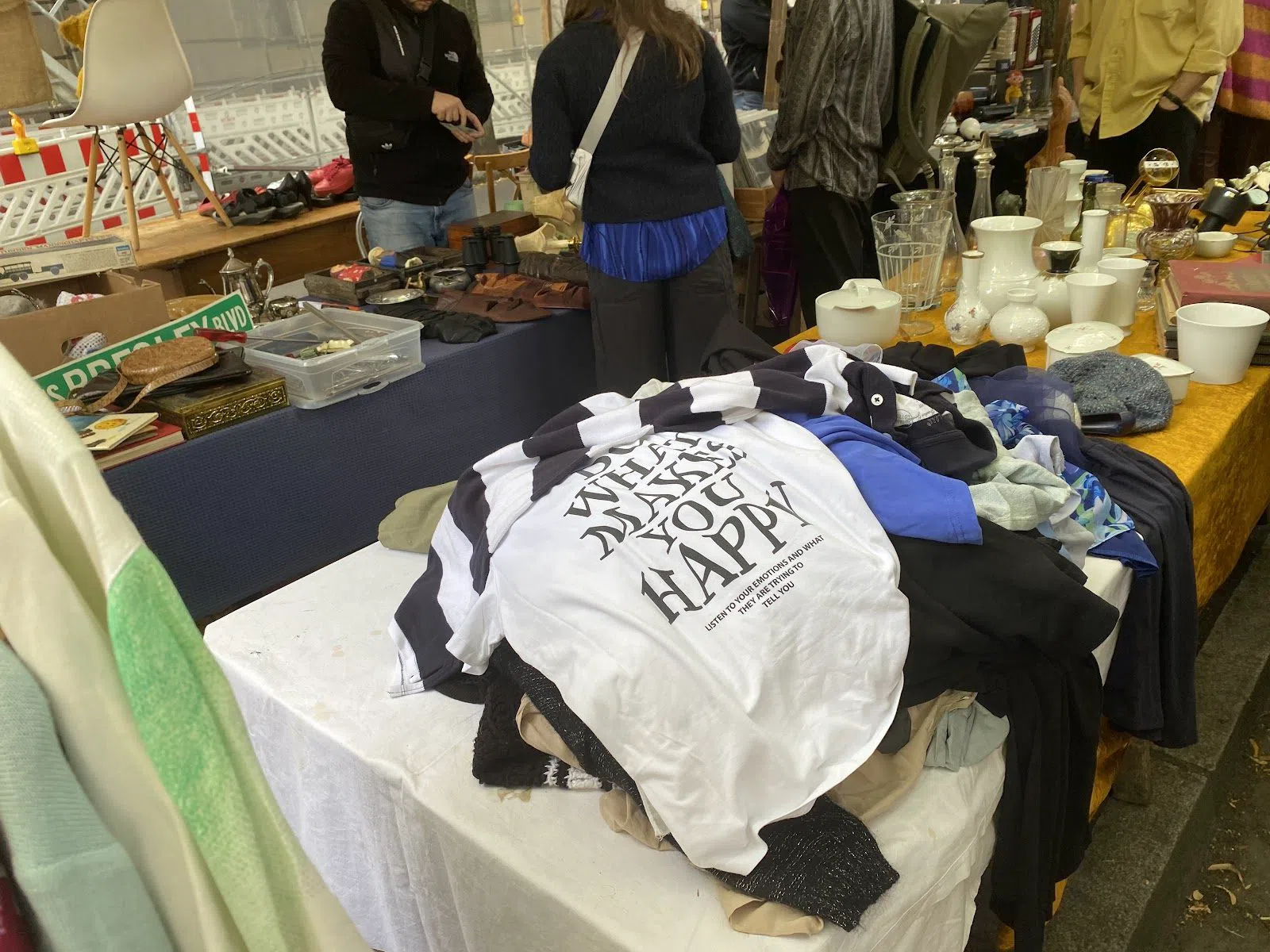
When you have walked it end to end, Sing Blackbird (Kreuzkölln, one street off the canal) solves the half-the-group-wants-to-sit problem better than anywhere else on this list: 1990s and 2000s originals on the rails at EUR 20 to 80, and a proper café in the same room, coffee and cake EUR 4 to 8. Open daily, 2pm to 8pm. The seating is limited, so four or more should expect to stand or wait for a table, which is no hardship when the other half of you is still digging through the rails.
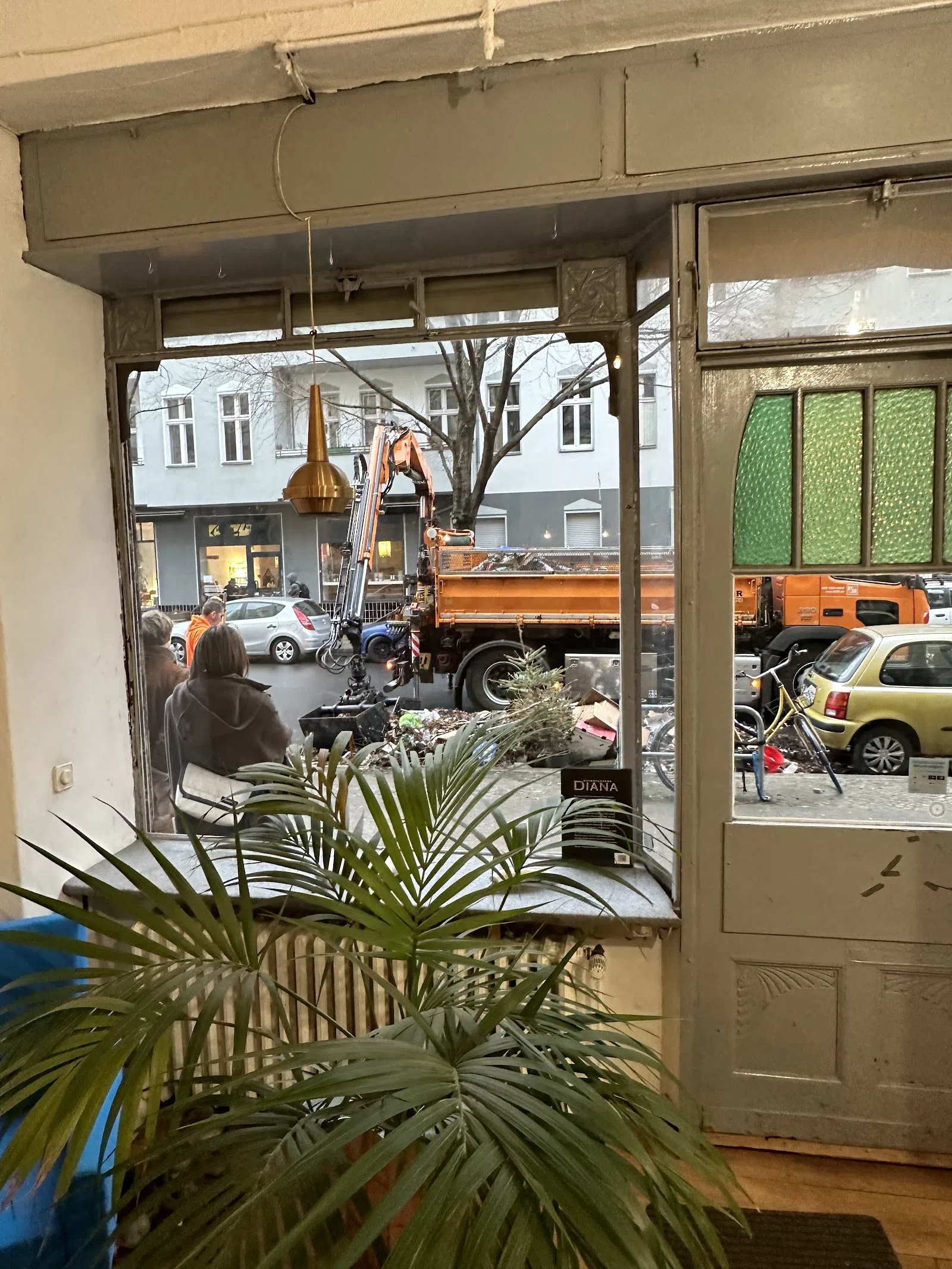
Friedrichshain shops all day Sunday
Flohmarkt am Boxhagener Platz (Friedrichshain) is the neighbourhood market rather than the tourist one. Sundays, 10am to 6pm, free. Prices sit below Mauerpark, with most finds between EUR 2 and 25. Haggling still works, and the book and record stalls are the strongest in Berlin, which is the reason to come even if you buy nothing else. There is no policy and no queue, and the cafés around Simon-Dach-Strasse seat groups easily, so this is the market where a party of eight can actually eat together afterwards without a plan.
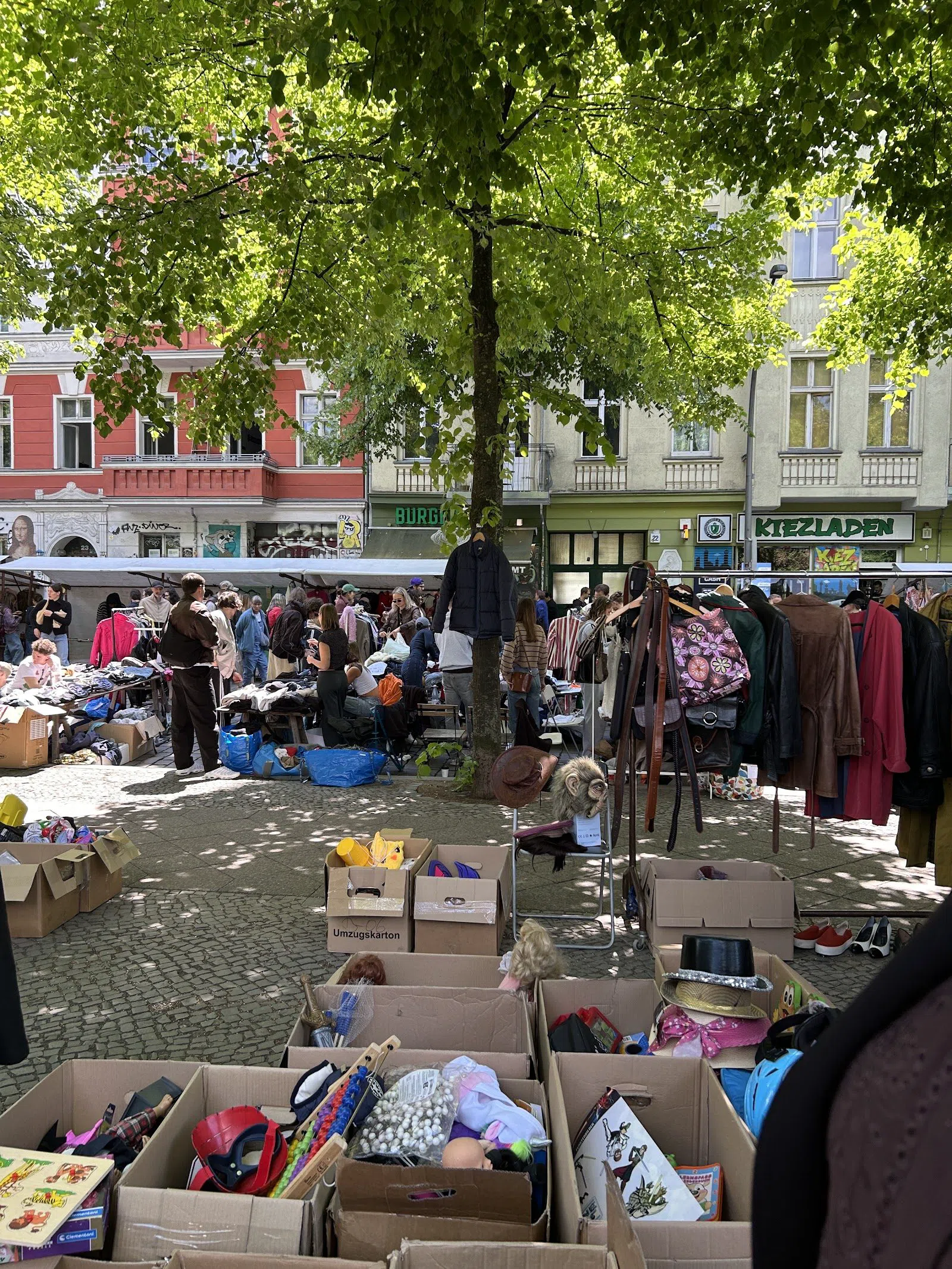
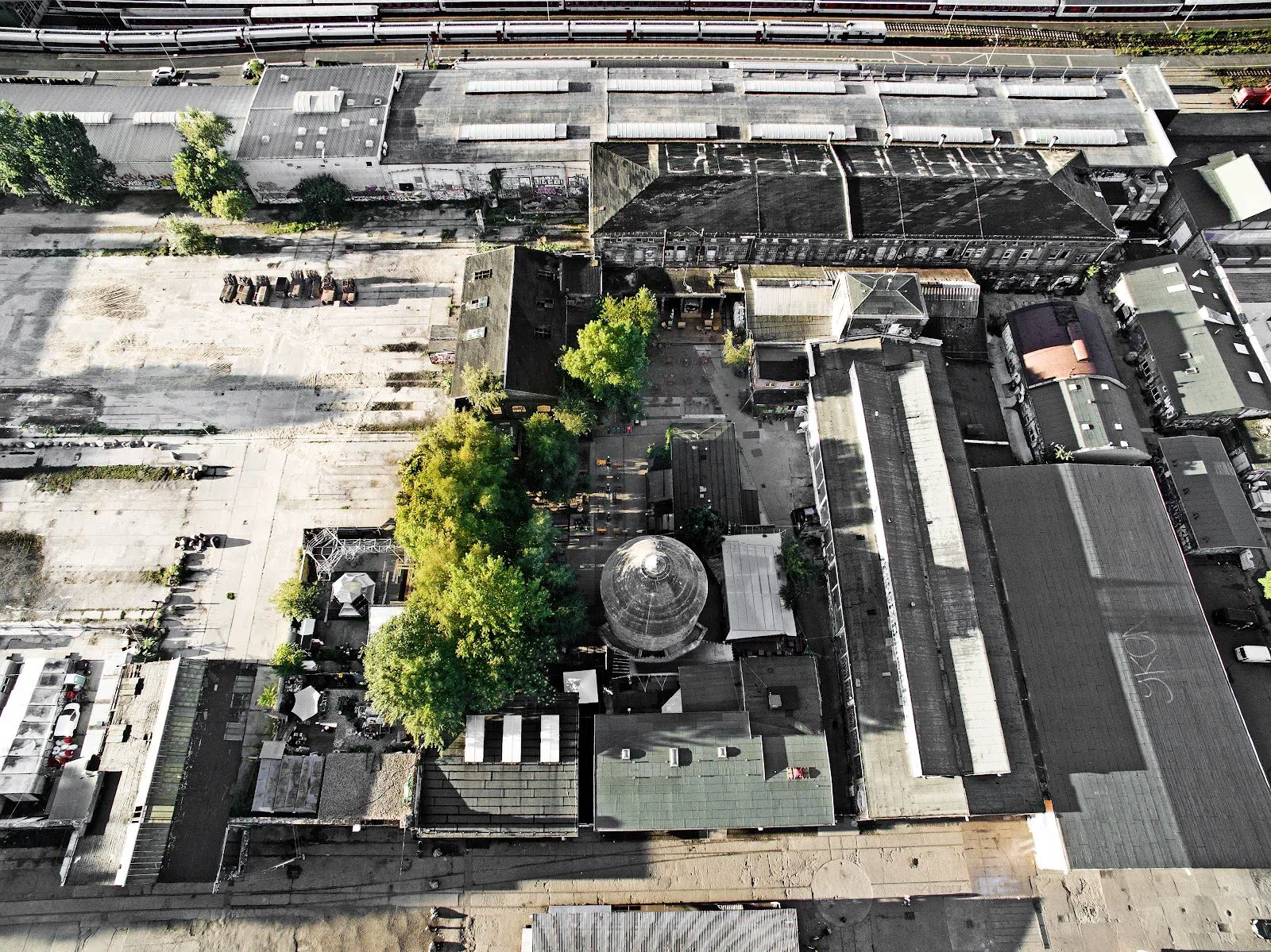
RAW Flohmarkt (Friedrichshain) is the most group-tolerant Sunday market in the city: an industrial yard with wide open ground, street food at EUR 5 to 12 and clothing at EUR 5 to 40, running from 8am. It is the best single stop for club-ready vintage and something to eat in one go. The RAW site is caught in an unresolved eviction and redevelopment fight with its owner, so confirm the market is on before crossing the city for it. Nobody enjoys a forty-minute U-Bahn ride to a locked gate.
The six days that are not Sunday
Most of Berlin's markets are Sunday creatures, and the shops are the opposite: nearly all of them close on Sundays and open the rest of the week. Plan around that and you can shop second-hand for a full seven days.
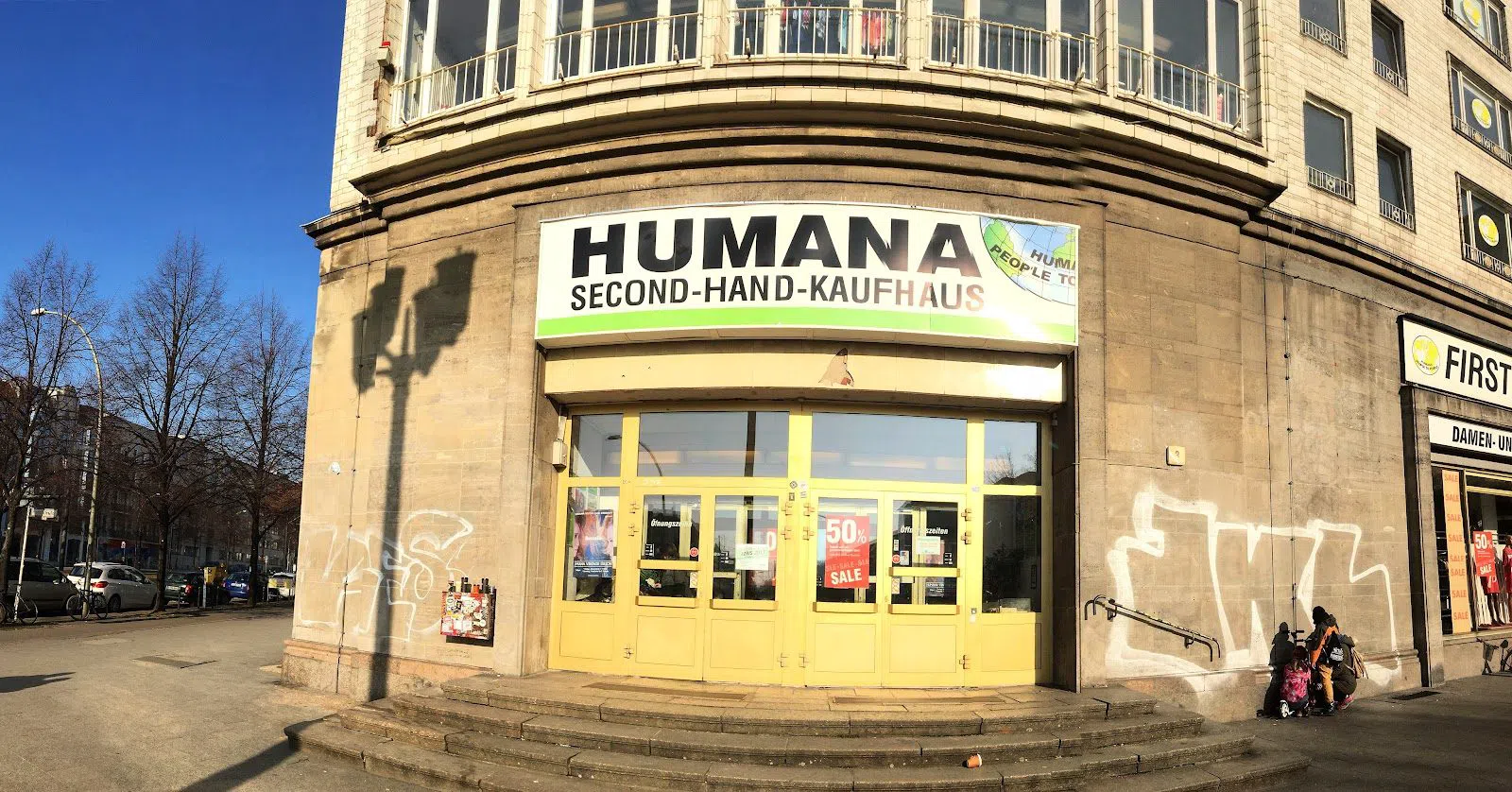
HUMANA Secondhand & Vintage, Frankfurter Tor (Friedrichshain) is Europe's largest second-hand department store: 2,000 sq m over five floors, roughly 30,000 items, no door policy and enough room to absorb any size of group without a queue. Everyday pieces are EUR 3 to 15. My advice is to skip the first four floors entirely and go straight to the top-floor vintage department, EUR 15 to 60, where the 1950s to 1990s originals are. Monday to Saturday, 10am to 8pm, so it rescues a wet Saturday but never a wet Sunday. This flagship is the one worth the trip; the other 18 Berlin branches are not the same shop.
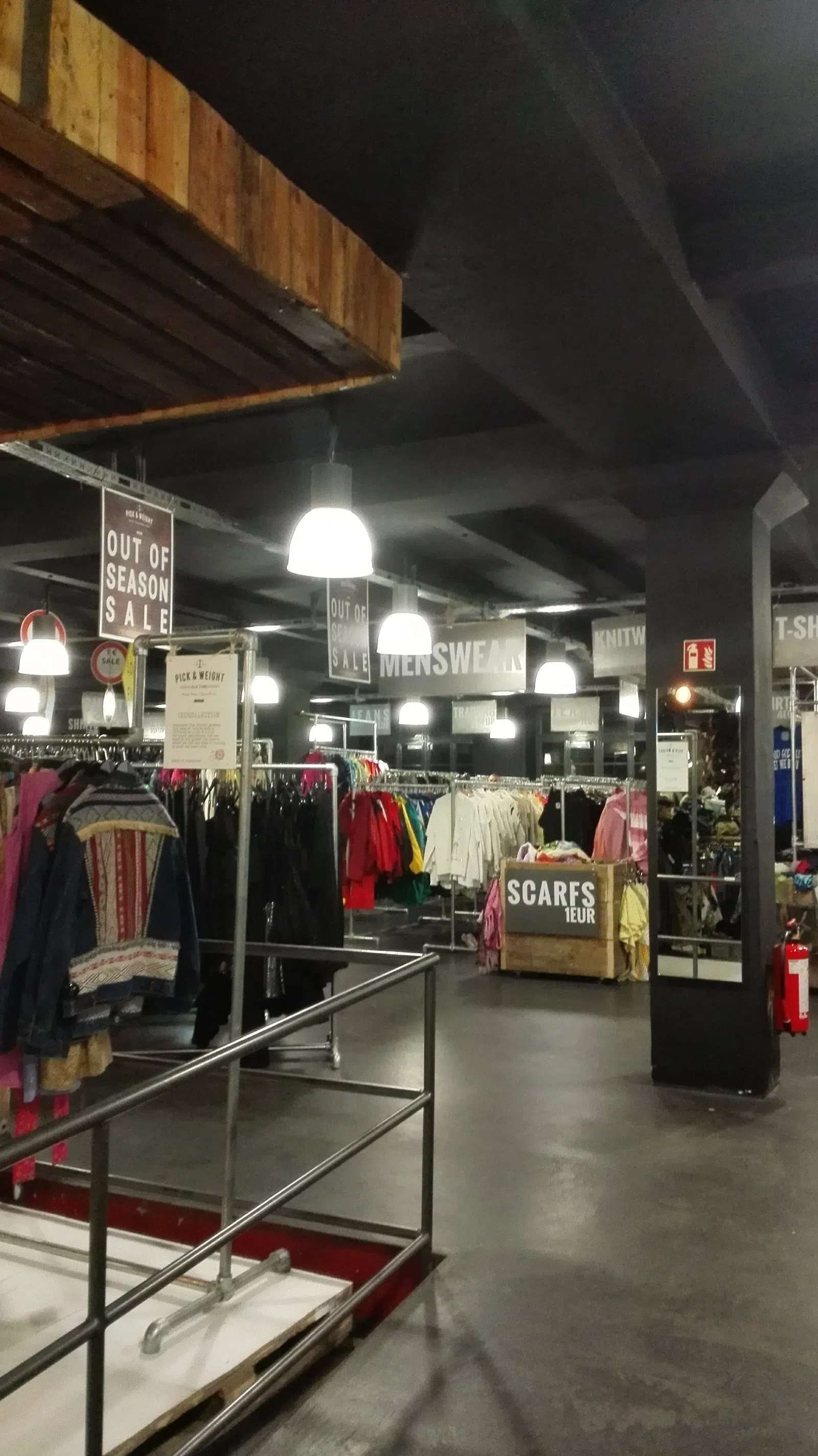
PICKNWEIGHT Vintage Kilo Store (Kreuzberg and Mitte) sells by weight rather than by tag, roughly EUR 40 to 90 per kilo depending on the colour of the rail, which turns shopping into a game and rewards patience with denim, leather and sportswear. Two branches, Bergmannstr. 102 and Münzstr. 19, both Monday to Saturday 11am to 8pm and closed Sundays; the Kreuzberg backyard store is the roomier of the two if there are several of you. Tuesday between 12 and 3pm takes 20% off. The old Alte Schönhauser store has shut, so ignore any listing that still sends you there.
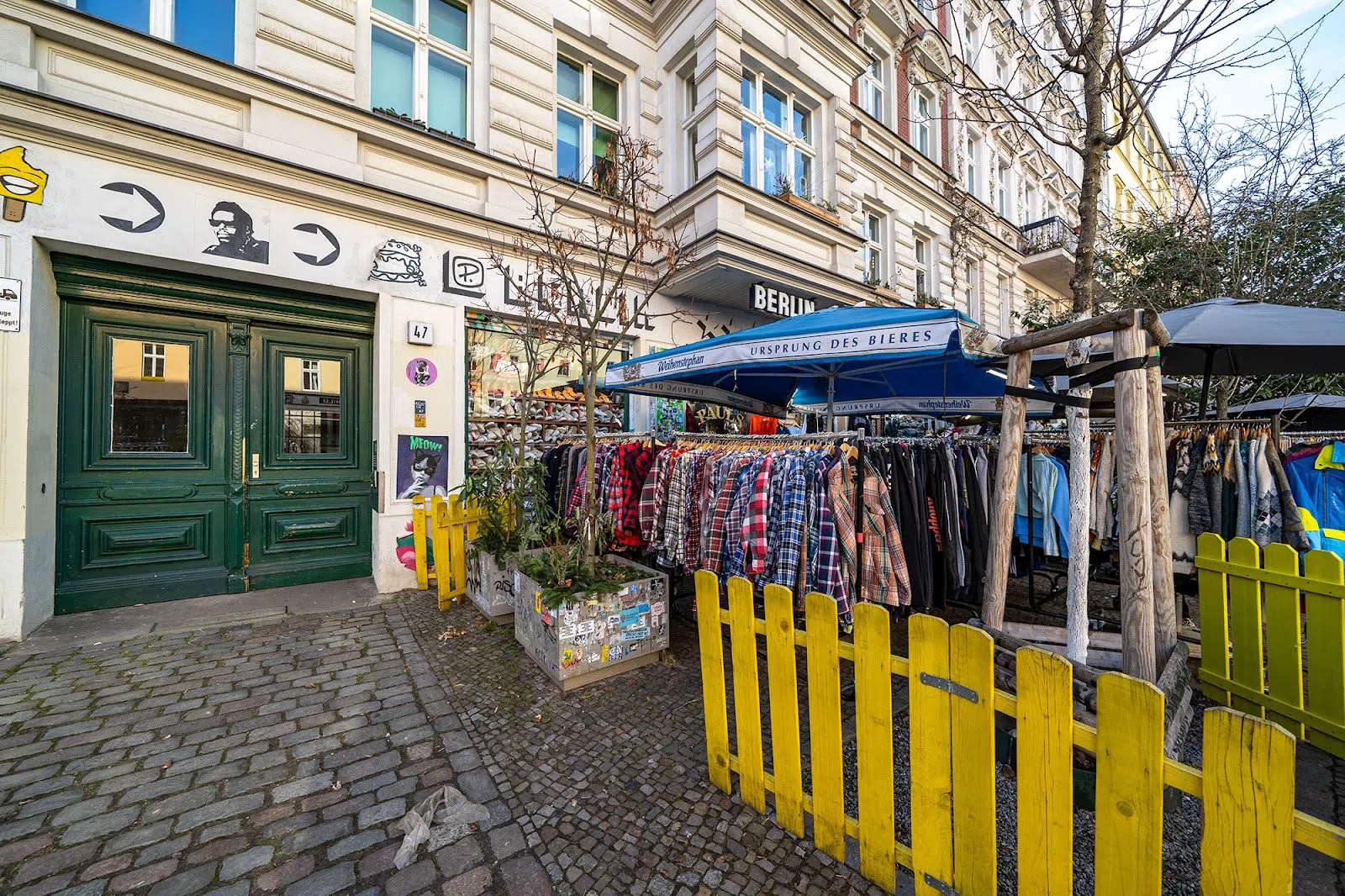
Paul's Boutique (Prenzlauer Berg) has been open since 2000 and holds over a thousand pairs of sneakers, EUR 60 to 250, alongside 1990s sportswear at EUR 20 to 120. It is the original of a small local group: Goo next door, Paul's Chapter on Torstrasse. The shop is small, so two or three people browse comfortably and eight will fill it and make the rails unreachable. Monday to Saturday, noon to 8pm, closed Sundays.
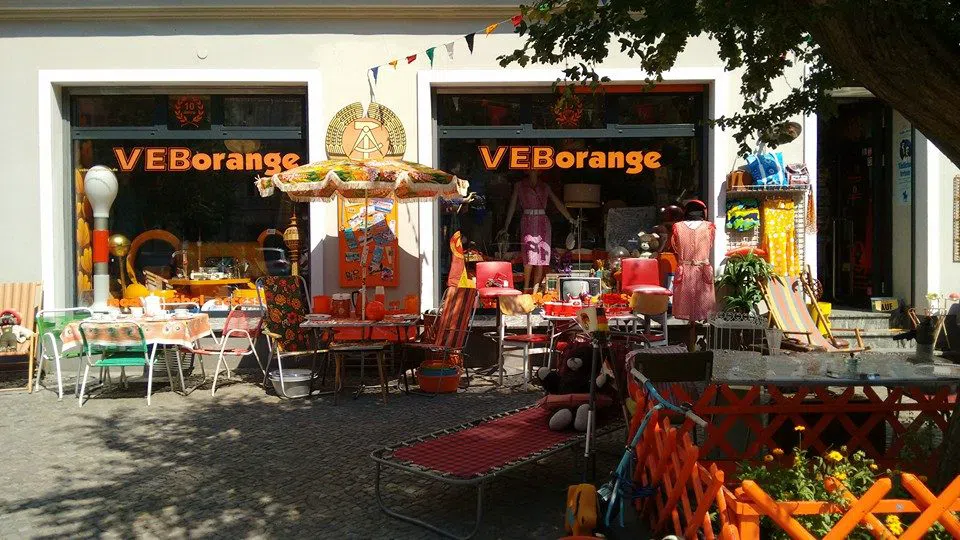
On the same short street, VEB Orange (Prenzlauer Berg) is the most concentrated look at East German design you will get outside a museum, with the difference that you can buy it: original 1960s and 70s homeware, lamps and furniture, small objects EUR 10 to 50, furniture EUR 100 to 600. It is tiny and densely stacked, two or three people at most, unless you want to pay for something with your elbow. Monday to Saturday 11am to 7pm, closed Sundays, with a second branch on Schliemannstrasse. Pair it with Paul's rather than with a market day.
Two shops that ask for a slower browse
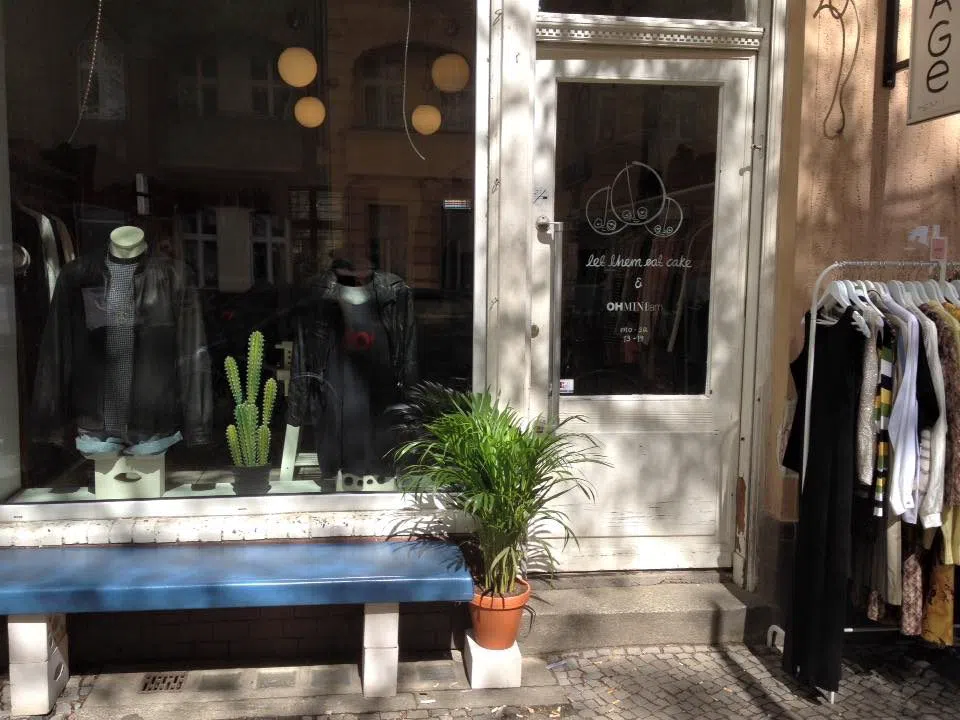
Let Them Eat Cake (Weserstrasse, Neukölln) is curated rather than sorted by the kilo, and the difference is obvious within a minute of walking in: strong 1970s pieces and Berlin 1990s club wear, EUR 25 to 120, in a room that doubles as an event space. Monday to Friday 1 to 7pm, Saturdays from 12.30pm, closed Sundays. Browse in twos; Weserstrasse itself takes the overflow, with a dozen more vintage shops inside a five-minute walk, so a group can fan out along one street and meet back at the door.
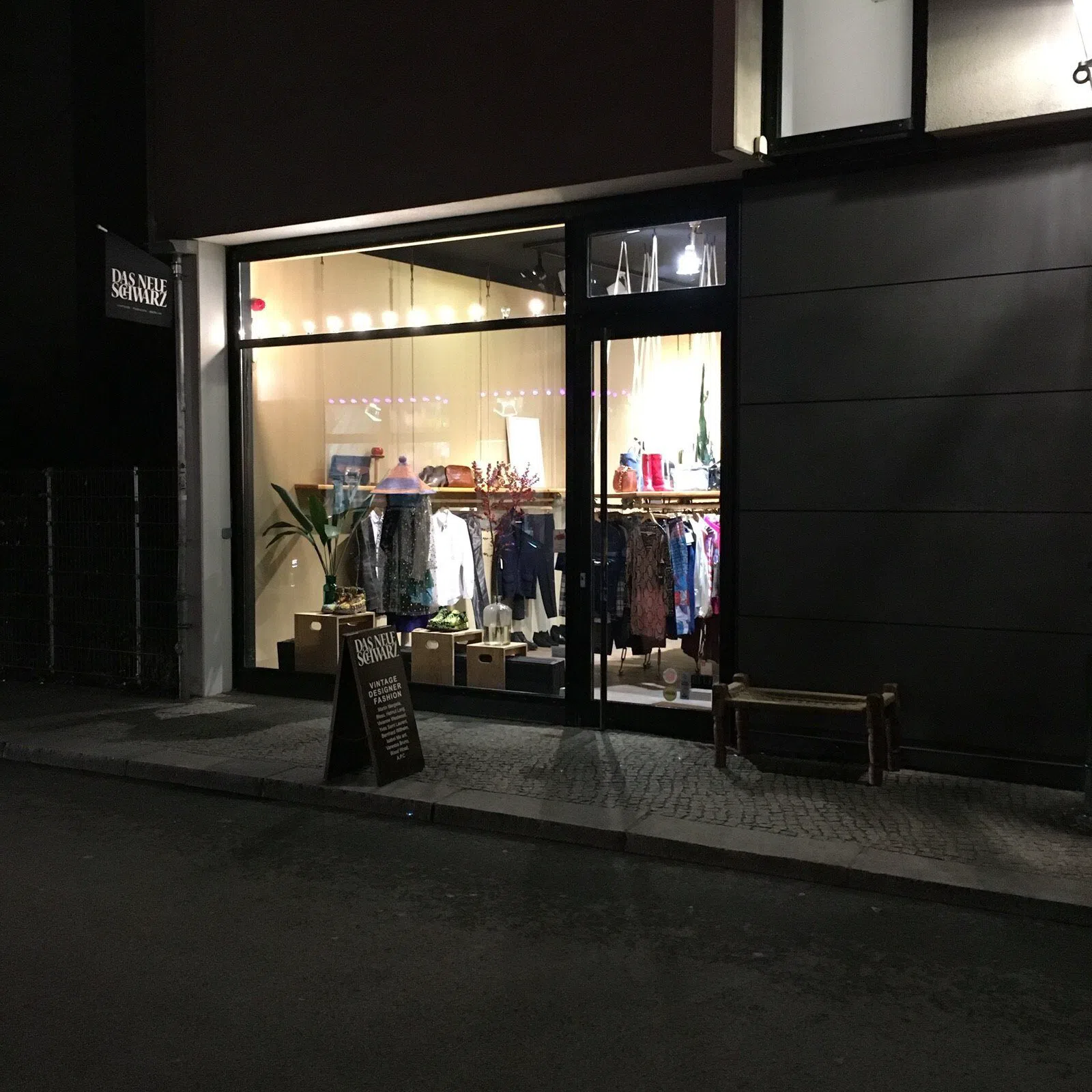
Das Neue Schwarz (Mitte, Mulackstrasse 38) sits at the top of Berlin's second-hand market: archive Helmut Lang, Margiela, Comme des Garçons and Issey Miyake, priced at EUR 150 to 1,500 and up. Monday to Saturday, noon to 8pm. Go in ones and twos and treat it as a gallery. It is deliberately quiet and spare, the calibre is real, and it is not a bargain hunt. Nobody here is going to enjoy a party of six talking over the rails.
Runways instead of streets
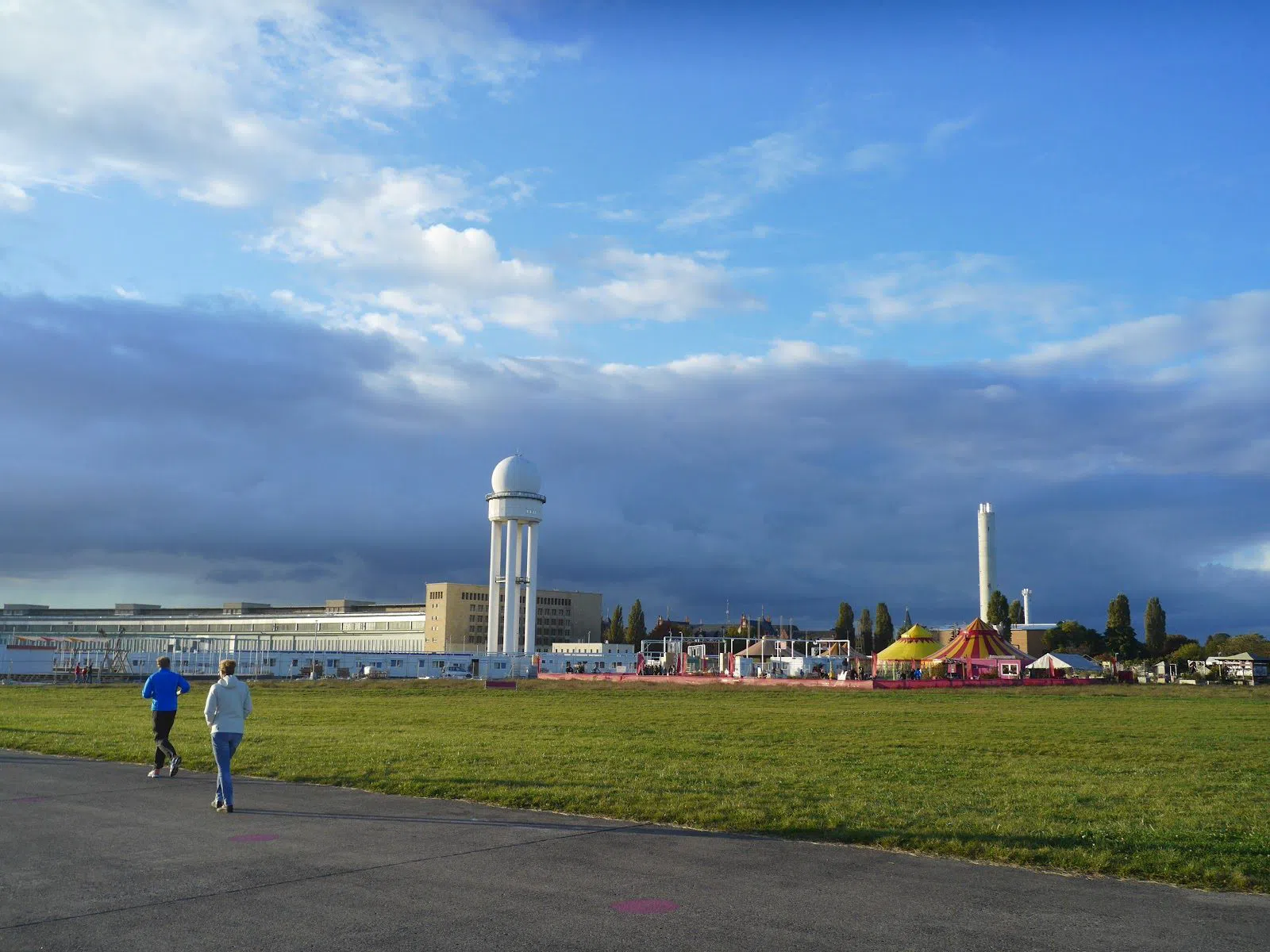
When you have had enough of aisles, Tempelhofer Feld (Tempelhof, with gates straight into Neukölln) is the antidote and the best low-effort wander in Berlin: the former airport, unbuilt since 2010, larger than 450 football pitches, free and unticketed, where you walk the actual runways with nothing overhead. Any group size works. Barbecues are only allowed in the three marked zones. Hours are seasonal, 6.30am to 9.30pm in September and 7am to 7pm in October, and the eastern Oderstrasse gates drop you directly into Neukölln's shops, which makes the obvious afternoon an hour on the runway followed by Weserstrasse. For everything else the city does between markets, the Berlin guide is the place to start.
Getting around, paying and timing it
All of these sit on the U-Bahn and S-Bahn network and a day ticket covers a full market circuit comfortably; the walk between Mauerpark and Arkonaplatz is faster than any train. Bring cash in small notes (EUR 5, 10 and 20) because most stalls take nothing else, and a dealer holding a EUR 8 lamp will not have change for a fifty at nine in the morning. Card acceptance is normal in the shops and unreliable at the markets.
Timing decides everything. Markets before 11am, shops after 1pm, and never plan a Sunday around a shop or a Monday around a market. Haggling is expected at Nowkoelln, Boxhagener Platz and Mauerpark, tolerated at Straße des 17. Juni, and pointless at Das Neue Schwarz. Bring a tote and a tape measure if furniture is on your list.
As a budget: EUR 30 to 60 fills a bag at the neighbourhood markets, EUR 40 to 90 buys a kilo at PICKNWEIGHT, EUR 15 to 60 gets a genuine vintage piece from HUMANA's top floor, and anything at Das Neue Schwarz starts at EUR 150. Weather is the one variable you cannot control. Every market on this list is open-air, and a wet Sunday means the shops are shut too, so keep HUMANA in reserve for the Saturday. Staying central on a Sunday saves you a cold morning on a platform; start a Berlin hotel search around Prenzlauer Berg, Friedrichshain or Neukölln and you can walk to at least two markets before breakfast.
Before you go
Which Berlin flea market should I go to if I only have one Sunday?
Start at Flohmarkt am Mauerpark between 9 and 11am, then walk ten minutes to Flohmarkt am Arkonaplatz at about eleven. Mauerpark has the scale and up to 3,000 vendors; Arkonaplatz has the better objects (mid-century lamps, clocks and GDR ceramics at EUR 10 to 80) and takes an hour. Both are free.
Are any Berlin flea markets open on a Saturday?
Yes. Flohmarkt am Rathaus Schöneberg runs Saturdays and Sundays, 8am to 4pm; Trödelmarkt Straße des 17. Juni trades both days, 10am to 5pm in summer; the Antik- und Buchmarkt am Bodemuseum opens Saturdays, Sundays and public holidays, 10am to 5pm. Schöneberg is closed 19 to 20 September 2026 for the Berlin elections and 15 November 2026 for Memorial Day.
Do I need cash at Berlin's flea markets?
Yes, and in small notes. Most market stalls take cash only, and a seller with a EUR 8 lamp will not have change for a fifty first thing in the morning. Cards work in the shops (HUMANA, PICKNWEIGHT, Paul's Boutique, Das Neue Schwarz) but not reliably at a blanket on a towpath.
What can I do if it rains on my market day?
Go indoors to HUMANA Secondhand & Vintage at Frankfurter Tor: 2,000 sq m over five floors, roughly 30,000 items, with the vintage department on the top floor at EUR 15 to 60. The catch is the hours, Monday to Saturday, 10am to 8pm, so it rescues a wet Saturday rather than a wet Sunday. On a wet Sunday, Sing Blackbird opens daily from 2pm and has a café in the same room as the rails.
Is the Nowkoelln Flowmarkt on every Sunday?
No. It runs every second Sunday only, 10am to 5pm, roughly late March to early November. The 2026 dates include 20 September, 4 and 18 October and 1 November. Check the date before you go, because on an off-Sunday the canal path is just a canal path.