The Berlin issue
Berlin's Other Wall: The City's Street Art Is a Living Museum
Berlin didn't decide to become the world's largest open-air canvas — it stopped trying to stop it, and the result is a city that keeps painting over its own history.
By Robin van der MeerThe slow way through a fast city
There is a moment, walking east along the Spree with the television tower behind you, when the grey concrete on your right stops being a barrier and starts being a wall of images — Trabants bursting through brickwork, a fraternal kiss between two heads of state, slogans in a dozen languages. This is the paradox that runs through the whole city: the surface that once meant death now means expression, and Berlin has spent thirty-six years deciding it would rather be painted on than scrubbed clean. Understanding that decision — who paints, who paints over whom, and why the authorities largely gave up policing any of it — is the real reason to come here, far more than any single mural.
What follows is not a checklist of pretty walls. It is a route through a living argument the city is still having with itself about its own surfaces. Some stops suit a slow solo wander; others are group-friendly or need booking. I've been honest about which is which.
The founding monument: where the wall became a gallery
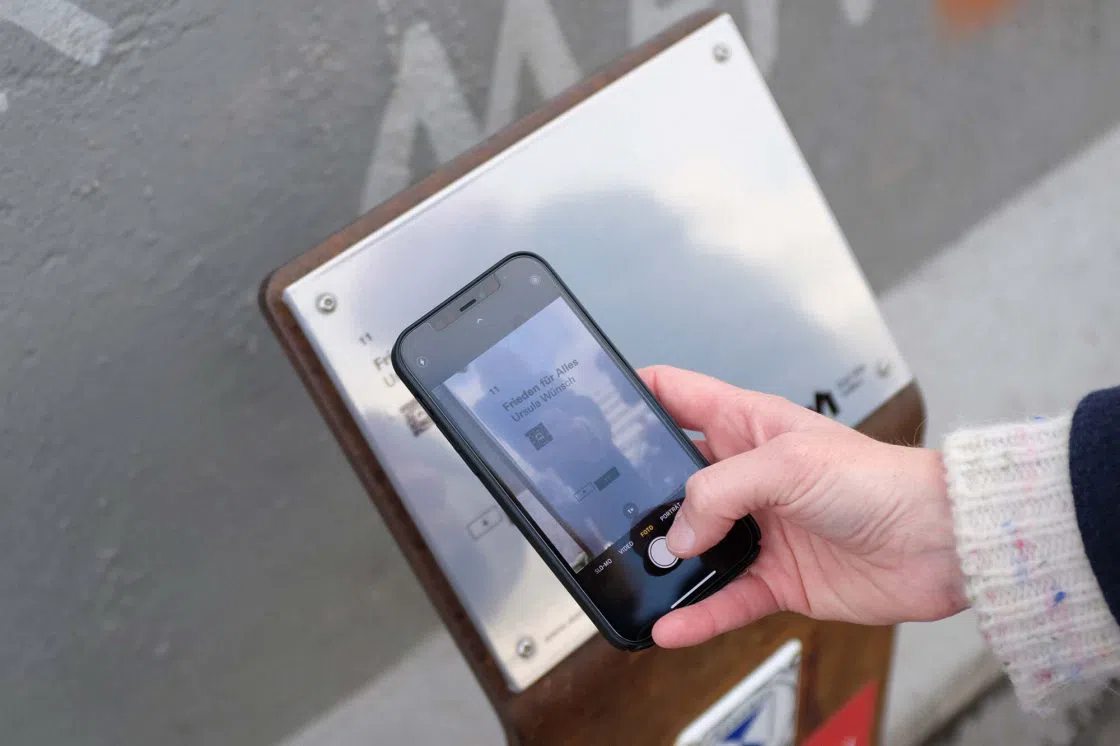
Start where the story turns. The East Side Gallery (Friedrichshain, along Mühlenstraße) is the longest surviving stretch of the Berlin Wall and, since 1990, the longest open-air gallery on earth — 118 artists from 21 countries invited to paint the eastern face of a barrier that, until months earlier, they could have been shot for approaching. That inversion is the whole point. This was the death strip; now it is a monument you can walk for free, at any hour, on any day. It is also not a fixed thing. The 2025–26 restoration programme means you should expect scaffolding section by section, some works veiled behind hoarding while conservators stabilise fading acrylic that was never meant to last a decade, let alone four.
Go early, before the coach parties reach the famous panels, and read it as a timeline rather than a photo backdrop: the images argue with the politics of 1990, and the restoration itself is an argument about whether ephemeral art should be frozen at all. Educational group tours are bookable through the Berlin Wall Foundation, which is the sensible option if you want the history rather than just the selfies. The private Wall Museum alongside is a separate, paid attraction; the gallery itself costs nothing.
Plan your Berlin trip
Live prices from our booking partners.
Free cancellation on many rooms. We may earn a commission when you book.
Why the council gave up
To grasp Berlin's relationship with its surfaces you have to accept a decision made quietly decades ago: the city concluded it could not win a war against paint, and chose to designate space instead of endlessly policing it. The clearest expression of that surrender is a sanctioned wall in a public park.
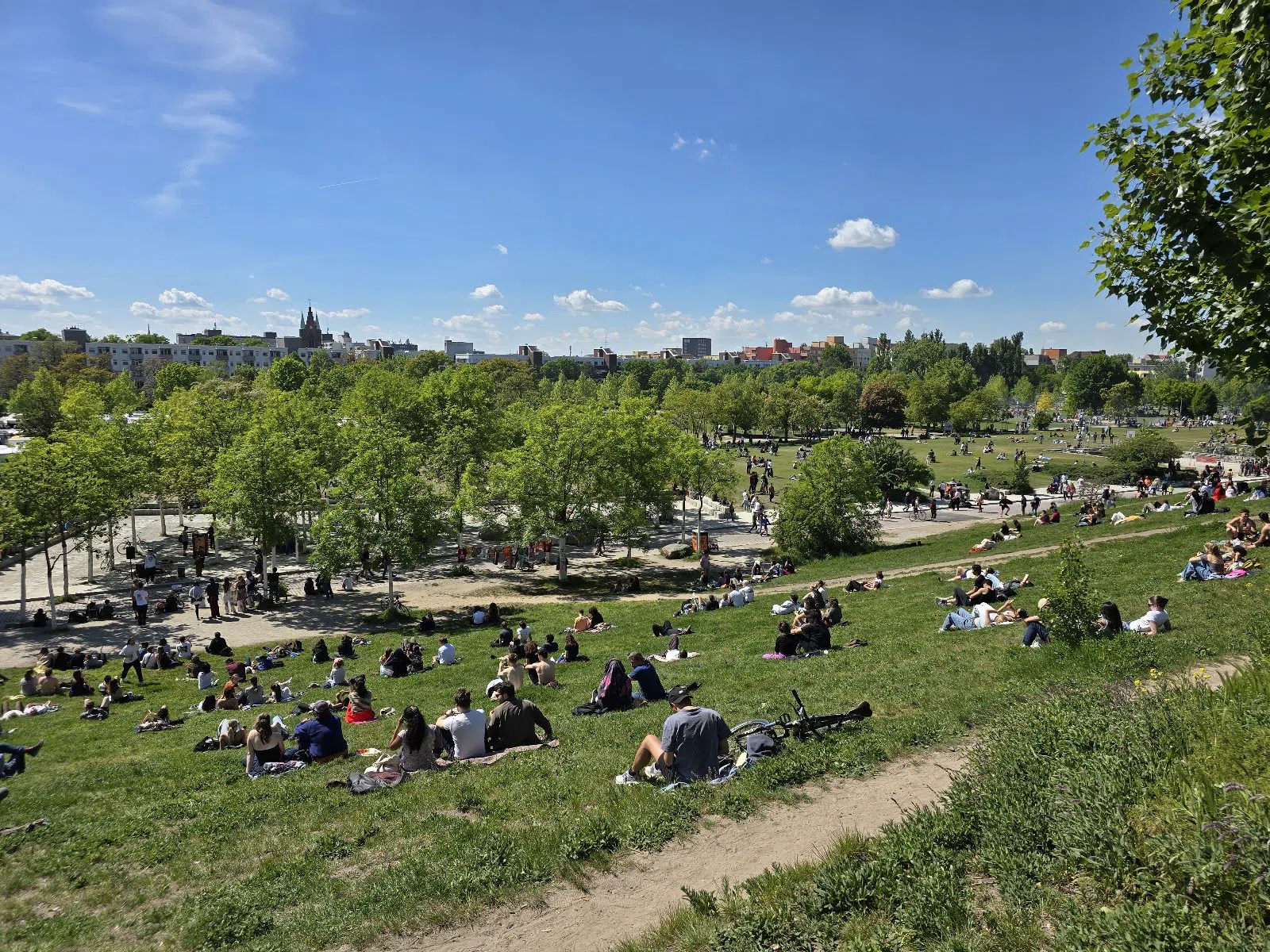
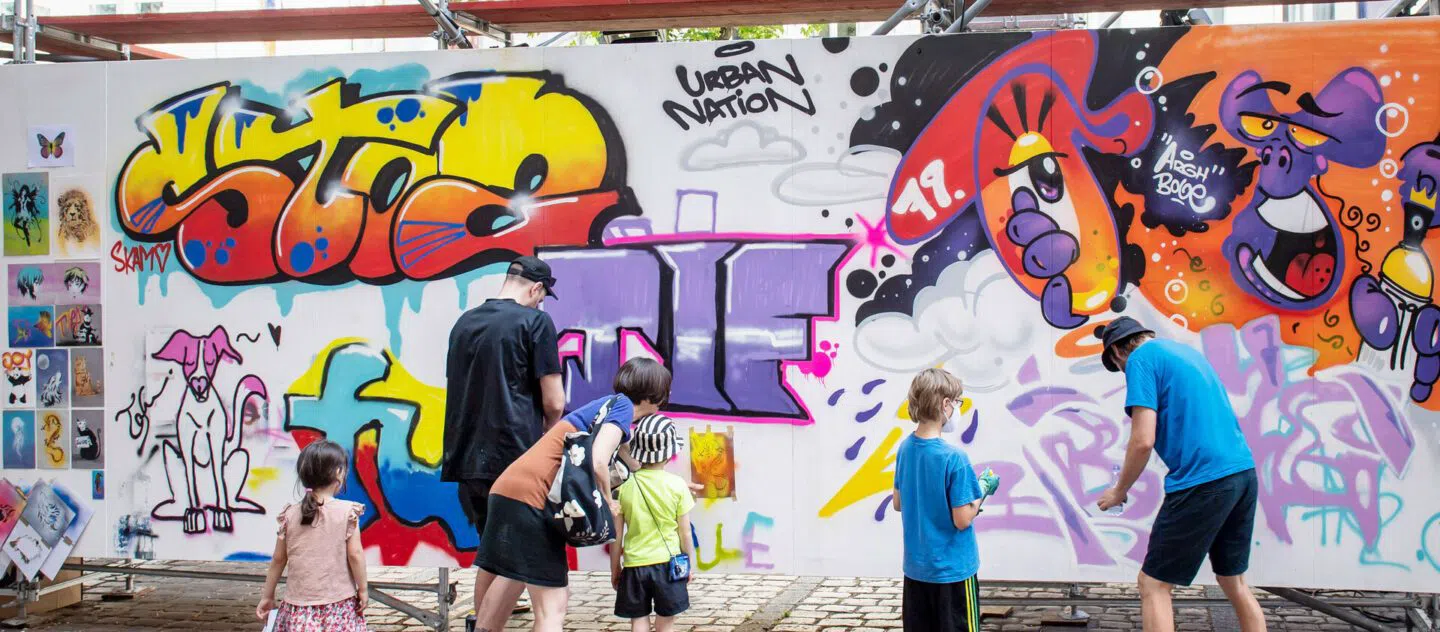
The Mauerpark Graffiti Wall (on the Prenzlauer Berg edge of Mauerpark) is one of the few officially legal walls in Berlin — anyone may paint it, no permit, no crew affiliation required, and beginner spray workshops run against it on weekends. Come back a week later and what you admired will be gone, buried under someone else's piece. That churn is not a failure of the wall; it is the wall working exactly as intended. Berlin decided that a surface everyone can use is easier to live with than a surface everyone fights over. It is free to paint and free to watch, and it suits absolutely everyone — families, first-timers, and writers testing a throw-up they'd never risk illegally.
A few kilometres west in Mitte, Haus Schwarzenberg (just off Rosenthaler Straße) shows the other half of the bargain. This scruffy, non-profit-run courtyard is one of the last raw artist spaces left in a district that gentrified around it, and its walls get repainted almost weekly. Nothing here is precious; everything is provisional. If the Mauerpark wall is the city's official permission slip, Schwarzenberg is where you actually watch the unwritten rule play out — the etiquette of who is allowed to paint over whom. A weak tag can be buried by anyone. A respected piece is usually left, or at least given a decent run, and covering it too soon marks you as either an amateur or someone starting a fight. That hierarchy is enforced by nobody official and everybody who matters. The courtyard is free and open around the clock; the cinema, bars and the Otto Weidt museum inside charge their own way.
The named artists of Kreuzberg
Most Berlin street art is anonymous by design — that is part of its politics. But a handful of walls carry names, and they cluster in Kreuzberg, which makes for a walkable, couple-friendly afternoon on foot.
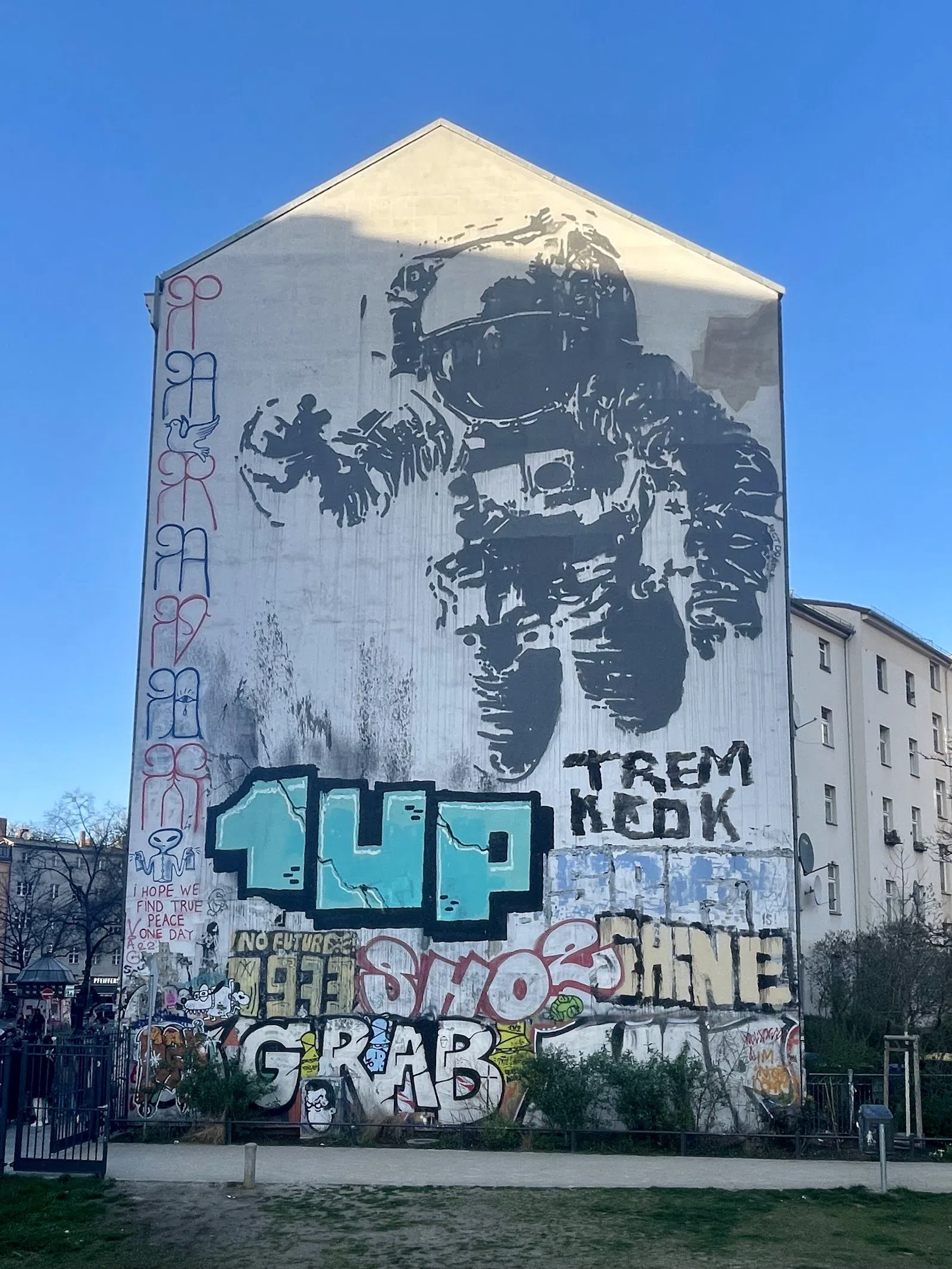
The most photographed is the Astronaut / Cosmonaut (Kreuzberg, on Mariannenstraße), painted by Victor Ash in 2007 for the Backjumps festival. A lone figure in a spacesuit drifts across a fire wall, a deliberate Cold-War nod to the space race in a city that spent decades cut in two. It has become one of the signature named works of Berlin — free, always visible, a fixed point on any Kreuzberg route.
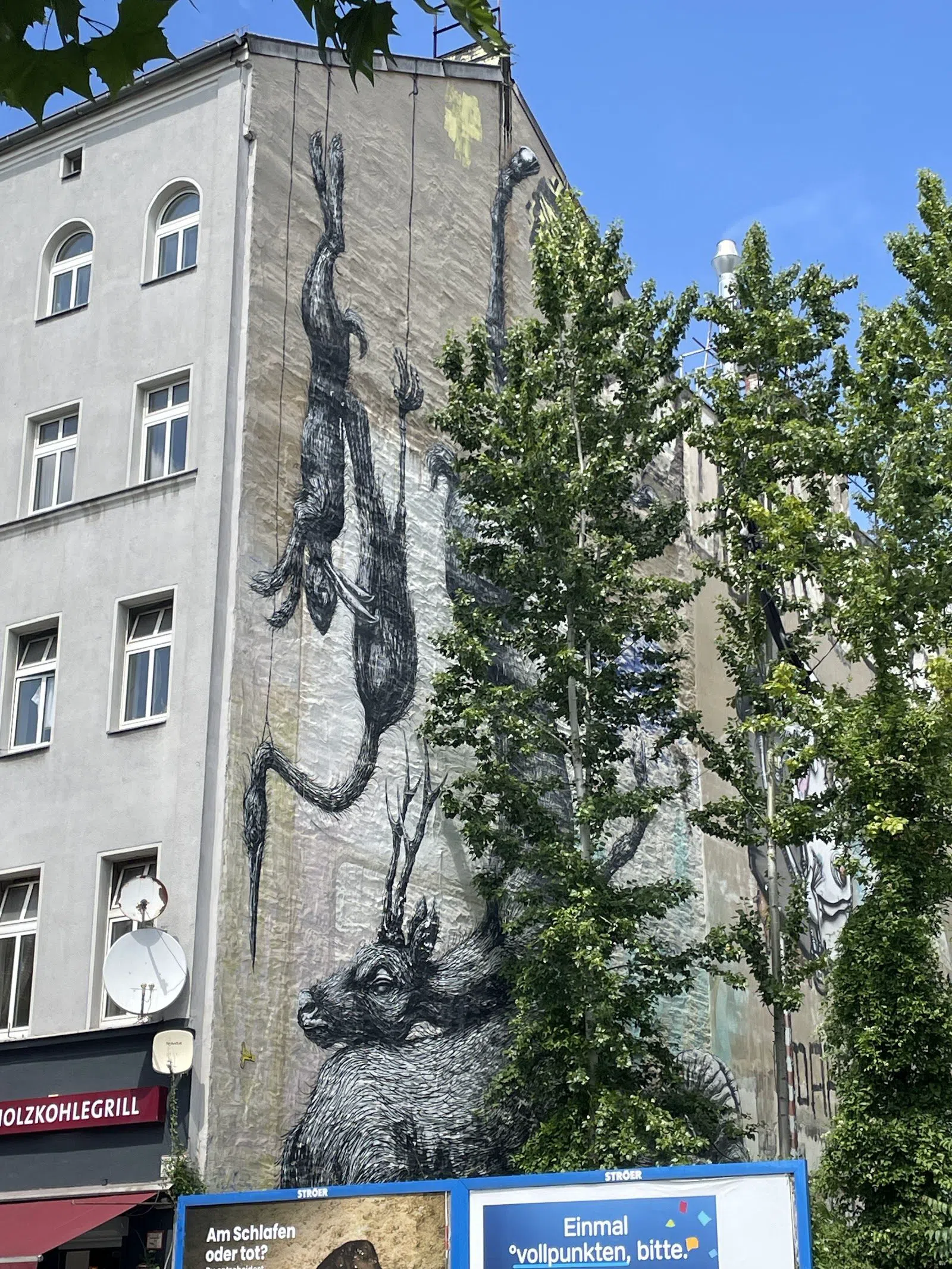
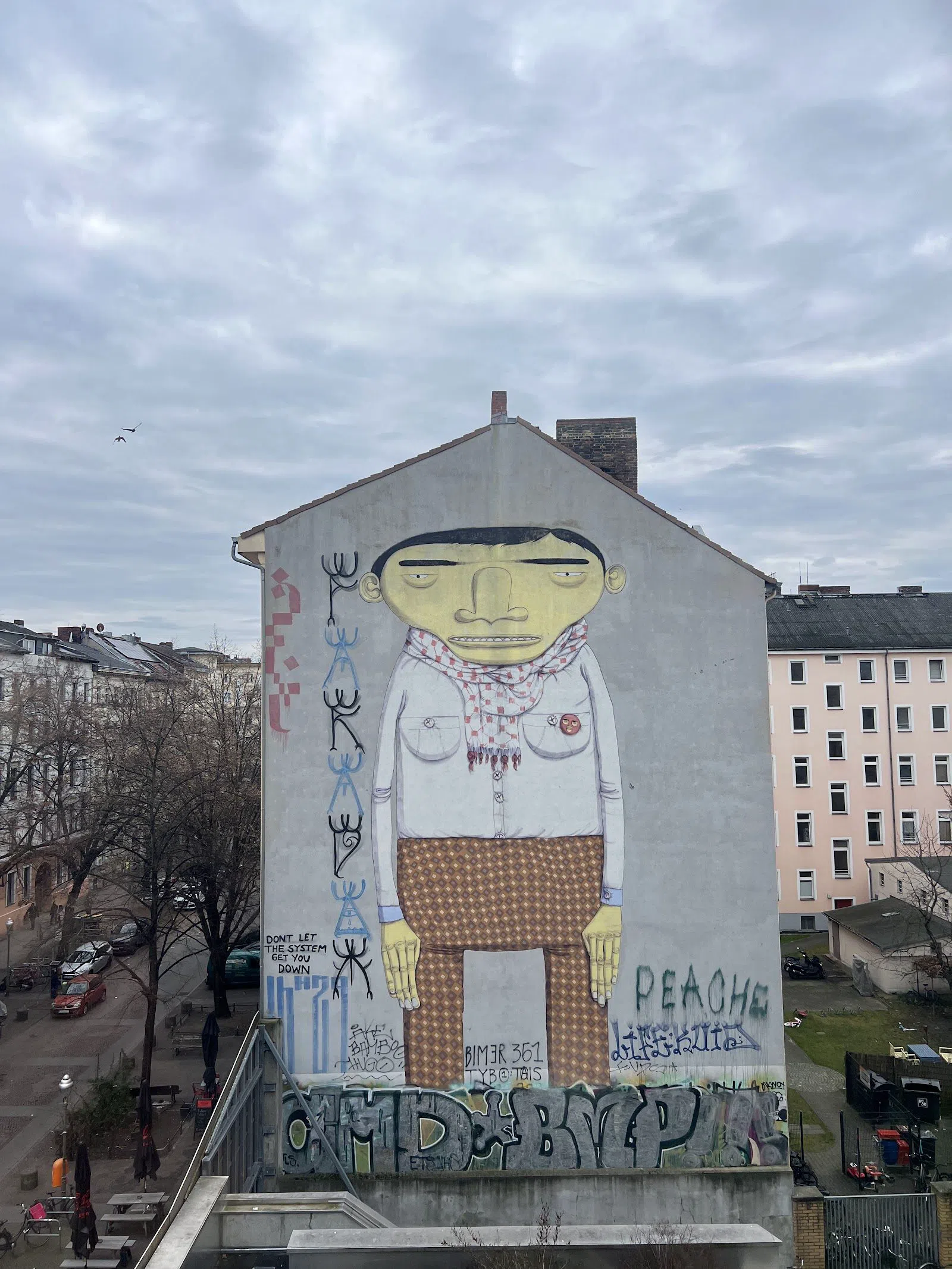
Nearby, look up for The Yellow Man (Kreuzberg), painted in 2005 by the Brazilian twins Os Gêmeos, also for Backjumps. It is among the oldest surviving large murals in the city, and its slow fade is not a flaw to fix but the story itself: Berlin lets its art weather rather than freeze it, and this yellow figure has been quietly ageing in public for over twenty years. Complete the trio with Nature Morte (Kreuzberg), a monochrome 'still life' by the Belgian animal-muralist ROA from 2011 — the best-documented, still-visible work he left here and the anchor of the named-artist trail. These three are free, need no booking, and reward a slow walk between them more than a rushed dash; give the district an afternoon and let the side streets fill in the rest.
Friedrichshain's living canvas — and its uncertain future
If Kreuzberg is where street art gets a signature, Friedrichshain is where it stays anonymous, dense and territorial. The heart of it is RAW-Gelände (Friedrichshain, off Revaler Straße), a former railway repair yard turned into one of the city's thickest living graffiti canvases and the home turf of the Friedrichshain crews. Every wall, container and stairwell is worked and reworked; it is free to wander the grounds, though the clubs and bars charge their own entry.
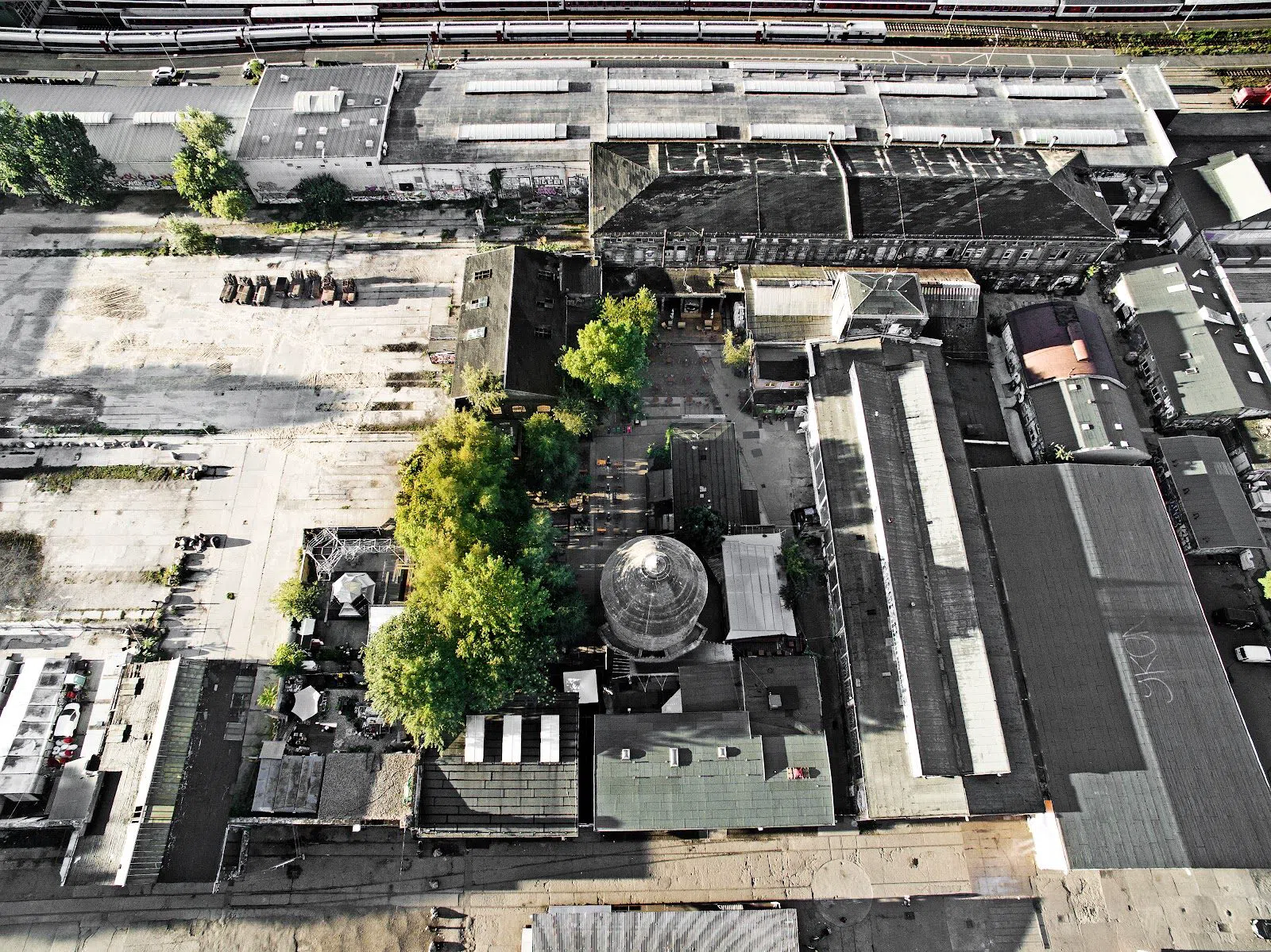
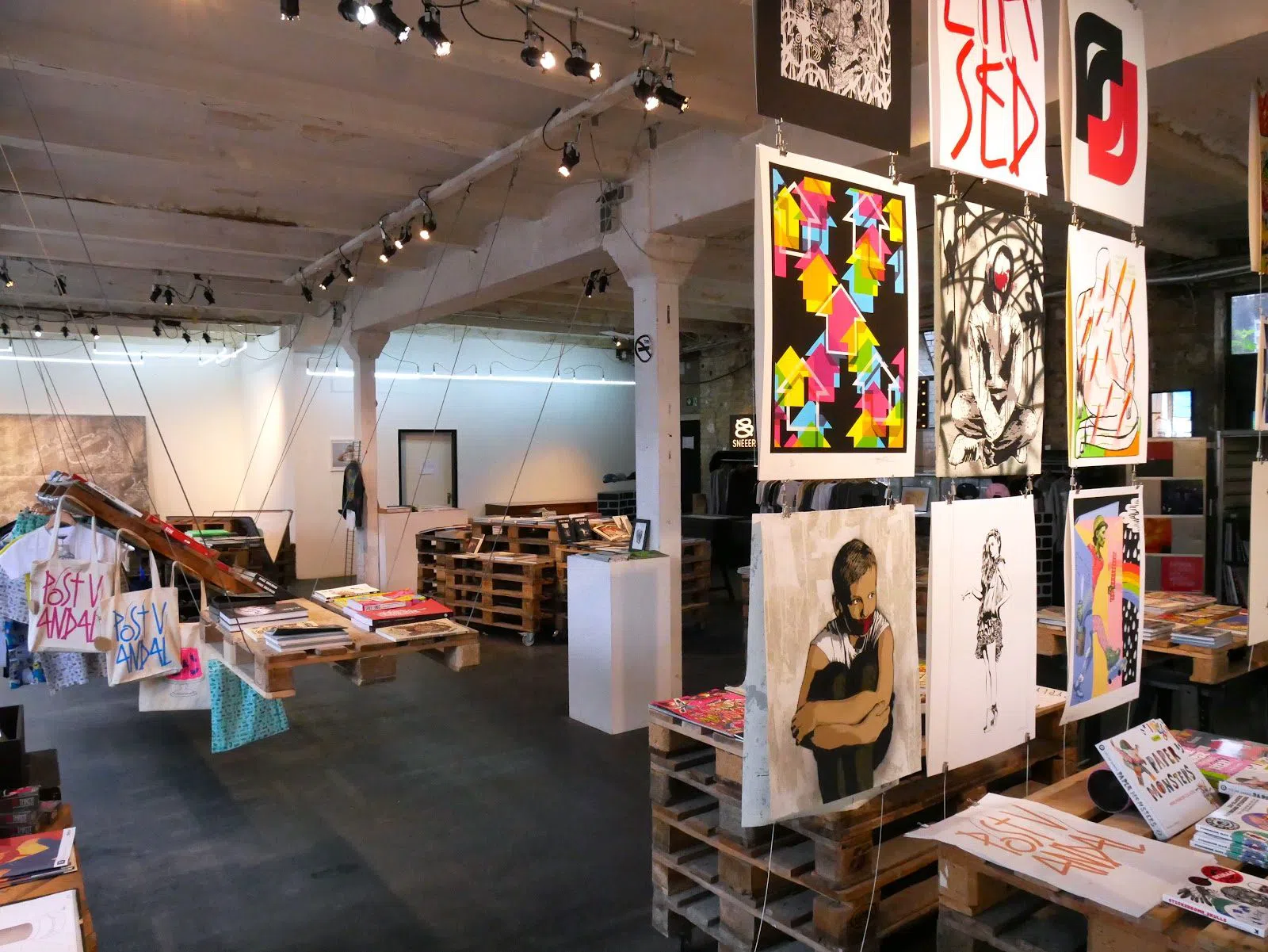
Be honest with yourself about what RAW is in 2026: open, but volatile. It is under active redevelopment pressure, with the owner imposing use-bans on several venues and protests through June 2026 over the site's future. Go now and you may be looking at a canvas the city is in the middle of deciding whether to keep. On the same grounds, Urban Spree (Friedrichshain) is the bridge between the street and the gallery — a venue running a continuous 2026 programme of exhibitions, artist talks, and guided-tour-plus-artist-talk formats, open Monday to Saturday. Gallery shows are generally free; concerts and events are ticketed. It shares RAW's long-term uncertainty but is very much operating, and its talks are the easiest way to hear artists explain the culture in their own words rather than have it narrated at you.
From street to institution
There is a real tension in collecting an art form built to disappear, and two very different museums sit on either side of it.
URBAN NATION Museum for Urban Contemporary Art (Schöneberg, on Bülowstraße) is Germany's dedicated museum for urban art — the institution that archives an ephemeral scene, which is either a contradiction or a rescue depending on your mood. Admission is free, but it is closed Mondays and rotates its exhibitions, so the specific installation you read about may have moved on; check before you plan a day around a particular piece. It takes groups, with advance registration required for parties of eight or more (a group service charge of €40 for 20–40 people, €60 for 41–70), and it is card payment only — worth knowing in a city that still loves cash.
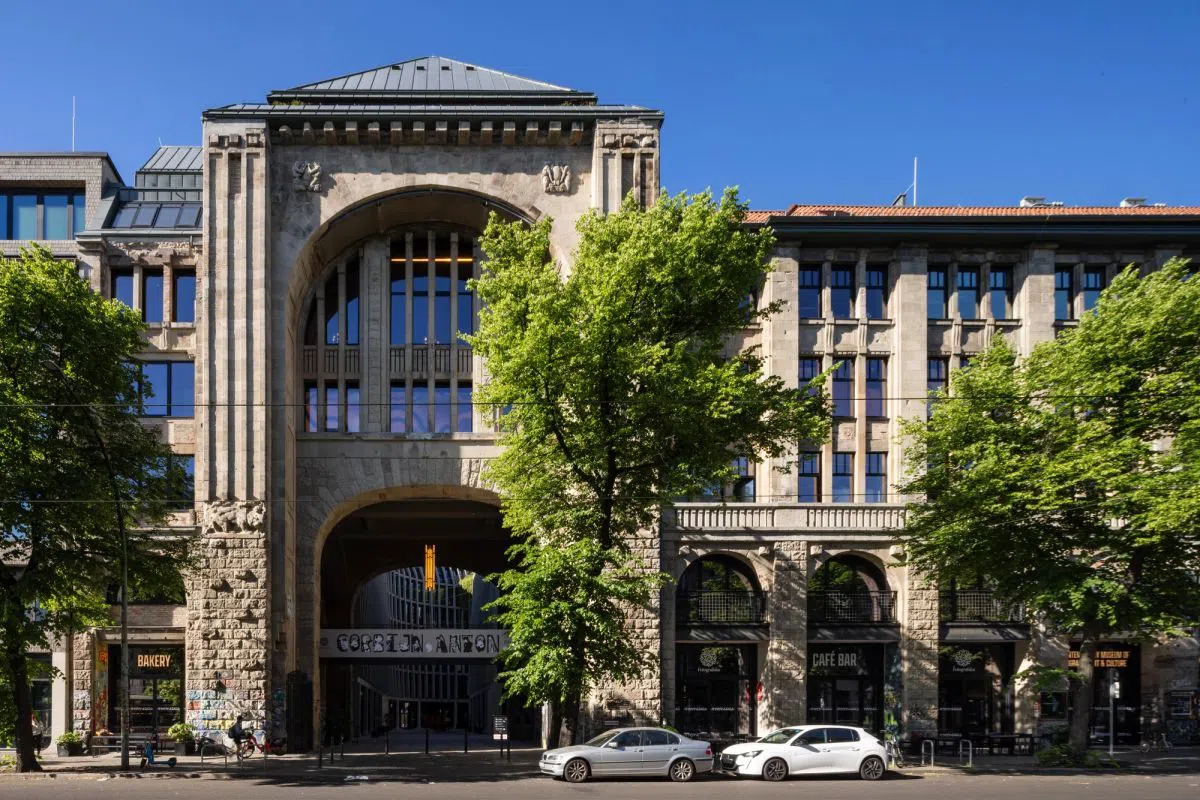
The other is a stranger inclusion. Fotografiska Berlin (Mitte, in the former Kunsthaus Tacheles on Oranienburger Straße) is a photography museum, not a street-art one — but it occupies the shell of Tacheles, the legendary occupied art-house whose paint-caked stairwell is preserved inside. Come for that graffiti heritage as a backdrop, not a main programme, and check the current exhibition first; entry is around €15 for adults, under-12s free, and it stays open late, 10:00 to 23:00 daily. It is the clearest case study in the whole city of how a raw, illegal space becomes a heritage feature inside a paid institution.
Ruins, edges and the outer districts
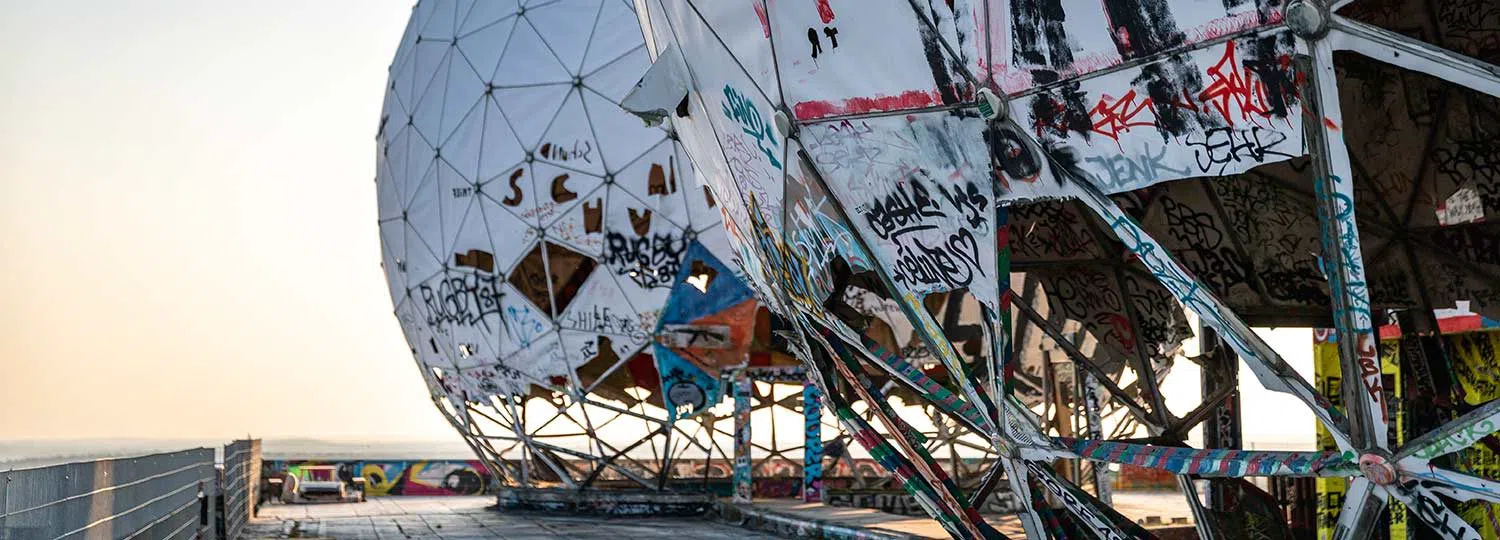
The further you get from the centre, the more the art tells you about how far the scene has spread. Teufelsberg (Grunewald, in the western forest) is one of Europe's largest urban graffiti galleries, sprayed across a genuine Cold War listening station built on a hill of wartime rubble. It is no longer a free-for-all: it is a fenced, ticketed ruin now, €10 for adults, €8 reduced, €3 for ages 8–17, with some interiors reachable only on specific guided tours (private, history, graffiti-art and torchlight formats all bookable). Wear proper shoes and treat it as a half-day expedition, not a quick stop.
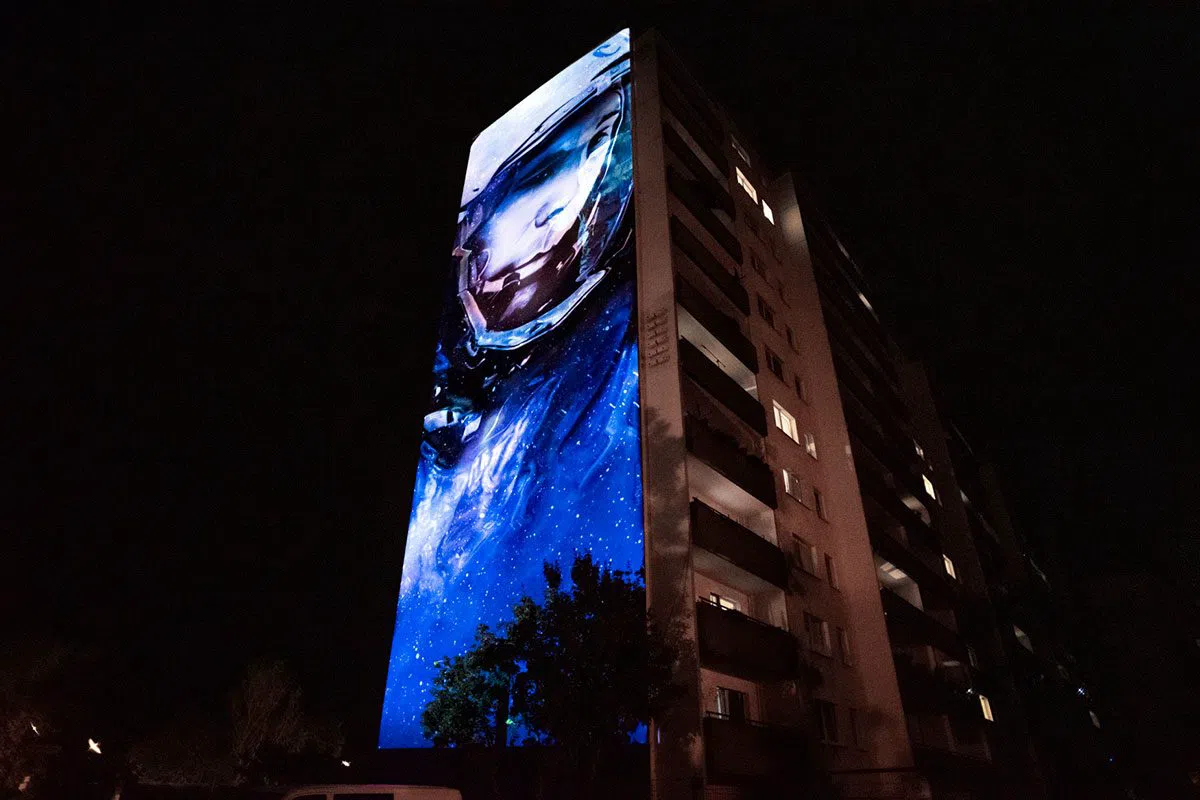
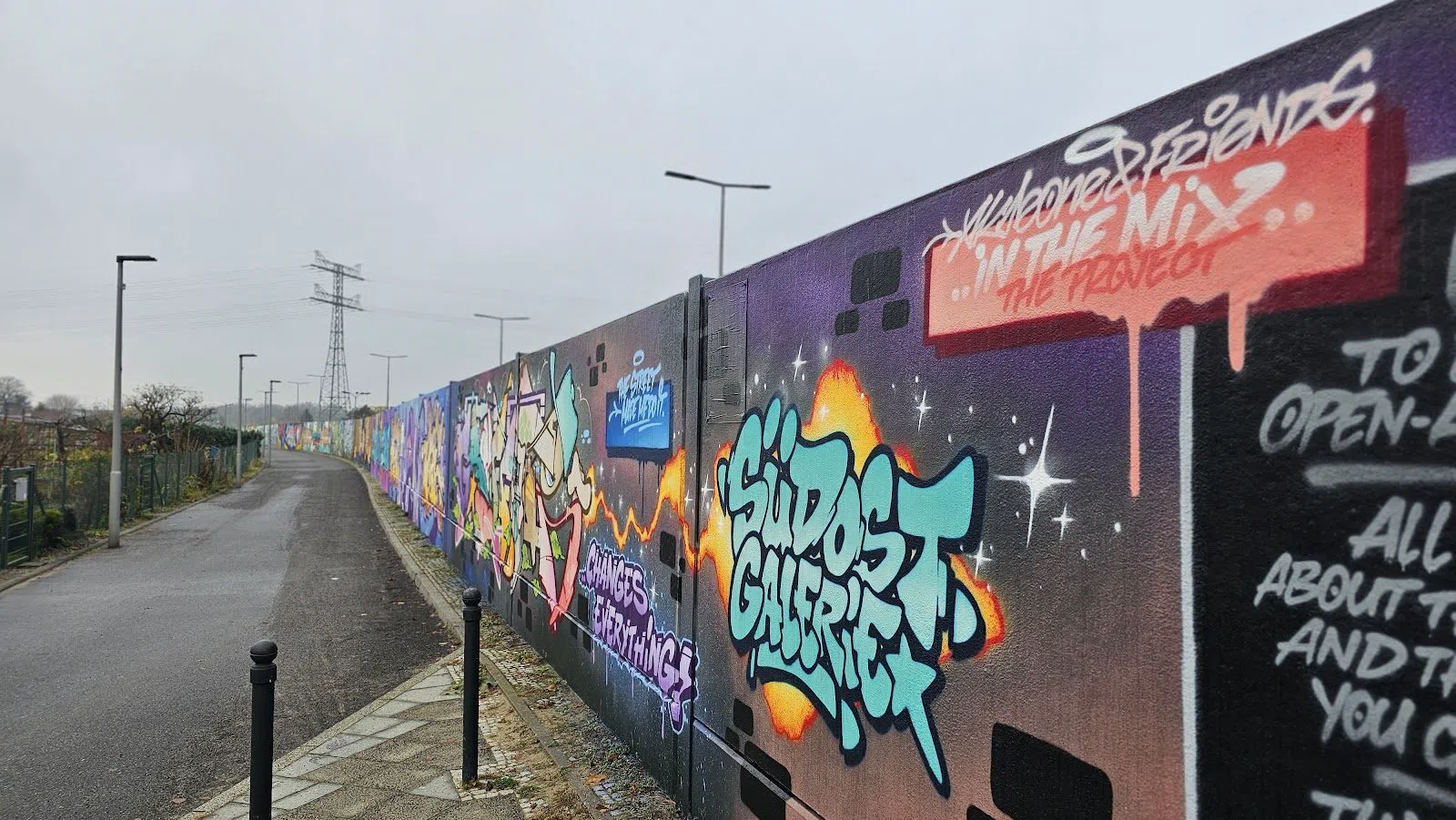
For the opposite end of the aesthetic, ride out to the eastern housing estates. The Berlin Mural Fest murals (Marzahn-Hellersdorf) are the giant works left on Plattenbau tower blocks by a festival that ran 2018–2021 and is now dormant. The murals remain up year-round; visitBerlin publishes a self-guided route, and this is the durable, tourist-free way to see Berlin muralism at genuine building scale. Treat it as a trail, not a live event. In the south-east, Süd Ost Galerie (Schöneweide) is a fresh 2025 open-air addition — proof the scene is still expanding into outer districts rather than calcifying in the core. It is free, off the tourist path, and best seen as a deliberate detour; guided tours run through the Urban Nation network.
Seeing it with someone who knows
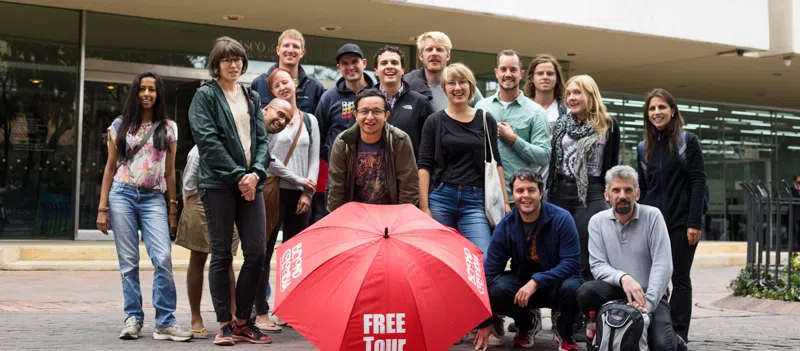
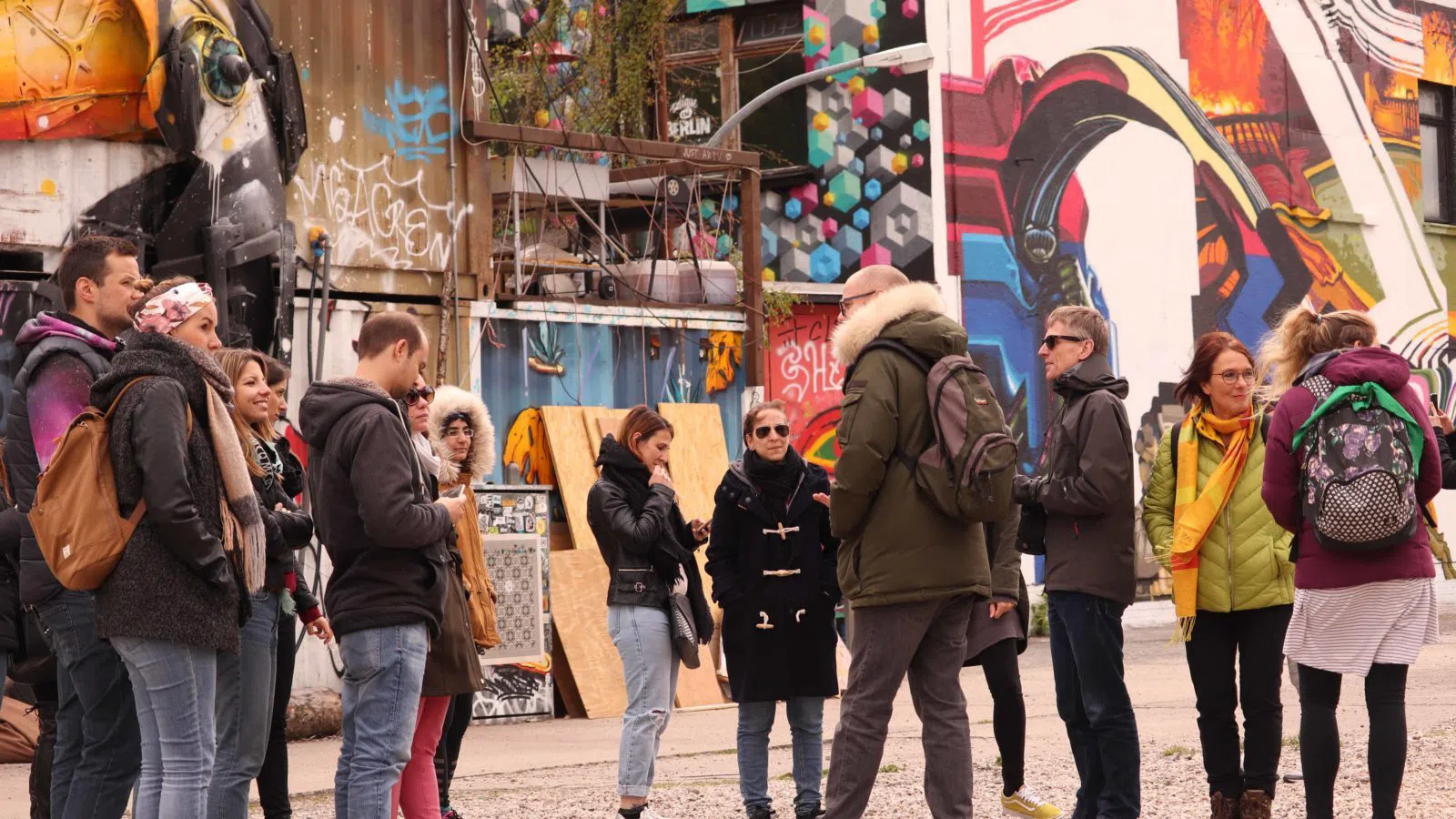
You can do all of the above alone, and much of it you should. But the culture — the crews, the etiquette, the reason the council stopped fighting — is not written on the walls, and one operator is worth booking precisely because it explains that rather than just pointing. Alternative Berlin Tours runs a Street Art Tour in small scheduled groups (age 12 and up, private bookings available) at €20 per person, English only, focused on the who-paints-over-whom of it all. One caveat: their separate spray-your-own workshop page is stale, so don't route a group there — for hands-on painting, the free Mauerpark wall is the honest answer.
Practical Berlin
Getting around: This is a whole-city subject, and you'll cover ground. A day pass on the U-Bahn and S-Bahn (roughly €10 for zones AB) links Friedrichshain, Kreuzberg, Mitte and Schöneberg easily; Teufelsberg and the Marzahn murals sit further out and eat more time, so give each its own half-day. Kreuzberg's named walls are best on foot.
Cash vs card: Carry cash. Plenty of venues, kiosks and smaller doors are cash-only, though URBAN NATION is pointedly card-only — the reverse of what you'd expect, so keep both.
Timing: Free outdoor sites — East Side Gallery, Mauerpark, Haus Schwarzenberg, RAW, the Kreuzberg murals — are open 24/7; go early to beat crowds at East Side Gallery. The museums close or rotate (URBAN NATION shut Mondays; check Fotografiska's current show; note East Side Gallery's 2025–26 scaffolding). Book Teufelsberg tours and any group visit ahead.
Budget: You can build an excellent two-day itinerary almost entirely free — the walls, parks and courtyards cost nothing. Budget only for Teufelsberg (€10), Fotografiska (~€15), and the Alternative Berlin tour (€20) if you want the context. For where to sleep between walks, start with a Berlin hotel search; Friedrichshain and Kreuzberg put you closest to the densest walls. For everything beyond street art, our full Berlin guide covers the rest of the city.
Berlin's other wall was never really one wall. It is every fire-gable, tower block and railway container the city decided to stop defending — a museum with no closing time, no fixed collection, and no final say on what belongs. Come to see it while it's still being argued over.
Before you go
Is Berlin's street art free to see?
Most of it, yes. The East Side Gallery, Mauerpark's legal wall, Haus Schwarzenberg, RAW-Gelände, Süd Ost Galerie and the Kreuzberg murals are all free and mostly open 24/7. You only pay for Teufelsberg (€10 adult), Fotografiska Berlin (~€15) and guided tours such as Alternative Berlin's €20 walk.
Where do I find the famous named murals?
Kreuzberg. Victor Ash's Astronaut/Cosmonaut (2007), Os Gêmeos's Yellow Man (2005) and ROA's Nature Morte (2011) sit close enough to walk between in an afternoon. They're free, always visible and need no booking — the ideal self-guided couple's route.
Can I paint street art myself in Berlin legally?
Yes, at the Mauerpark Graffiti Wall, one of the city's few officially sanctioned legal walls where anyone may paint and beginner spray workshops run on weekends. Whatever you paint will likely be covered within days — that turnover is the point. Avoid Alternative Berlin's separate workshop page, which is stale.
Is a guided street art tour worth it?
If you want the culture rather than just photos, yes. Alternative Berlin Tours runs a €20 Street Art Tour (age 12+, English only) that explains the crews, the etiquette of who paints over whom, and why the council stopped policing it. For institutional depth, Urban Spree's artist talks are another strong option.
Is the East Side Gallery worth visiting in 2026?
Absolutely — it's the founding monument of post-Wall Berlin street art, 118 artists from 21 countries painted on the old death strip. Note the 2025–26 restoration means section-by-section scaffolding, so some panels may be veiled. Go early to beat the coach parties, and book a Berlin Wall Foundation tour for the history.