The Berlin issue
Coffee, Markets and Day Trips for a Berlin October
Where the espresso is worth crossing town for, which market opens on which day, and the regional trains still running before the season shuts down.
By Giulia FerreroEating Berlin one market stall at a time
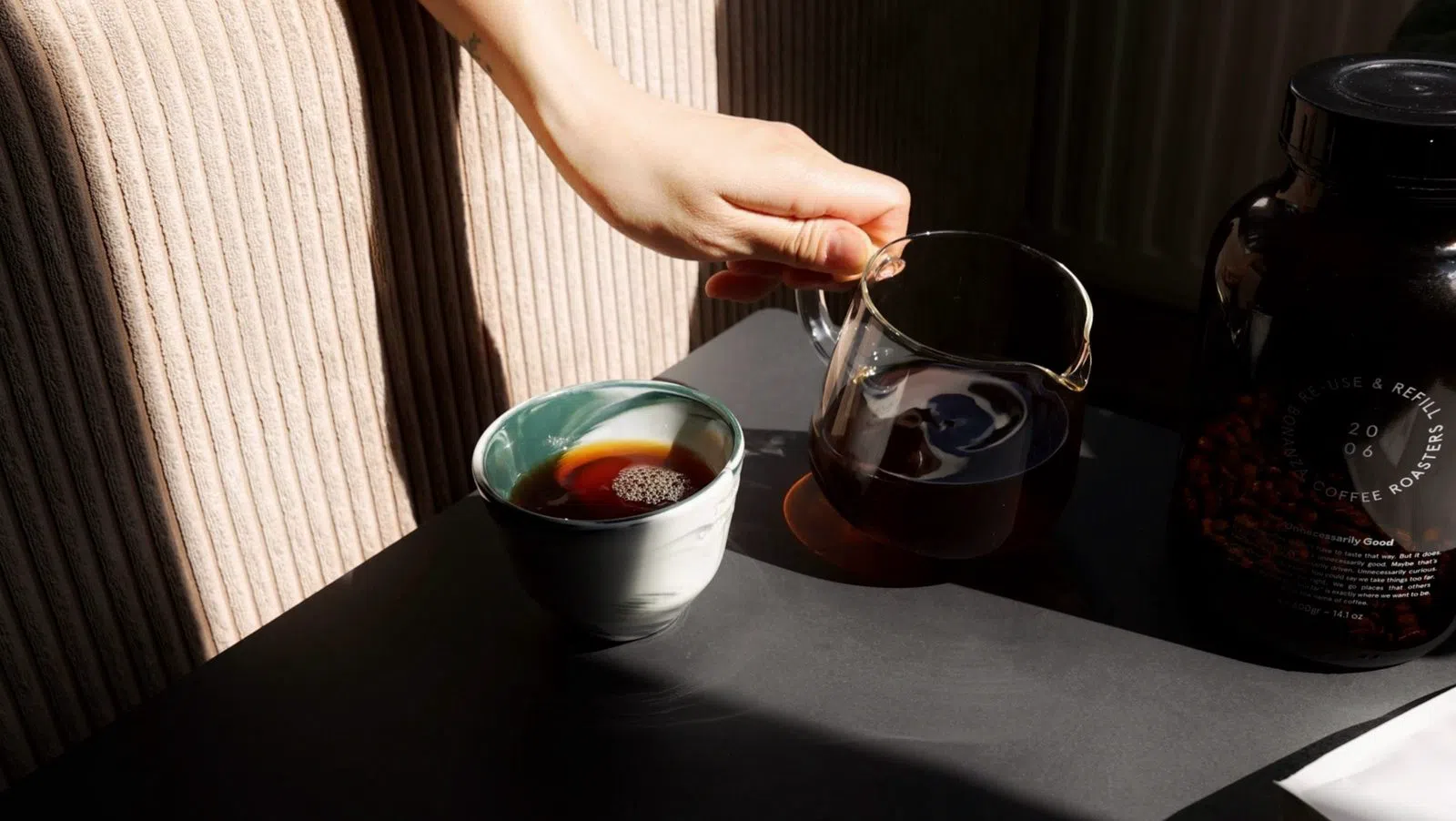
By the second week of October the light in Berlin goes long and low, the leaves along Oderberger Straße turn the colour of crema, and the city relocates indoors somewhere around four in the afternoon. This is the best month to be here, as long as you build the day around the three things Berlin does better than most places: coffee made by people who take it much too seriously, markets that are a meal rather than a photograph, and a regional train that puts you in a palace park or a wet forest inside an hour. Everything below I have eaten or drunk at least twice, in different weather, because one good visit tells you nothing.
The coffee counters worth crossing town for
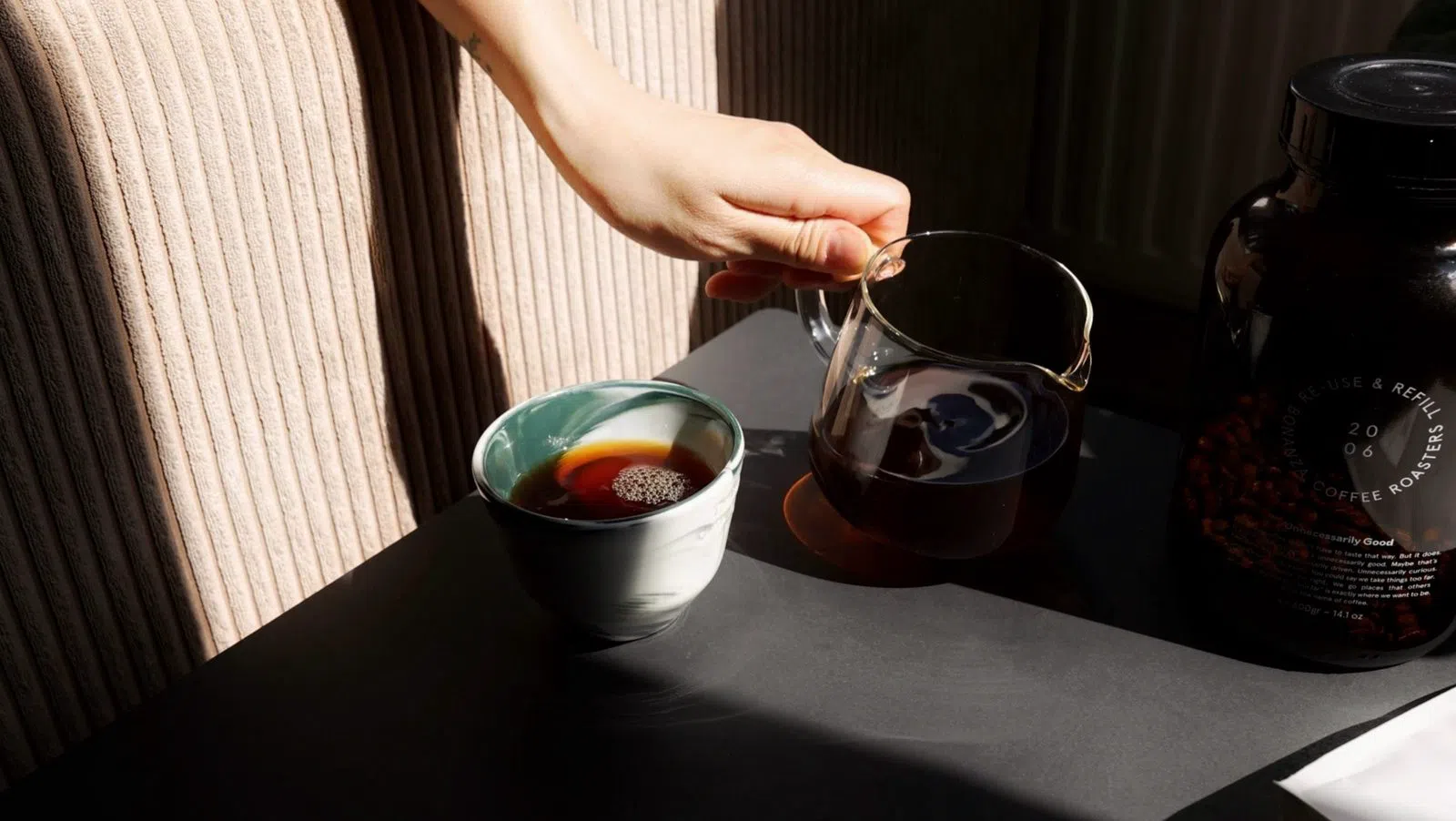
Bonanza Coffee Roasters sits on Oderberger Straße in Prenzlauer Berg, a street of chestnut trees and no particular hurry. It is the shop that started Berlin's third-wave scene in 2006, and two decades on it still pulls the most precise espresso in the city, the sort where whoever is on the machine watches the shot rather than the queue, and pours it again if the timing slips. Expect €3.50 to €5.50. The room is tiny and takes no bookings. Two or three of you will find a seat or a corner of the bar, but arrive as a group of eight and you will be drinking on the pavement, which in mid-October is a decision rather than an accident. There are four Bonanza locations now; this is the original, and worth the extra U-Bahn stop.
The Barn on Auguststraße in Mitte is Berlin's most exacting roaster and makes no apology for it. The Auguststraße room is the purist's one: small, quiet by design, laptops discouraged at peak, the coffee list explained rather than performed. €3.50 to €6. It sits in the middle of the Mitte gallery run, so it pairs neatly with an afternoon of looking at art while it rains. If there are more than three or four of you, go to the roomier Schönhauser Allee or Potsdamer Platz branches instead. Same coffee, no glares.

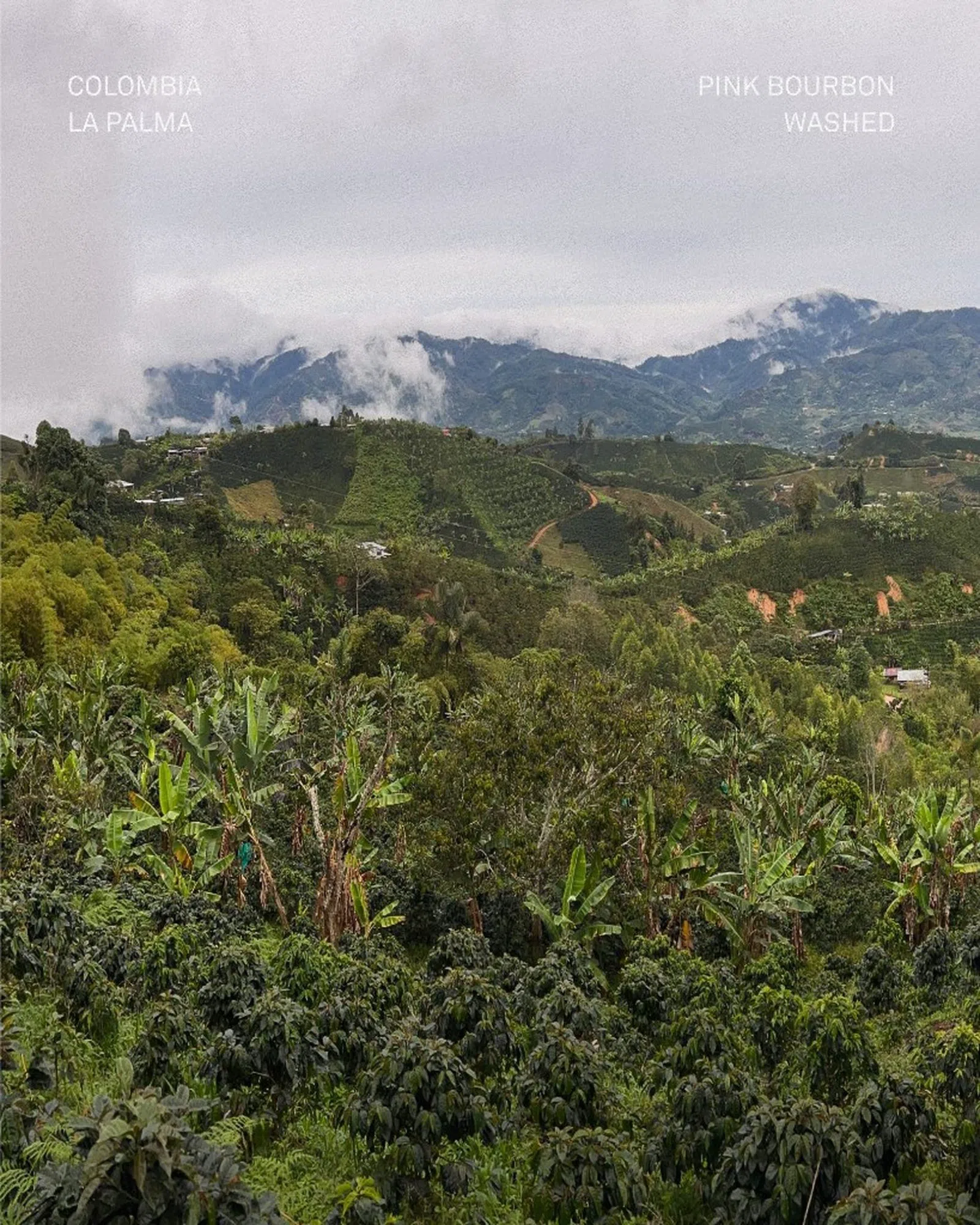
Five Elephant on Reichenberger Straße in Kreuzberg is the one place here that people cross the whole city for, and it is the cheesecake they cross for. €5 to €6 a slice, dense and sour-edged and not remotely a novelty. The roastery behind it happens to be world class as well, with coffee at €3.50 to €5.50. It is also the most forgiving of the four for numbers: a back room and outdoor tables absorb six to eight without a booking, which no other specialty café in this piece will do for you. Reichenberger is the original of four sites.
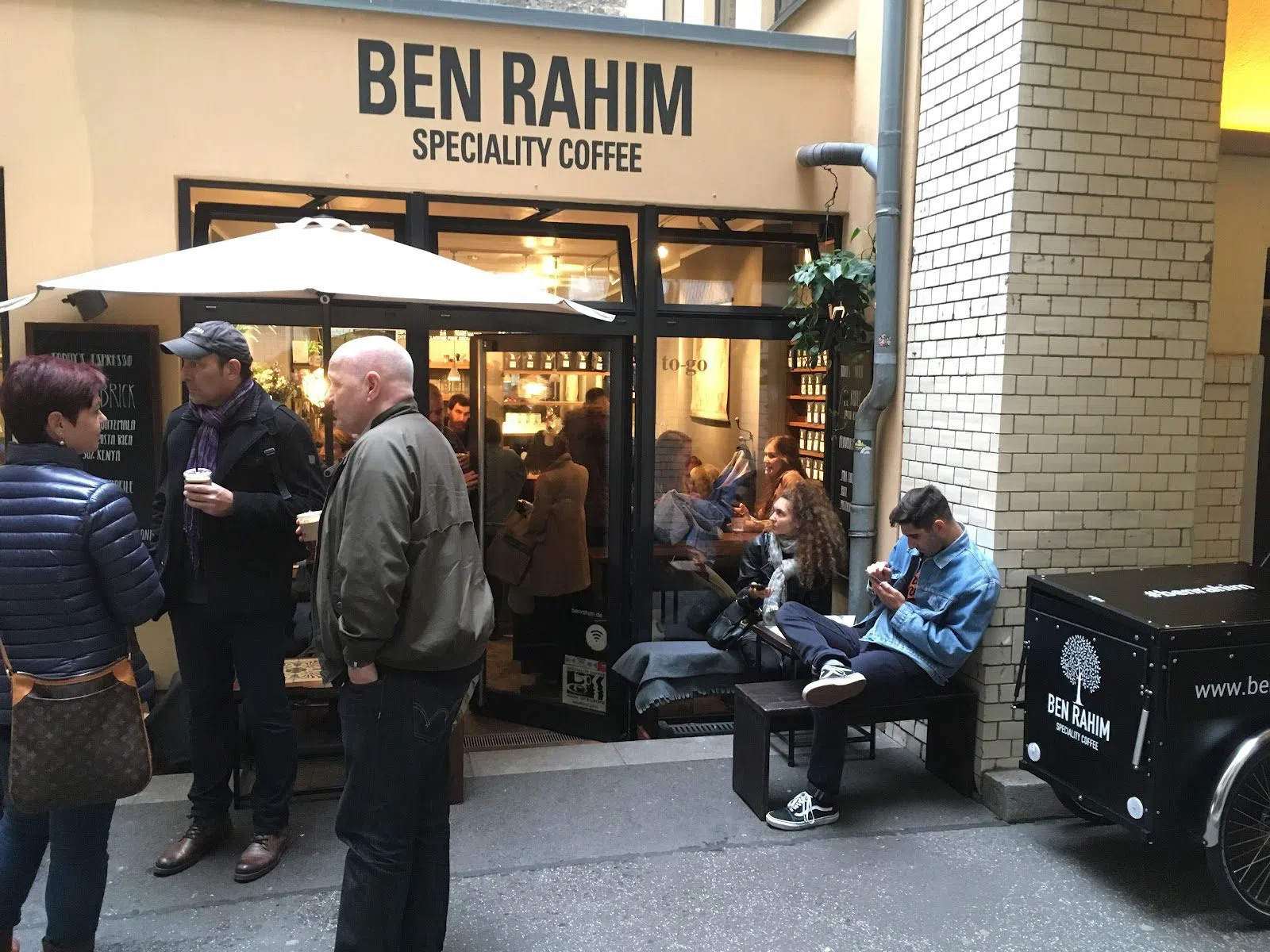
Ben Rahim hides in a courtyard thirty seconds from the Hackescher Markt crush in Mitte, which is exactly the point of it. Tunisian-run, Arabic-leaning, and the antidote to everything happening on the other side of the archway. €3.50 to €6. It is very small, and a courtyard table takes four at a push, so if you are six, split into two and meet on the street rather than colonising the place.
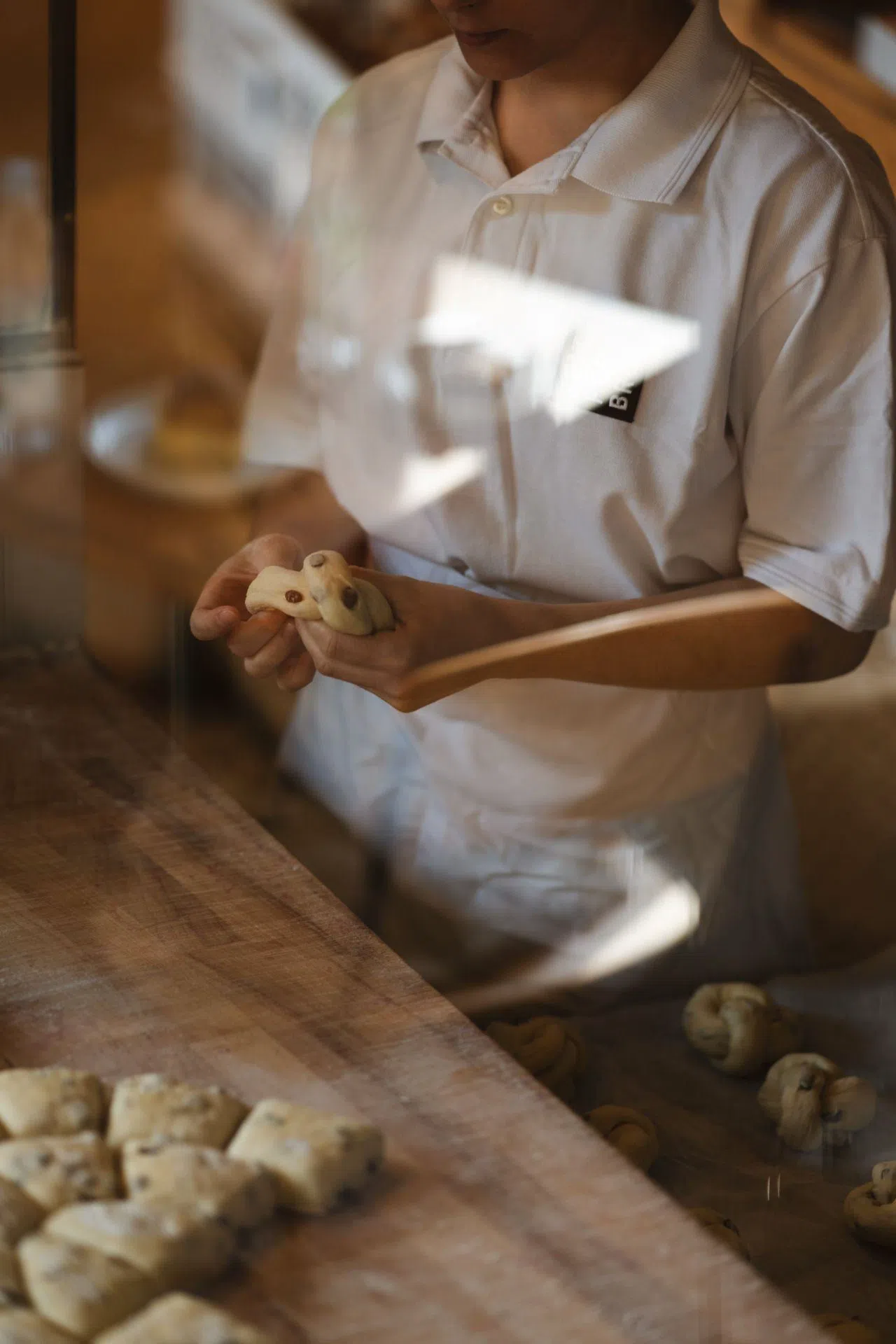
Zeit für Brot on Alte Schönhauser Straße in Mitte is a bakery, not a café to settle into: counter service, a handful of stools, organic flour milled to order, and a Zimtschnecke at €4 to €6 that is the benchmark cinnamon bun in this city. Hot, sticky, torn apart in layers rather than bitten. Eat it standing outside on a cold morning with a €3.50 to €5 filter and you have had a better breakfast than most hotels will sell you. Groups are no problem at all, provided you take them onto the pavement.
One piece of routing: Zeit für Brot, Ben Rahim and The Barn are within a ten-minute walk of each other, which makes for a very efficient Mitte morning. Bonanza and Five Elephant are separate expeditions, in opposite directions, and both are worth their own trip.
Plan your Berlin trip
Live prices from our booking partners.
Free cancellation on many rooms. We may earn a commission when you book.
How the market week actually runs
Berlin's markets run on fixed days, and the days matter far more than the addresses. Plan the week around them and you will barely need a restaurant booking.
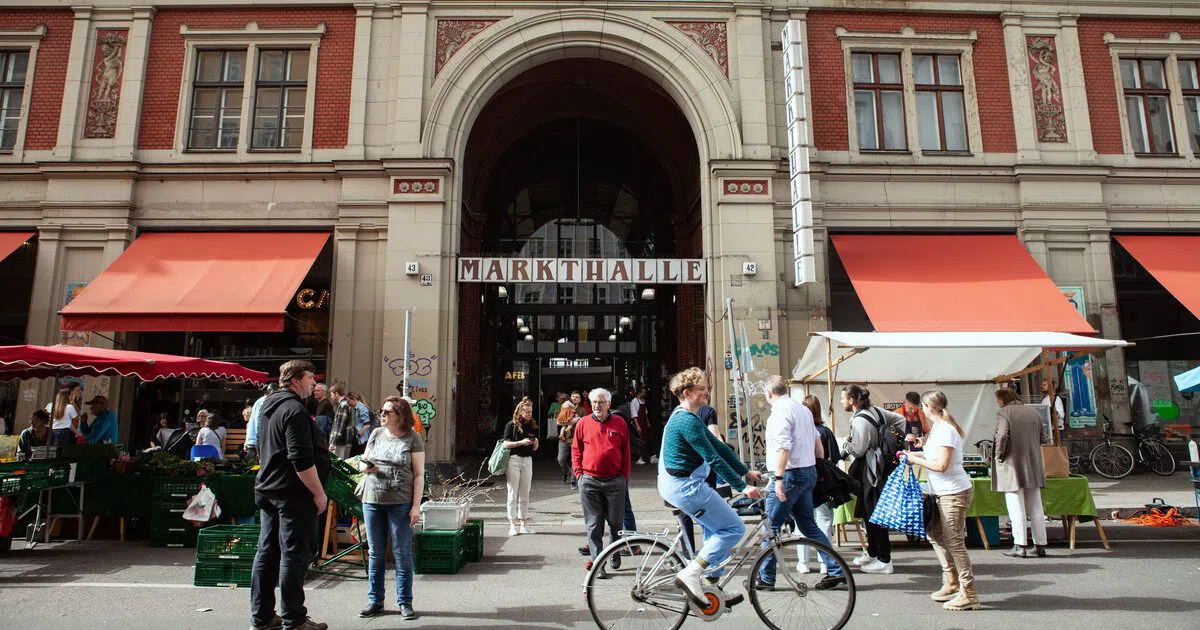
Markthalle Neun in Kreuzberg is the city's best food hall and the anchor of the whole thing. On weekdays it is a small working market; Friday and Saturday it goes big; and on Street Food Thursday, 17:00 to 22:00, it becomes the most enjoyable dinner in Berlin at €5 to €15 a plate. Communal tables, no bookings, excellent for groups, but by 18:00 on a Thursday it is packed and you will be eating standing up. Get there before six, claim a table, then send people to the stalls in shifts. Closed Sundays.
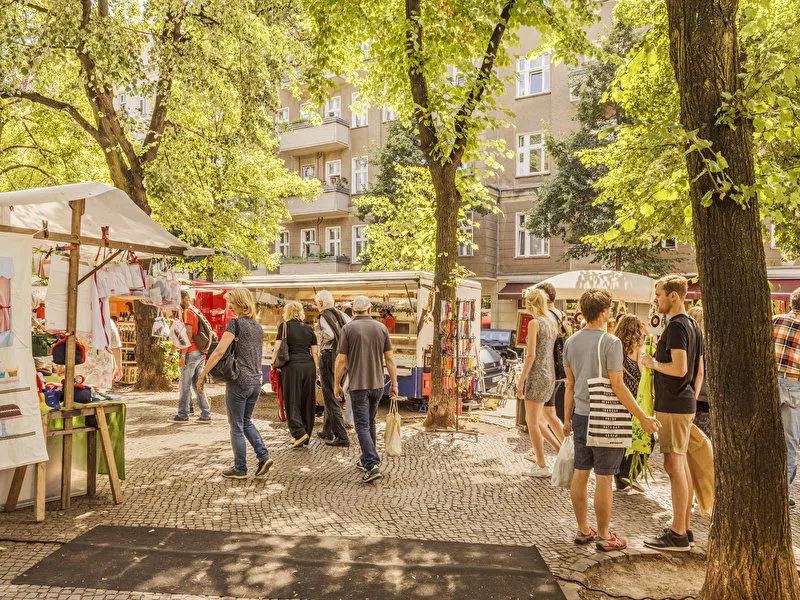
Türkischer Markt am Maybachufer runs along the canal in Neukölln on Tuesdays and Fridays, roughly 11:00 to 18:30, and it is the loudest, cheapest and most useful market in the city. Entry is free and you can eat properly for €2 to €6: gözleme off a hot plate, a bag of dates, herbs and cheese sold by the kilo by traders who will tell you plainly if you are buying the wrong thing. In a group, accept that you will file through single-file in the crush. Browse in pairs and regroup at the bridge.
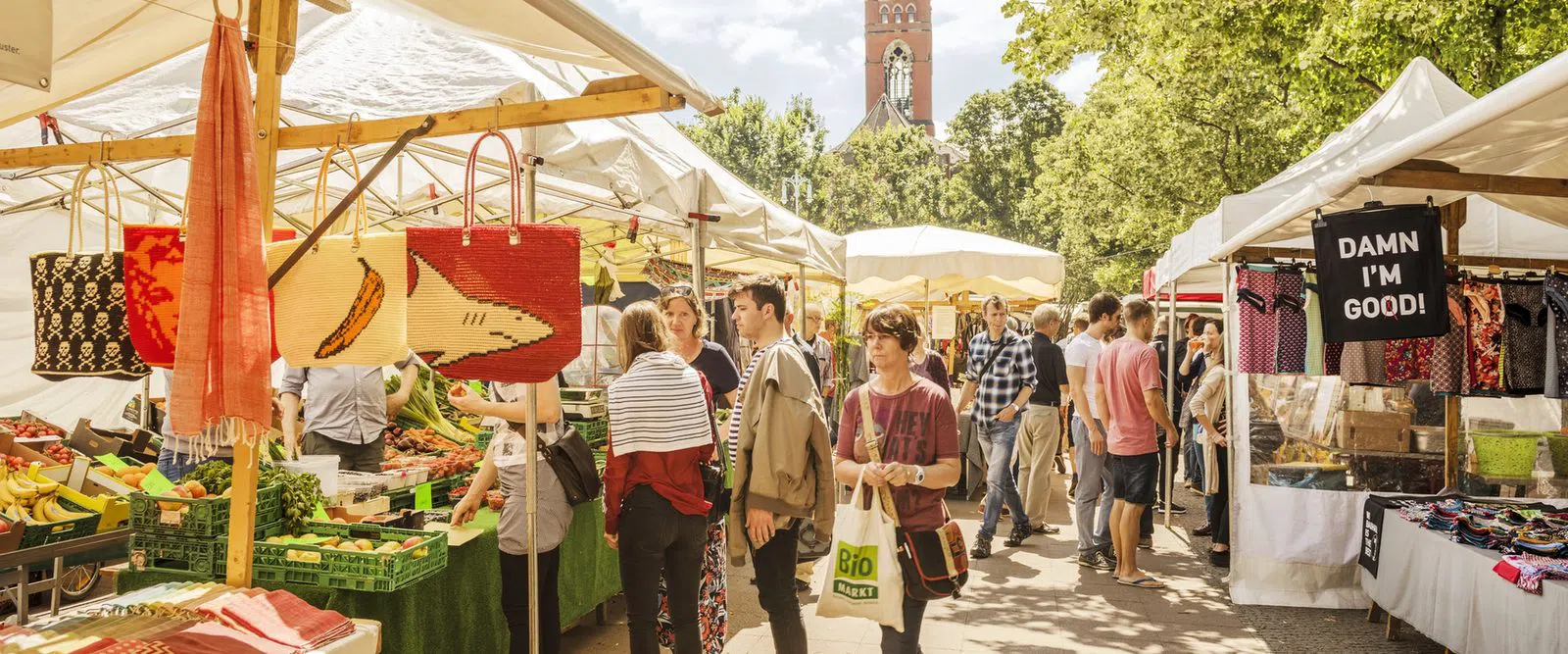
Wochenmarkt am Winterfeldtplatz in Schöneberg is the all-rounder, on Saturdays roughly 08:00 to 16:00 and smaller on Wednesdays. Produce, cheese, a standing breakfast, and enough open square that a group of any size is a non-issue. €4 to €12 to eat. Traders start packing up early, so a Saturday arrival after two is a wasted journey. Go at nine, eat, then walk it off.
Sundays belong to the flea markets
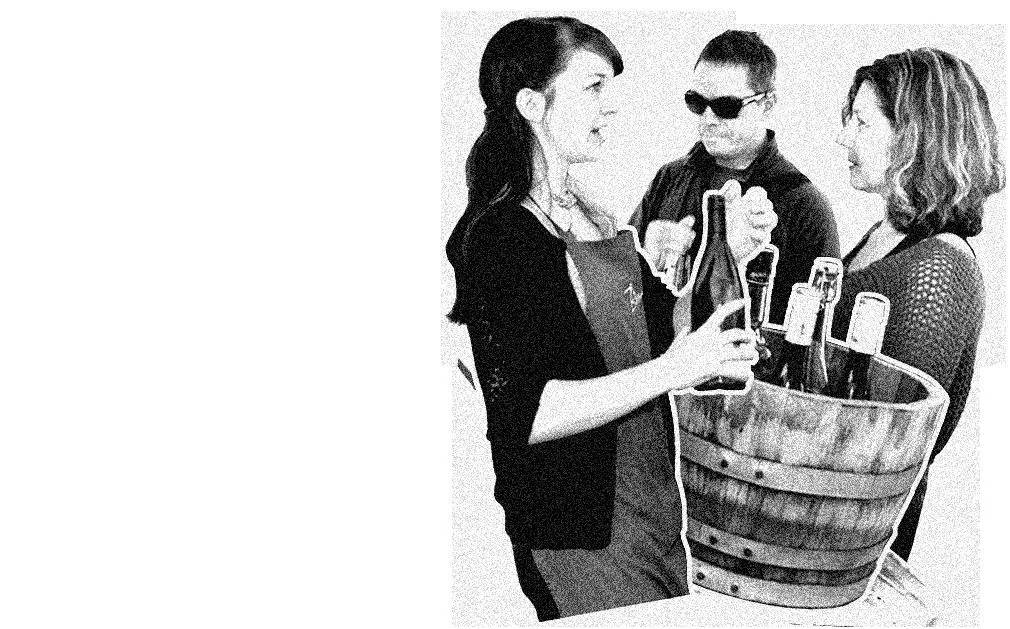
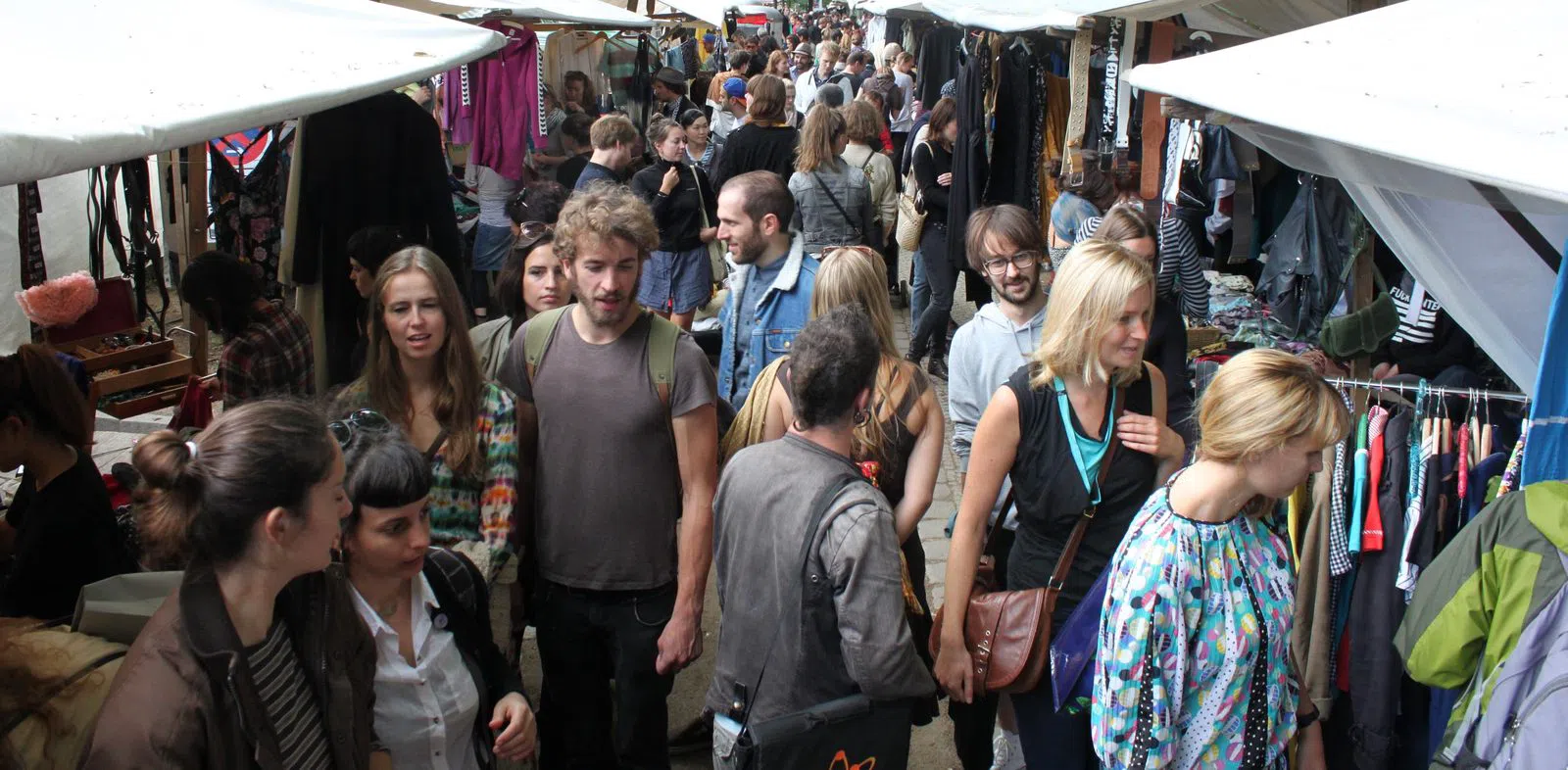
Flohmarkt im Mauerpark in Prenzlauer Berg runs every Sunday, 10:00 to 18:00, year-round, with something like 400 traders. Yes, it is touristy. It is also very good for vintage clothing and old furniture, prices €5 to €60, and the park karaoke that runs alongside it is one of the few Berlin institutions that lives up to its reputation. It is the busiest market in the city, so agree a meeting point before you go in. The signal is fine; hearing each other is not.
Nowkoelln Flowmarkt on the Neukölln canal bank is the better one if you actually intend to buy something. It runs fortnightly on Sundays, 10:00 to 17:00, mostly private sellers clearing out flats rather than dealers, which keeps prices sane at €5 to €40 for most items. Free entry, easy at any size, and the format rewards browse-and-regroup rather than moving as a herd. Watch the date: the season's last market is Sunday 18 October 2026, and then it stops until spring. Later in the month, Mauerpark is the one still standing.
Vintage on the days the flea markets are shut
Humana Secondhand & Vintage at Frankfurter Tor in Friedrichshain is the practical answer to a wet Tuesday. It is a second-hand department store, around 30,000 pieces restocked daily, with a proper 1950s to 90s vintage department upstairs that justifies the trip on its own. Most items €5 to €40. It is vast, so it is the one vintage stop that absorbs a group of ten without anybody getting jammed in a doorway. Monday to Saturday 10:00 to 20:00, closed Sunday, the exact inverse of the flea markets, which is how you cover both in one trip.

Five day trips you can do on a regional train
October is the last month when all of these run something close to a full timetable, and the regional network makes them easy without a coach tour.
Park Sanssouci and Schloss Sanssouci in Potsdam is thirty-five minutes on the RE1 from Hauptbahnhof and covered by an ABC ticket. The palace is €14 (€10 reduced) and open Tuesday to Sunday, 10:00 to 17:30 through October; the park is free and enormous. Timed-entry palace tickets are capped daily, so book ahead. A group turning up unbooked at midday will be walking the terraces instead, which in fairness is beautiful in autumn. The Orangerieschloss is closed for restoration, so don't build the afternoon around it.
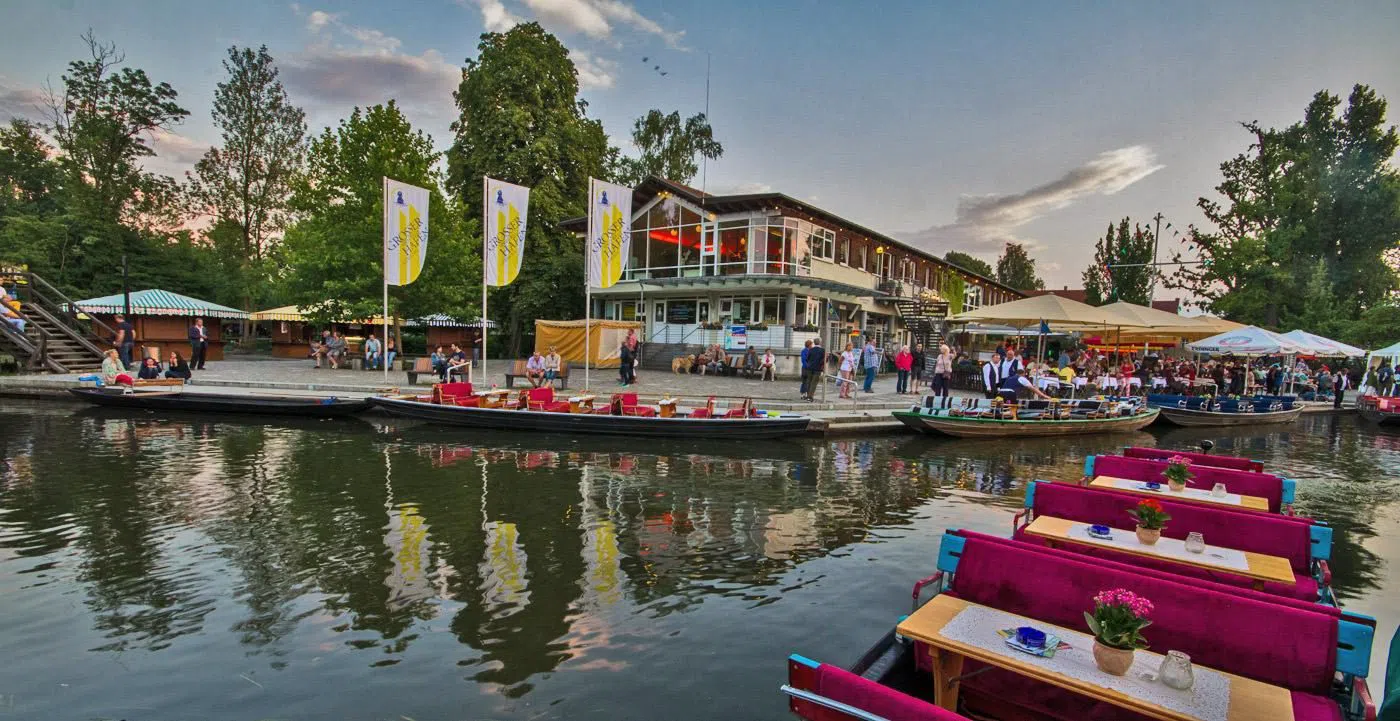
Grosser Spreewaldhafen Lübbenau runs the classic punt from Lübbenau's main harbour, about ninety minutes out on the RE2. Trips are €17 to €28 for adults and €9 to €16 for children, lasting two to five hours. Whole boats are bookable with a standard minimum of 16, and smaller parties on request, so this is the one entry here that is built for a group. The season officially ends on 31 October, and October departures thin out fast, so check times before you travel. Take gloves: you are sitting still on water for hours.
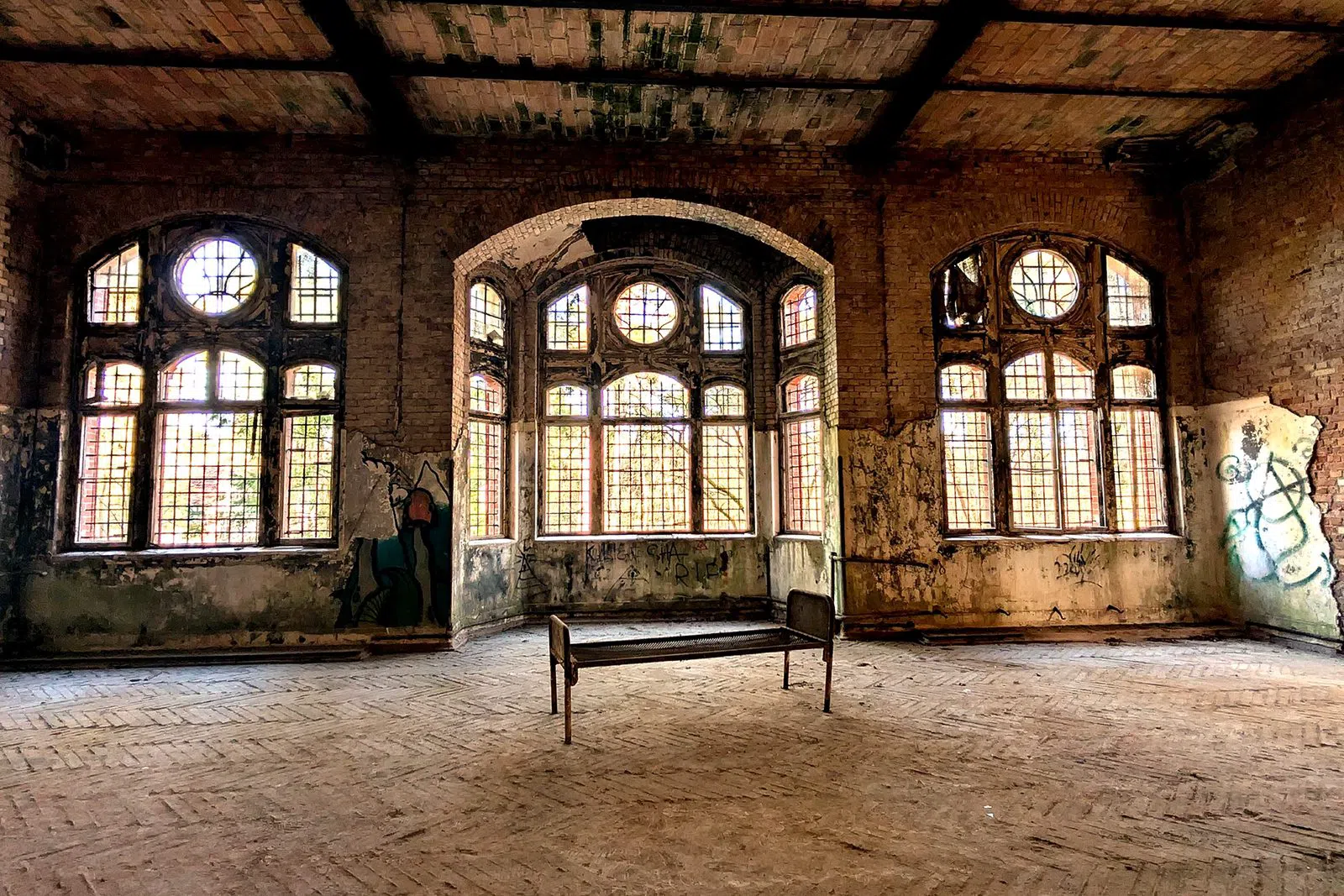
Baum & Zeit Baumkronenpfad Beelitz-Heilstätten is forty minutes on the RE7 and around €14 to €18 for adults. It is a canopy walkway strung over a collapsing tuberculosis sanatorium, and it is as good as October scenery in Brandenburg gets: mist, rust, red leaves and brickwork being slowly taken back by trees. Group rates and guided tours are bookable in advance. No dogs on site.
Sachsenhausen Memorial and Museum in Oranienburg is free and forty-five minutes on the S1 from Friedrichstraße. Audio guides run in eight languages at €3.50, or €2.50 each for groups of ten or more, and guided tours and agency bookings are supported. The grounds close at 18:00 until 26 October and 16:30 after that, so go in the morning and allow three hours. Give it its own day rather than the back half of one. It is not something to fit around lunch.
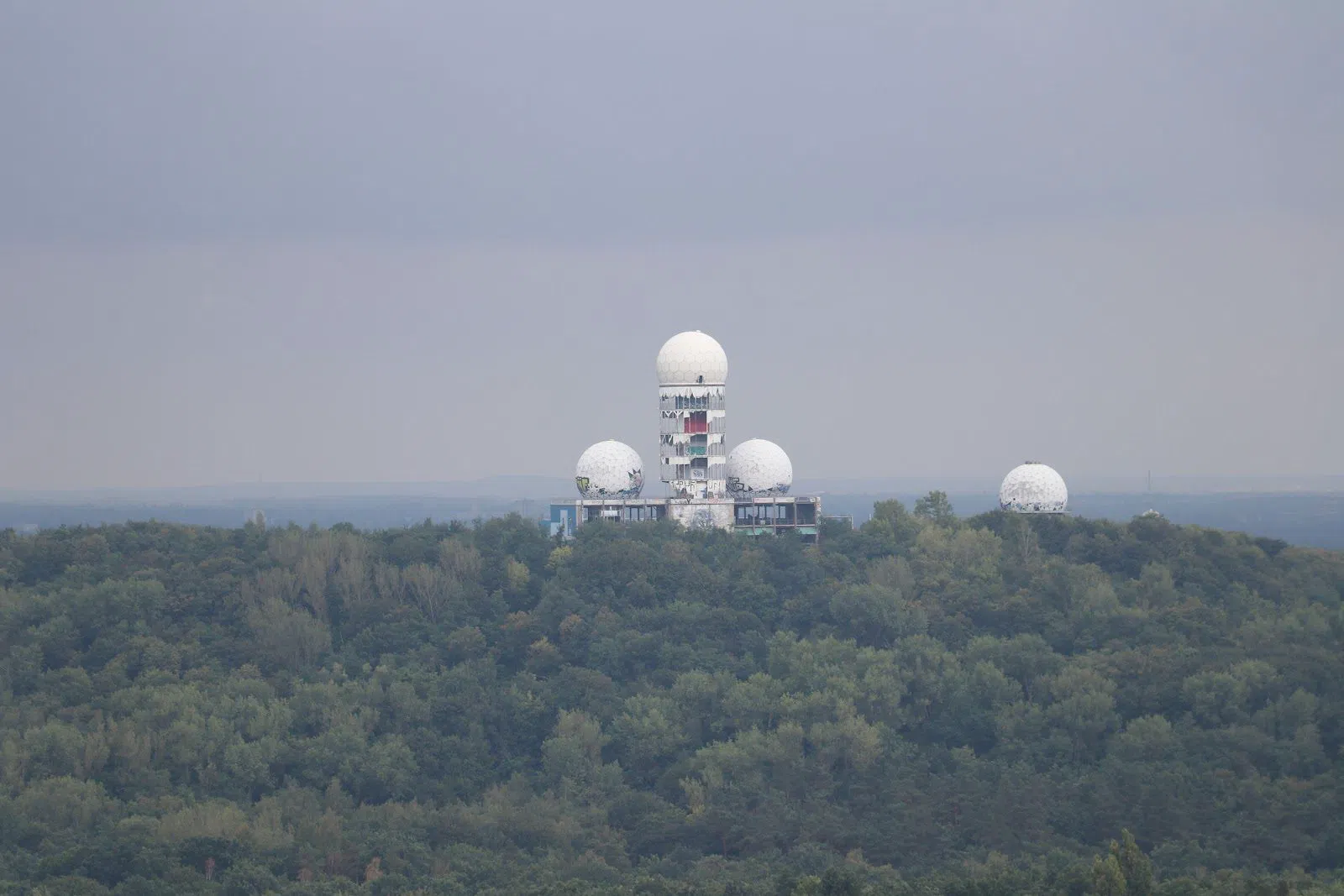
Teufelsberg is the Cold War listening station built on wartime rubble in the Grunewald, now a graffiti gallery with the best view over the autumn forest anywhere in the city limits. Open daily from 11:00 to sunset, last entry an hour before, which in late October means the gate effectively shuts mid-afternoon, so check the sunset time before you set out. €12 adults, €10 reduced, €5 under-18s, €27 for a family, with daily public and street-art tours plus school and group programmes. Buy online if there are several of you and walk past the box-office queue.
Groups, couples and what will not work
Berlin will not turn you away at a door for how you are dressed, but a small coffee room will let you feel it. If you are two or three, the tight rooms are the pleasure of the trip: Bonanza, Ben Rahim, The Barn on Auguststraße. If you are six or more, plan around the places built for it, which means Five Elephant, Markthalle Neun, Winterfeldtplatz, Humana, Teufelsberg and a whole Spreewald boat.
Only three things here need booking: Sanssouci palace entry, a private punt at Lübbenau, and Teufelsberg tickets if you want to skip the queue. Every market and every café is turn-up-and-wait. If you want the wider picture of the city beyond coffee and market days, the Berlin guide covers the rest.
Practical notes before you go
Transport. An AB ticket covers the city itself and everything in the market and coffee sections, plus Teufelsberg. Potsdam and Oranienburg need ABC. Lübbenau and Beelitz-Heilstätten sit outside the Berlin zones, so buy a regional ticket; for two or more people, the Berlin-Brandenburg day ticket is usually the cheaper move. Regional trains take bikes and buggies without drama.
Cash. The markets are cash-first, particularly Türkischer Markt and both flea markets, where card readers are the exception. Carry €50 to €80 in small notes. Nobody at a flea stall wants to break a fifty for a €6 jumper. Cafés and the market halls take cards, though a few of the smaller rooms still set a minimum.
Timing. Days run about 8 to 14°C with a real chance of rain, and it is dark by around six in the middle of the month. The clocks go back on Sunday 25 October 2026, after which the evening ends an hour earlier and the Sachsenhausen and Teufelsberg closing times tighten with it. German Unity Day on 3 October falls on a Saturday in 2026 and shops shut for it, so confirm your Saturday market before you build the morning around it. Waterproof shoes matter more than a coat here. You will be standing on wet gravel for hours.
Budget. Coffee, a market lunch and a market dinner comes to roughly €35 to €50 a head. Add €15 to €30 for a day trip including transport. Sachsenhausen is nearly free, and the Spreewald boat is the most expensive thing in this article. The cheapest good day in October is a Sunday: Mauerpark, a €4 bun, and the S-Bahn.
Where to stay. Kreuzberg and Neukölln put you inside walking distance of Markthalle Neun, Five Elephant and both canal markets; Mitte gives you the coffee walk; Prenzlauer Berg is best for a Sunday. Compare rates and locations with Berlin hotel search, and book early for the weekends around the marathon and the light festival, when the city fills up.
Before you go
What is the weather like in Berlin in October and what should I pack?
Expect roughly 8 to 14°C, frequent rain, and dark by around six in the evening mid-month, earlier once the clocks go back on 25 October 2026. Waterproof shoes matter more than a heavy coat, because most of the good days here involve standing on wet gravel at a market or sitting still on a Spreewald boat. Pack gloves for anything on water.
Which day should I go to Markthalle Neun?
Thursday for Street Food Thursday, 17:00 to 22:00, at €5 to €15 a plate, but arrive before 18:00 or you will be eating standing up. Friday and Saturday are the big market days if you want produce and traders rather than dinner, weekdays are a smaller working market, and it is closed on Sundays.
Do I need cash for Berlin markets?
Yes. Türkischer Markt am Maybachufer, Nowkoelln Flowmarkt and Flohmarkt im Mauerpark are cash-first, and card readers are the exception. Carry €50 to €80 in small notes, because no flea-market seller wants to break a fifty for a €6 jumper. Cafés and Markthalle Neun stalls generally take cards.
Is Potsdam or the Spreewald the better day trip in late October?
Potsdam is the easier, more weather-proof option: thirty-five minutes on the RE1, covered by an ABC ticket, with the free park as a fallback if the €14 timed palace slots are sold out. The Spreewald punt from Lübbenau is the better day if the forecast is dry, but the season officially ends on 31 October and departures thin out, so check times before you travel.
Which flea markets are running in October 2026?
Flohmarkt im Mauerpark runs every Sunday, 10:00 to 18:00, year-round. Nowkoelln Flowmarkt is fortnightly on Sundays, 10:00 to 17:00, and its last date of the season is 18 October 2026. After that, Humana at Frankfurter Tor covers second-hand and vintage, Monday to Saturday, 10:00 to 20:00.