In 1946 the Allies packed the Humboldthain flak tower with explosives, set them off, and the tower largely stayed where it was. Berlin has been improvising around that failure ever since: burying what it could not blow up, building flats over the rest, and eventually renting the survivors to art collectors and techno promoters. The twentieth century is still load-bearing here, and a good deal of it can be walked into for the price of a museum ticket.
Reading the concrete before you book anything
Two short building booms left Berlin its giants. The first ran from 1940 into the last months of the war: three vast flak-tower complexes, hundreds of Hochbunker standing on ordinary residential streets, shelter systems threaded under stations, and, at the megalomaniac end of the same programme, test structures for a capital that was never built. The second was the Cold War, when both German states dug again: civil-defence shelters under the west of the city, command bunkers in the woods to the east, listening posts raised on artificial hills made of the first war's rubble.
What the city discovered after 1945 is that this material does not go quietly. Demolition in a dense urban fabric is a controlled art, several of the biggest charges underperformed, and the cost of finishing the job was money nobody had. So the options narrowed to three: bury it, build over it, or find it a tenant. Almost every site below is one of those three answers, and knowing which one you are looking at is the difference between a satisfying afternoon and standing outside a locked steel door.
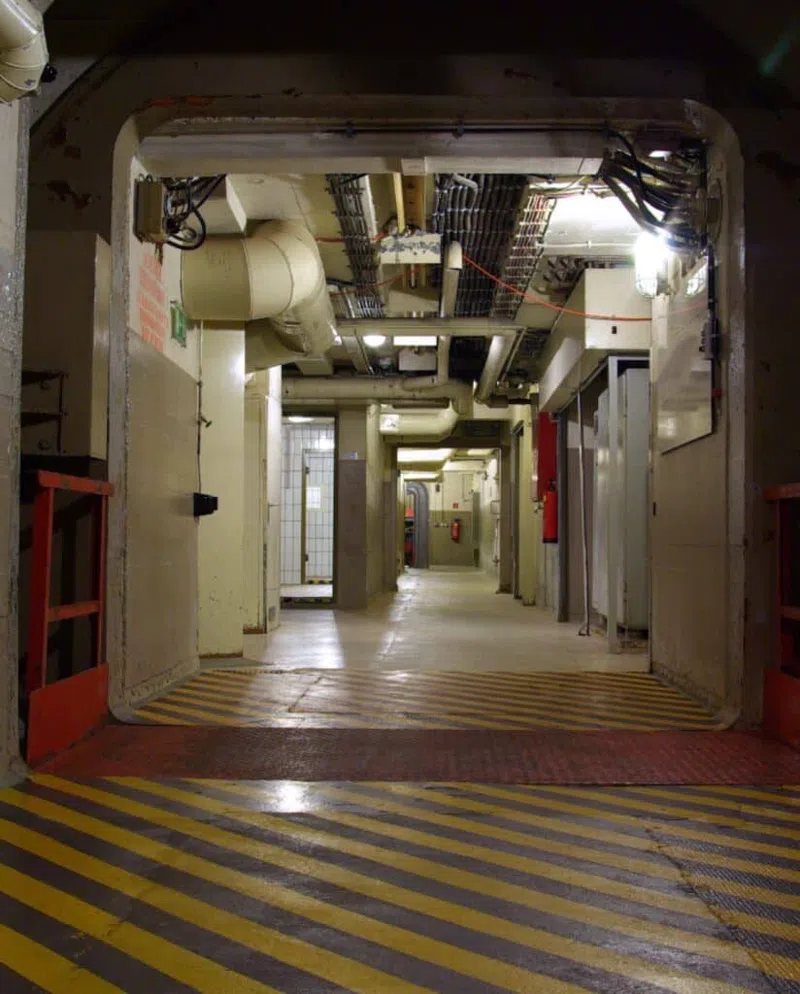
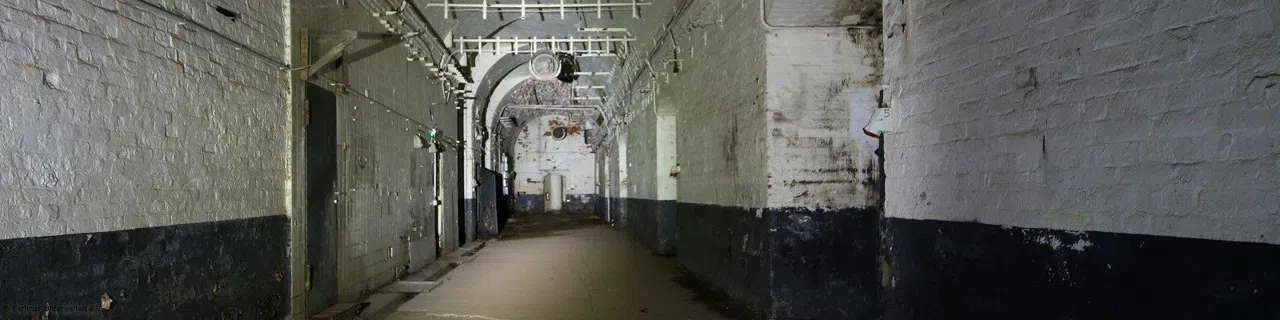
One organisation controls most of the underground access. Berliner Unterwelten – Gesundbrunnen Bunker Museum (Gesundbrunnen, northern Wedding) runs its "Dark Worlds" tour year-round from the shop at Brunnenstraße 105, directly beside the U- and S-Bahn station, for €18 (€13 reduced). Public tours cap at around 20 people and sell out, especially at weekends. Sturdy closed-toe shoes are obligatory and the guides turn people away at the door, so treat that as a rule rather than a preference. The association also books dedicated group tours in German and English outside the public schedule, which is the only sensible way to move more than half a dozen people through a shelter stairwell. It runs the Fichtebunker, the Pankstraße nuclear bunker and the Dresdener Straße tunnel as well, so think of it as one operator with four sites: if the tour you want is full, check the others before giving up. For the wider context of the districts these sit in, the Berlin guide is the place to start.
The flak tower you can still walk up
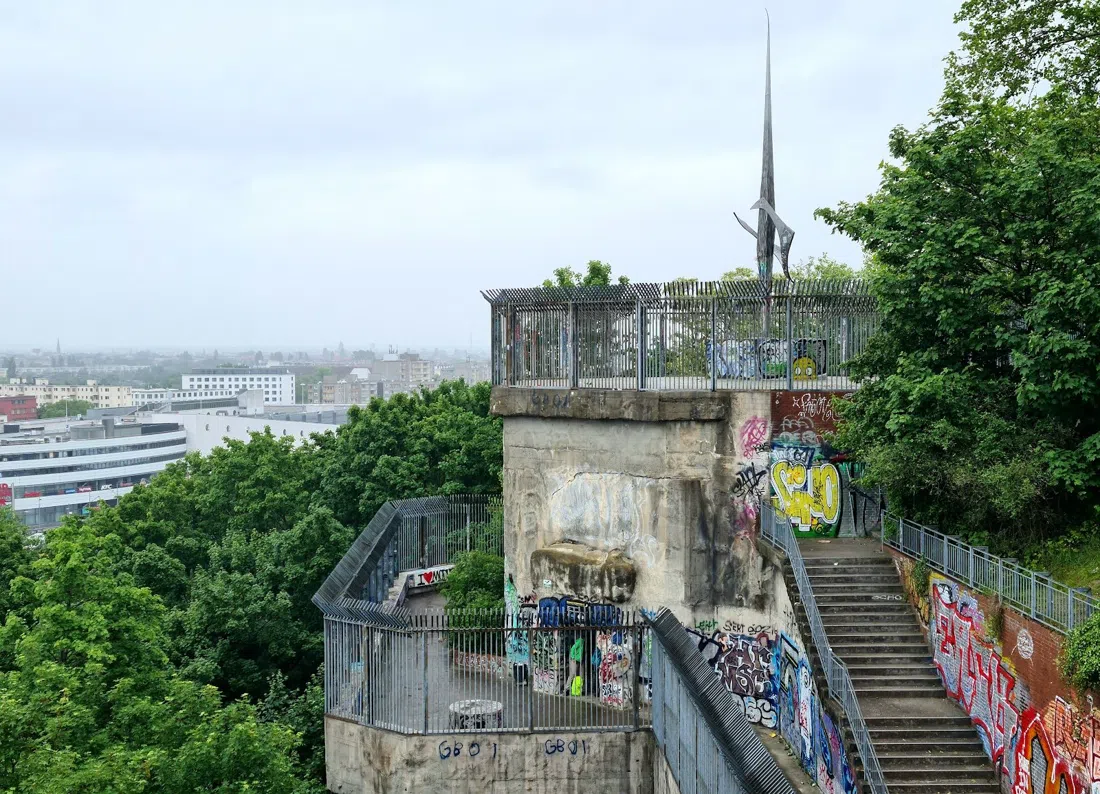
Flakturm Humboldthain (Volkspark Humboldthain, Gesundbrunnen) is the one that failed to fall, and the raw sheared face where the concrete tore instead of collapsing is the most photographable object in the whole subject. The park and the summit terrace are free, open around the clock, with no limit on group size: you can arrive with fifteen people at seven in the morning and nobody will stop you. From the top you get the northern skyline and, more usefully, a sense of scale that no interior can give you. The gun platforms were built to work above the roofline of the entire district.
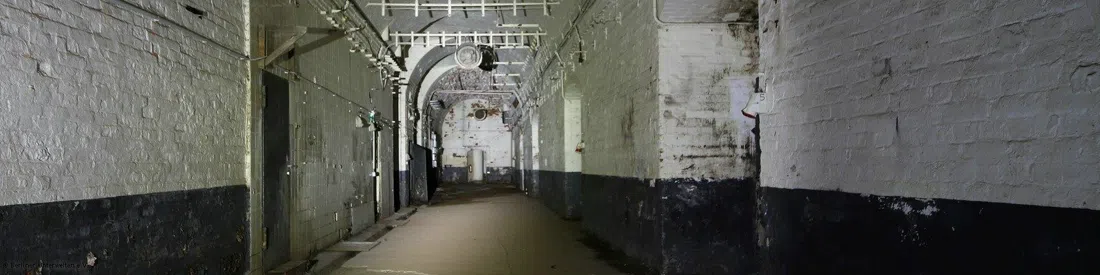
The interior is a separate proposition. Berliner Unterwelten runs it from April to October only, 18-plus, helmets issued, €17-18, and it sells out reliably. If you are in the city in winter, accept the summit and the exterior. That is the honest version of the visit, and it is still worth the climb. The Unterwelten shop is a ten-minute walk from the foot of the tower, so the tidiest morning in this article is Dark Worlds first, then the terrace.
Großer Bunkerberg, known locally as Mont Klamott (Volkspark Friedrichshain), is the opposite outcome. Flak Tower II was blown up in 1946 and then buried under rubble carried by the Trümmerfrauen, and the interior is sealed: no door, no tour, nobody who will let you in. Read it as landscape archaeology instead, in the unnaturally steep sides, the too-regular footprint under the trees, the way the paths spiral rather than climb. It is free, open, and fine for any group at any hour, which makes it the easiest stop on the list. Just do not go expecting a visit.
Art inside the shelters
Boros Collection (Mitte, Reinhardtstraße) carries the whole arc of this article in one building: Nazi air-raid shelter, then a Soviet fruit store, then the notorious 1990s "Bunker" techno club, now Collection #4 hung across its chambers with a penthouse on the roof. Visits are small guided groups only, Tuesday to Sunday, with tours every half hour in German and English, and private group tours bookable. All bags go into lockers, photography is not allowed anywhere inside, and the recommended minimum age is 12. Tickets are €20 (€12 reduced). Book weeks ahead. This is the most reliably sold-out thing here, and turning up on spec does not work.
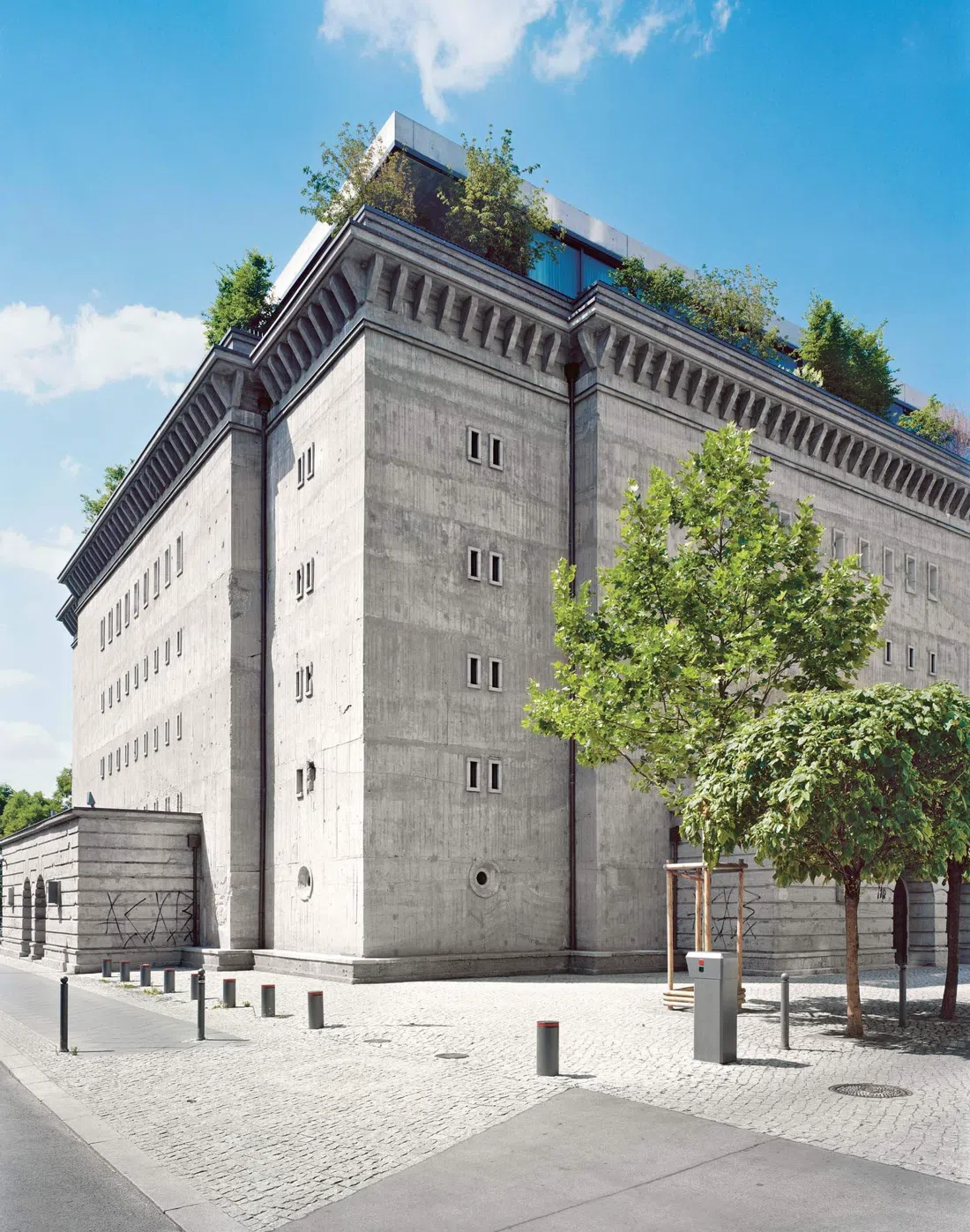
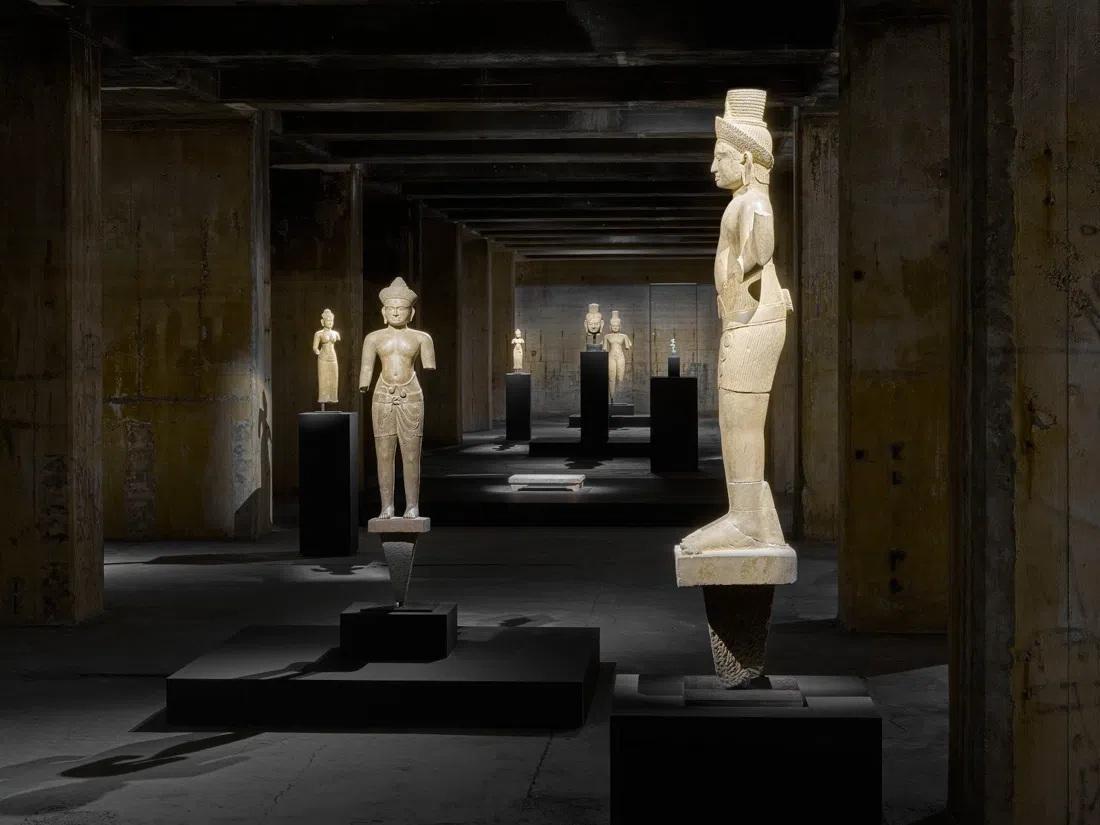
The Feuerle Collection (Kreuzberg, on the Hallesches Ufer side of the Landwehrkanal) is the quiet counterweight. Visits are accompanied only (Friday 14:00-19:00, Saturday and Sunday 11:00-19:00, last tour 18:00) and run 45 minutes, with an art mediator alongside you throughout. It opens with a sound piece in near-darkness before you see a single object, a ritual rather than a gallery walk, and it will either hold you completely or irritate you. The rules are strict and worth knowing before you buy: 16-plus only, no photography, bags left at the door. €22, reduced €11-15. Two people who are happy being quiet in the dark will get far more from it than a group of six.
Museums that keep the lights on
Berlin Story Bunker (Kreuzberg, beside the ruined Anhalter Bahnhof) is the most confronting of the bunker museums, and the least interested in atmosphere for its own sake. Its "Hitler – How Could It Happen?" exhibition is a long, argumentative documentary route through the rise of the regime, and it takes real time. Open 365 days a year, 10:00-19:00 with last entry at 17:30, €18 (€12 reduced) with the audio guide in ten languages included, and dedicated group offers and rates. It is not wheelchair accessible. Arrive before 16:00 if you want to see the whole thing rather than the first two thirds, and give yourself two minutes afterwards for the Anhalter Bahnhof portico around the corner, the surviving fragment of a terminus that once handled the traffic of half a continent.
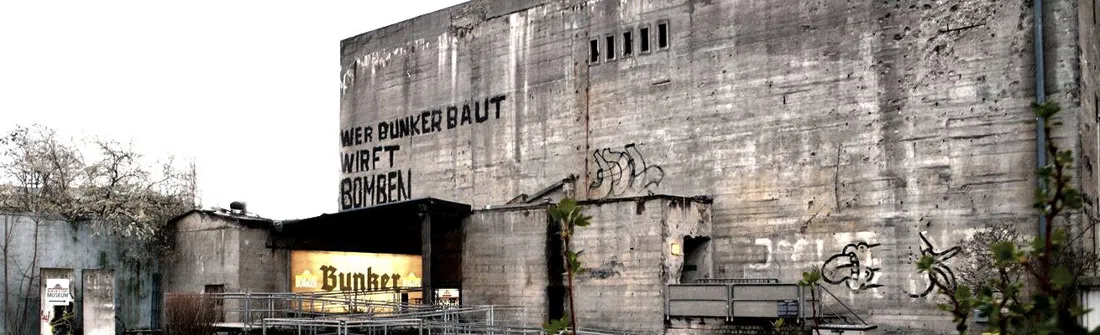
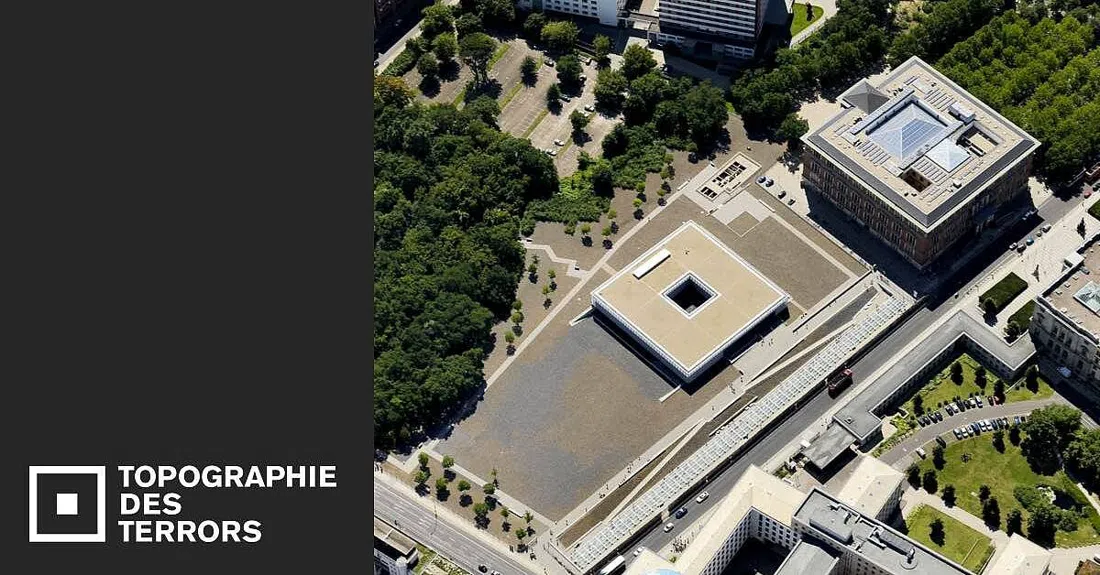
Topography of Terror Documentation Center (on the Mitte-Kreuzberg boundary at Niederkirchnerstraße) is strictly cellars rather than a bunker, but it belongs on any route like this because it teaches the skill the rest of the day depends on: reading concrete as evidence. The excavated foundations are those of the Gestapo and SS headquarters, and the outdoor trench runs along a surviving stretch of the Wall. It is free, open daily 10:00-20:00, with free 60-minute open tours every weekend and group programmes in several languages for a minimum of seven people.
A free afternoon on one walking line
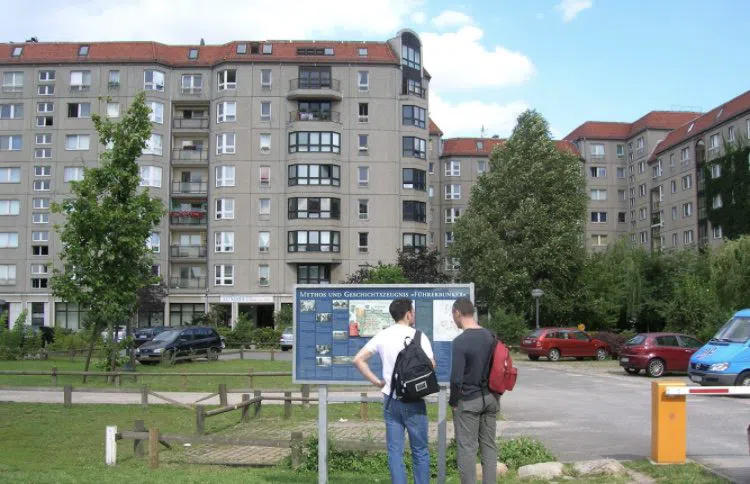
Three of the most eloquent objects in this piece cost nothing and sit close enough to string together. Start at Gedenkort Führerbunker (Mitte, on a residential corner off Wilhelmstraße), a single information panel on a car park: free, unbooked, open at all hours. That is entirely the point, because the city refused to mark the site at all until 2006, precisely to avoid manufacturing a pilgrimage. The pavement is narrow and walking-tour groups cycle through in ten-minute shifts, so keep a group tight and let others read. It is a three-minute walk from Potsdamer Platz, and Mohrenstraße is the nearest U-Bahn.
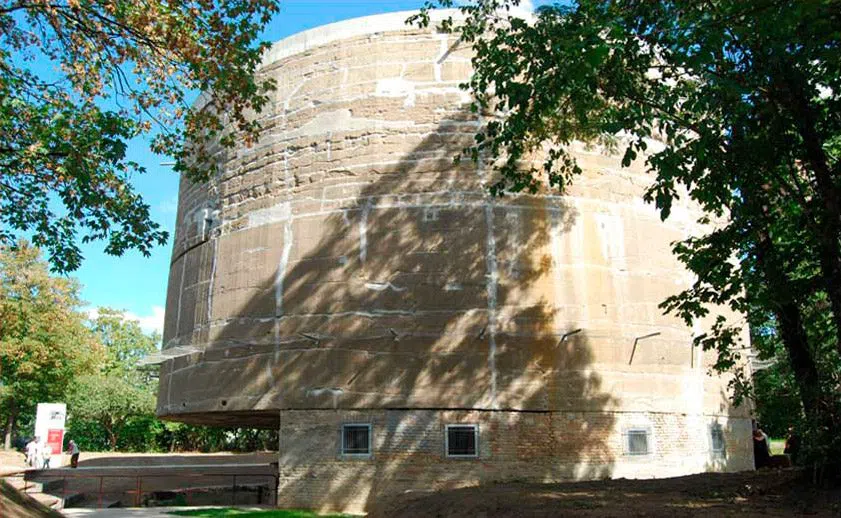
Walk on to the Topography site, then take the U-Bahn south to Informationsort Schwerbelastungskörper (Tempelhof-Schöneberg, General-Pape-Straße), the purest object of the lot: a 12,650-tonne cylinder of concrete sunk into the ground to test whether the sandy soil could carry the triumphal arch of the never-built Germania. It could not. The site is free, needs no booking and takes groups, but it is seasonal (1 April to 31 October, Tuesday to Thursday and Saturday to Sunday, 13:00-18:00), with a free German-language guided tour on the first Sunday of each month at 15:00. The interior is currently closed on safety grounds, so what you get is the pavilion, the viewing tower and the block itself.
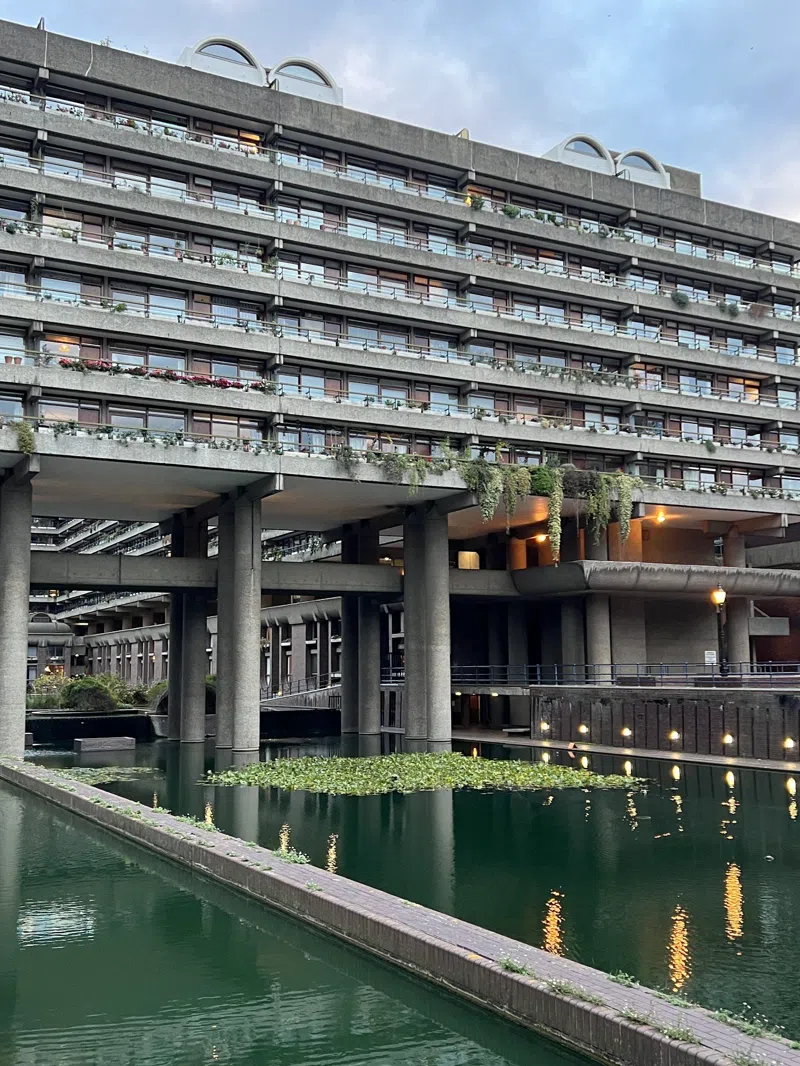
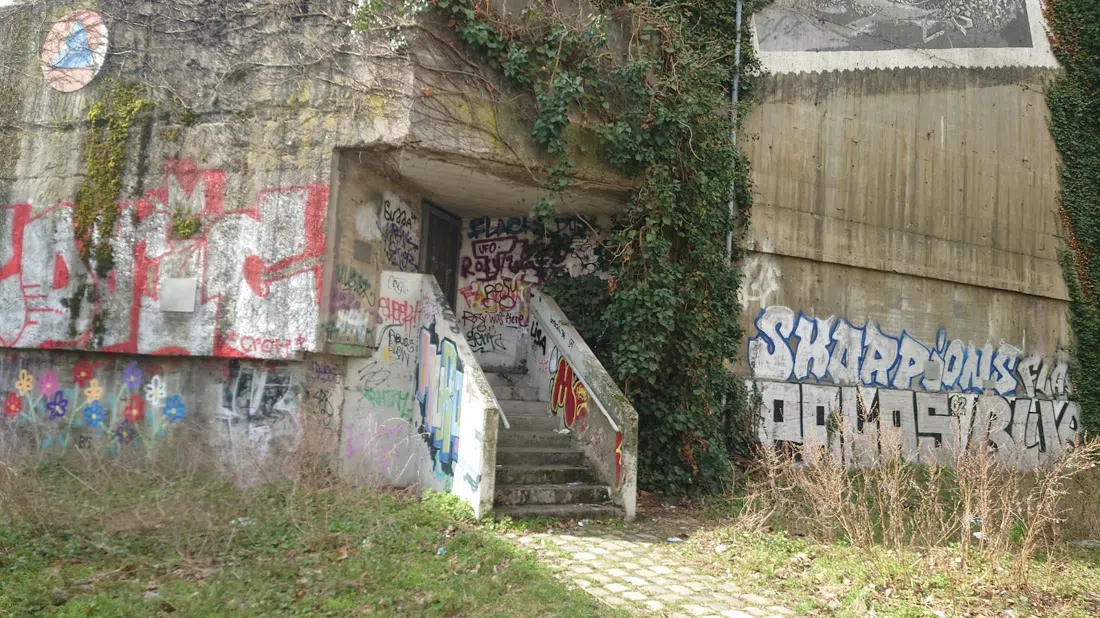
Finish at Hochbunker Pallasstraße (Schöneberg), the most literal image Berlin offers of a past it could not dispose of. Built by Soviet forced labourers, judged too solid to demolish safely, and so simply built over: the Pallasseum housing block bridges the street beside it. It stands next to the site of the Sportpalast, where Goebbels gave the "total war" speech. This is an exterior only: free, public street, any group, any time. The interior is not an attraction; it is used for a school memorial project and occasional events, so do not arrive expecting a door to open.
The airport and the rubble mountain
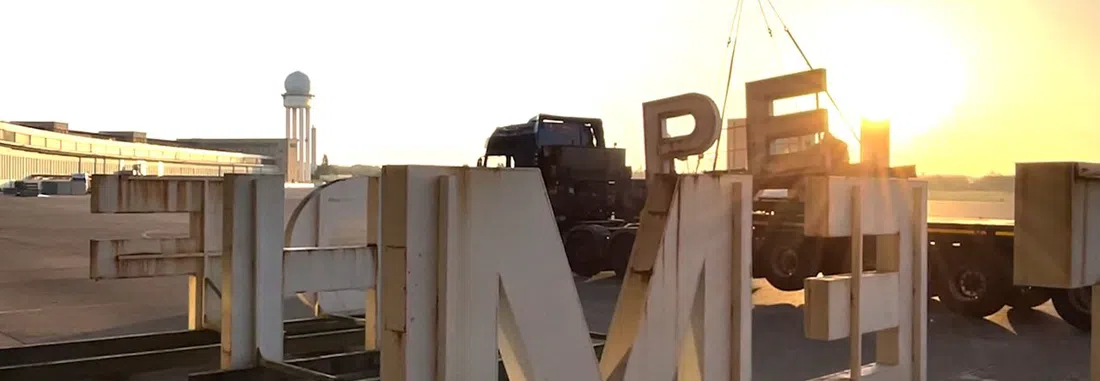
Tempelhof Airport (THF) — Hidden Places tour (Tempelhof) is the best-value underground tour in the city and the strongest single thread from the Nazi years into the Cold War: air-raid shelters, the forced-labour aircraft production halls, then the rooms the US Air Force used for intelligence work. Public tours run Saturday and Sunday at 10:30 and last two hours, at €17.50 (€12 reduced), with 25% off if you hold a Berlin WelcomeCard. Private group tours can be booked outside normal hours through Museumsdienst Berlin with a minimum of eight people, which is how a family group or a company outing should do it. Closed shoes are required, and there is no wheelchair access and no pushchairs. For 2026, the separate "Myths Tempelhof" tour pauses from 18 May to 1 June, but Hidden Places runs straight through.
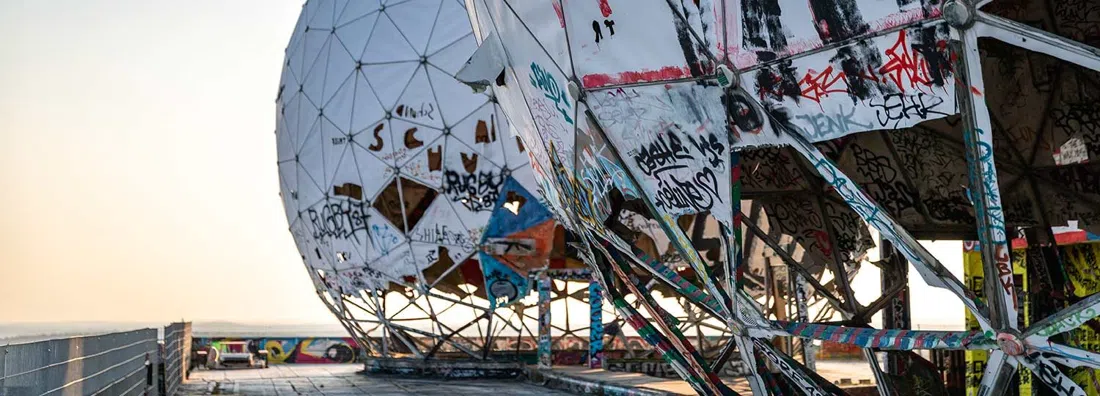
Teufelsberg Field Station (Grunewald) puts the whole century on one hill. The mound is wartime rubble piled over a Nazi military-technical college that resisted demolition, the domes on top are the remains of the American listening station that sat on it through the Cold War, and the interiors are now covered in street art that gets repainted almost continuously. It opens daily from 11:00 until sunset with last entry an hour before close, at €12 adult, €10 concession, €5 under-18 and €27 family, with guided tours extra. Groups are fine and school and private group programmes exist; buy online in advance to skip the counter queue. It is closed on 18 September, 24 December and 31 December 2026. Budget for the walk up through the forest: it is longer than the map suggests, and there is nothing to buy on the way.
Two trips worth leaving the city for
Bücher- und Bunkerstadt Wünsdorf sits about 40km south and is the one entry that justifies a whole day. This was the Wehrmacht high command's nerve centre and later a closed Soviet garrison town of tens of thousands, a forbidden city on Brandenburg soil. Booking is essential, by phone or email. Tour 1 runs daily except Monday at €14; the four-bunker tour at €20 is the serious option and the one to take if you only come once; a 4.5-hour specialist tour runs at €40 and is 16-plus; Tour 5 requires a minimum of ten people. Bring a torch, a jacket and sturdy shoes, because the temperature underground does not care what the forecast says, and note that it is not suitable for mobility-impaired visitors.
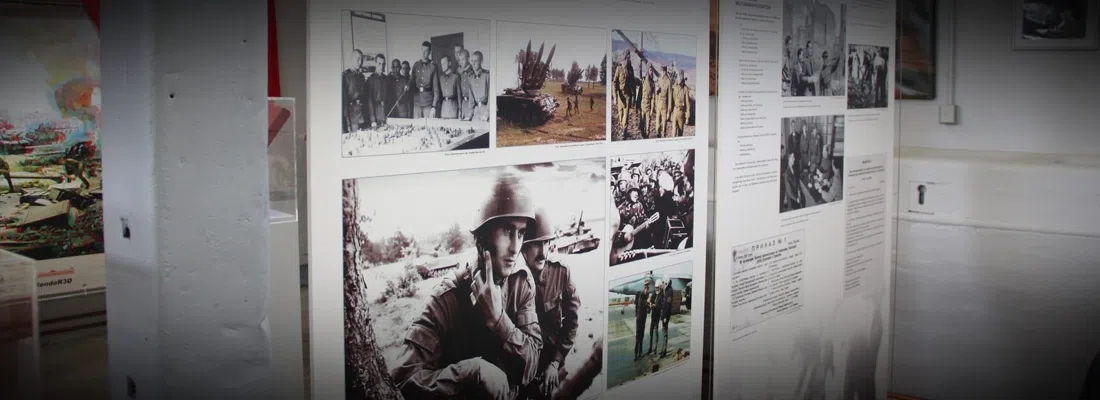
Atombunker Museum Harnekop, an hour northeast, is the cold-war bookend to the flak towers: the main GDR Ministry of National Defence bunker, and the least sanitised interior on this list. Access is by guided tour only, with regular tour days on Thursday, Saturday and Sunday and online booking required; exclusive tours for groups, companies and school classes can be arranged. Prices run roughly €10-€35 depending on the tour and rose under the operator that took over in 2025, so confirm the current rate when you book rather than trusting an old listing.
Where the concrete still has a soundsystem
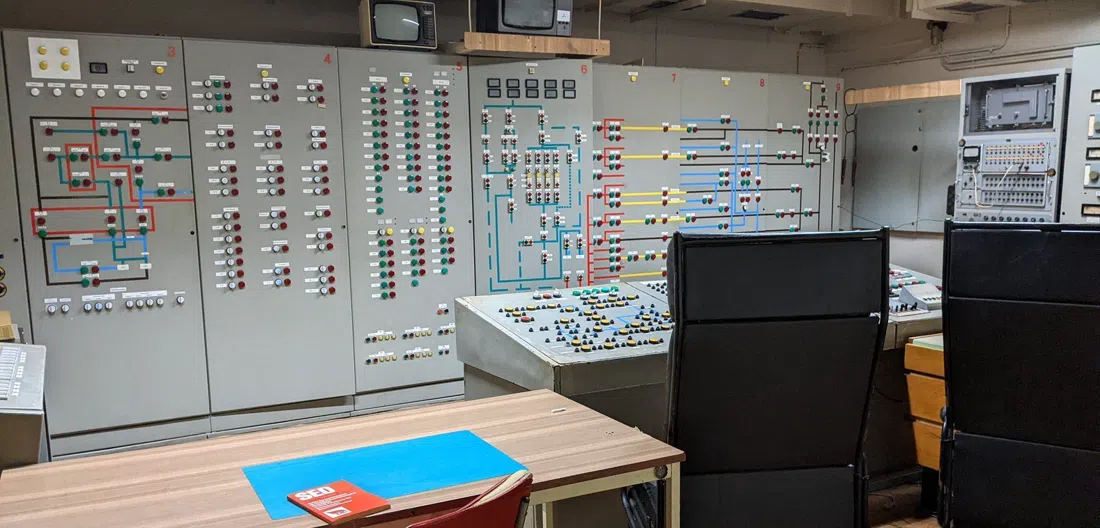
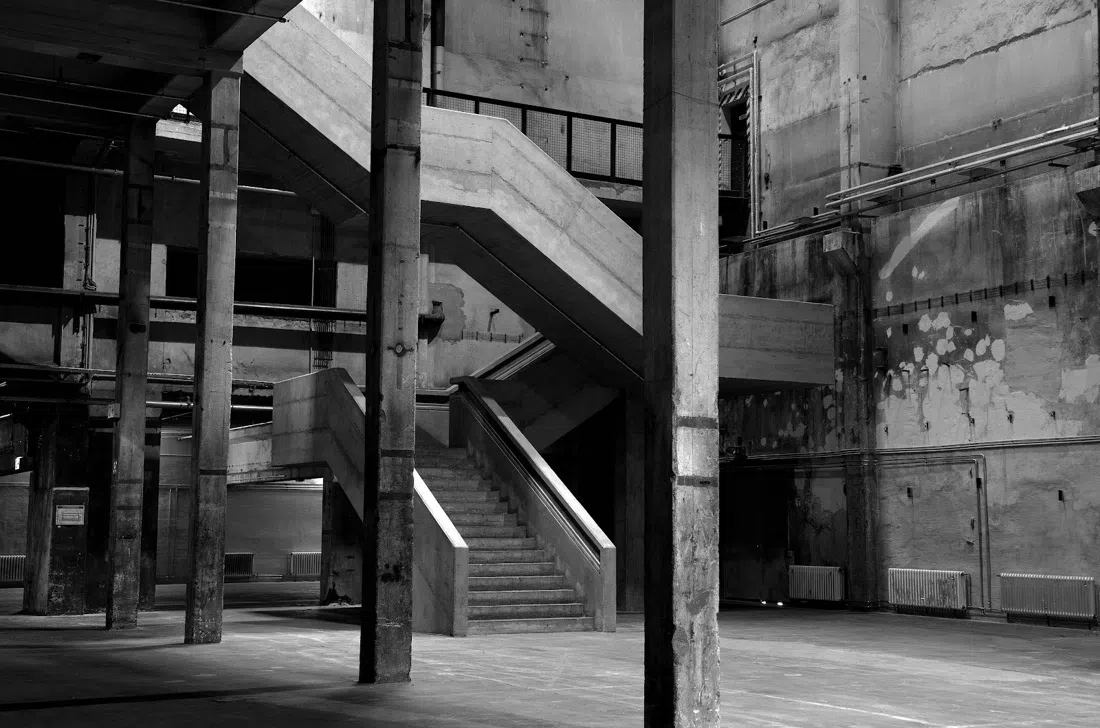
Kraftwerk Berlin, home to Tresor, Globus and OHM (Mitte, Köpenicker Straße) is a decommissioned power plant rather than a bunker, and it is here because it finishes the argument the rest of the article makes. The reuse logic that put art in a shelter on Reinhardtstraße is the logic that put a soundsystem in a turbine hall, and this is where the descendants of the old Bunker club actually dance. Tresor opens Monday, Wednesday, Friday and Saturday with a strict late-night door: large groups are the classic rejection, so split into pairs, arrive separately, keep phones away and do not queue as a party of eight. Entry runs €15-25. Kraftwerk itself opens only for programmed events such as Berlin Atonal and The Quiet Space, when the main hall becomes one of the more overwhelming interior spaces in Europe; ticket prices vary by event.
Practical notes
Transport is simple inside the city: everything is on the U-Bahn, S-Bahn or a short bus ride, and a standard city-zone ticket covers Gesundbrunnen, Mitte, Kreuzberg, Schöneberg and Tempelhof. Teufelsberg needs an S-Bahn out west plus a 30-40 minute uphill walk. Wünsdorf is a regional train south and sits outside the city zones, so buy the extended ticket. Harnekop has no useful public transport, so a car, or a taxi from the nearest station, is the realistic answer.
Timing is what the trip has to be built around. Two sites are seasonal (the Humboldthain interior, April-October; the Schwerbelastungskörper, April-October), one is weekend-only (Tempelhof Hidden Places), and two are effectively booking-only weeks ahead (Boros, Wünsdorf). Fix those four constraints first and everything else fits around them. Underground tours run cold year-round, so bring a layer even in August.
Book Boros, Feuerle, Tempelhof, Teufelsberg, Wünsdorf and Harnekop online or by phone in advance; the rest you can walk up to. Carry some euros: small tour desks and rural sites are not reliably card-friendly.
The free tier is genuinely strong. Humboldthain's summit, Mont Klamott, the Führerbunker panel, the Schwerbelastungskörper, the Pallasstraße exterior and Topography of Terror cost nothing at all and make a full, serious day. Doing the six main paid sites inside the city comes to a little over €100 per person, plus €14-40 for a day at Wünsdorf.
For a base, Mitte and Kreuzberg put you within walking distance of Boros, Feuerle, Berlin Story Bunker, Topography of Terror and the Führerbunker panel, and one U-Bahn line from Gesundbrunnen. Start a Berlin hotel search in those two districts and the rest of the itinerary gets shorter by an hour a day.
Access is the hard limit here, because this is a subject built on stairs. Berlin Story Bunker is not wheelchair accessible, Tempelhof's tour has no wheelchair access and does not allow pushchairs, and Wünsdorf states plainly that it is unsuitable for mobility-impaired visitors. The workable route is the free one: the parks, the street-level monuments and Topography of Terror's open-air documentation trench.