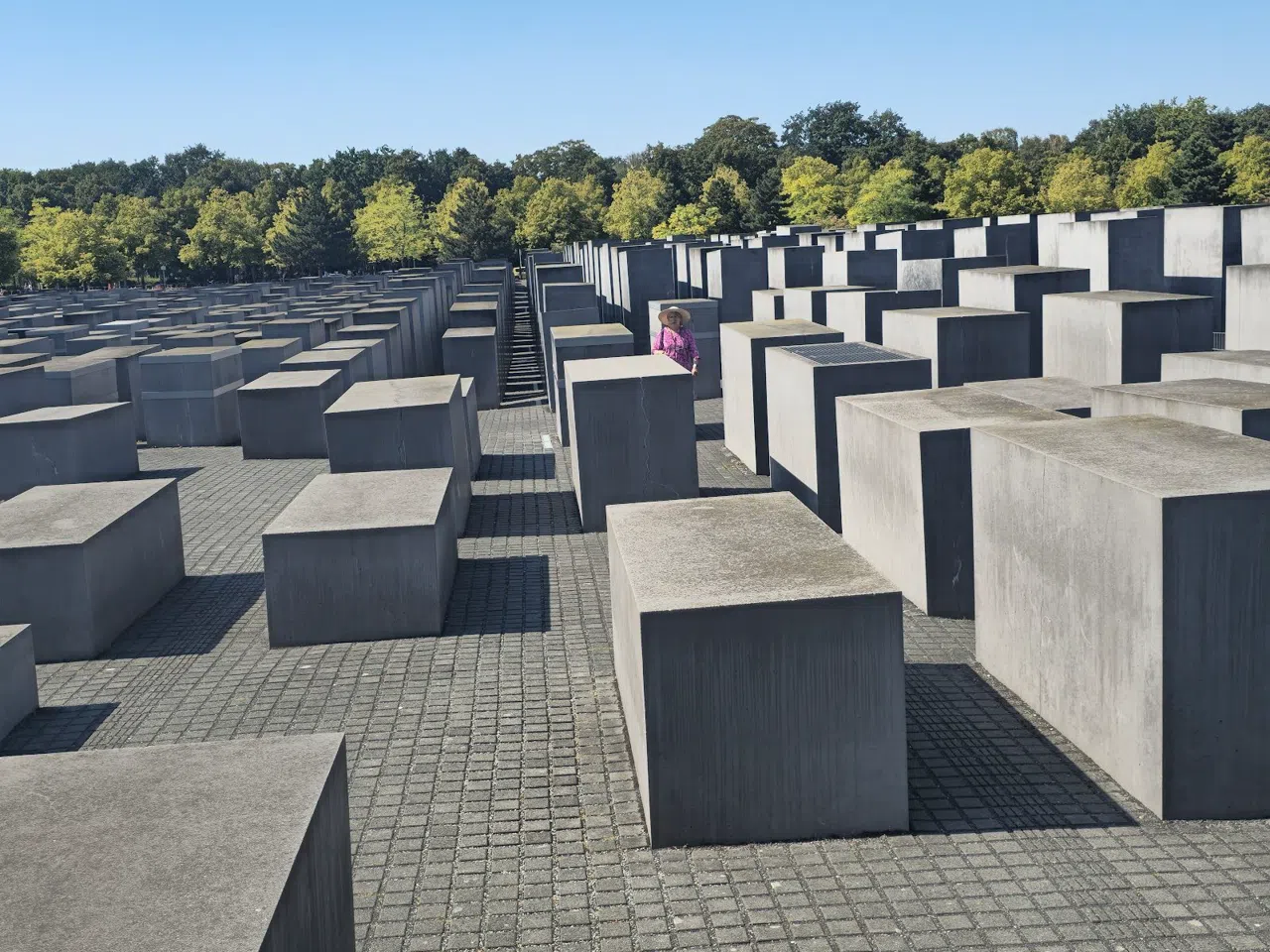

At the Ebertstraße corner the slabs come up barely to your knee, and you can see clean across the grid to the trees on the far side. Twenty paces in, the ground drops away beneath your feet, the rows close over your head, and the traffic you were standing in a minute ago thins to almost nothing. Nothing is explained to you and nothing is charged, and the effect arrives anyway.
What you are walking into
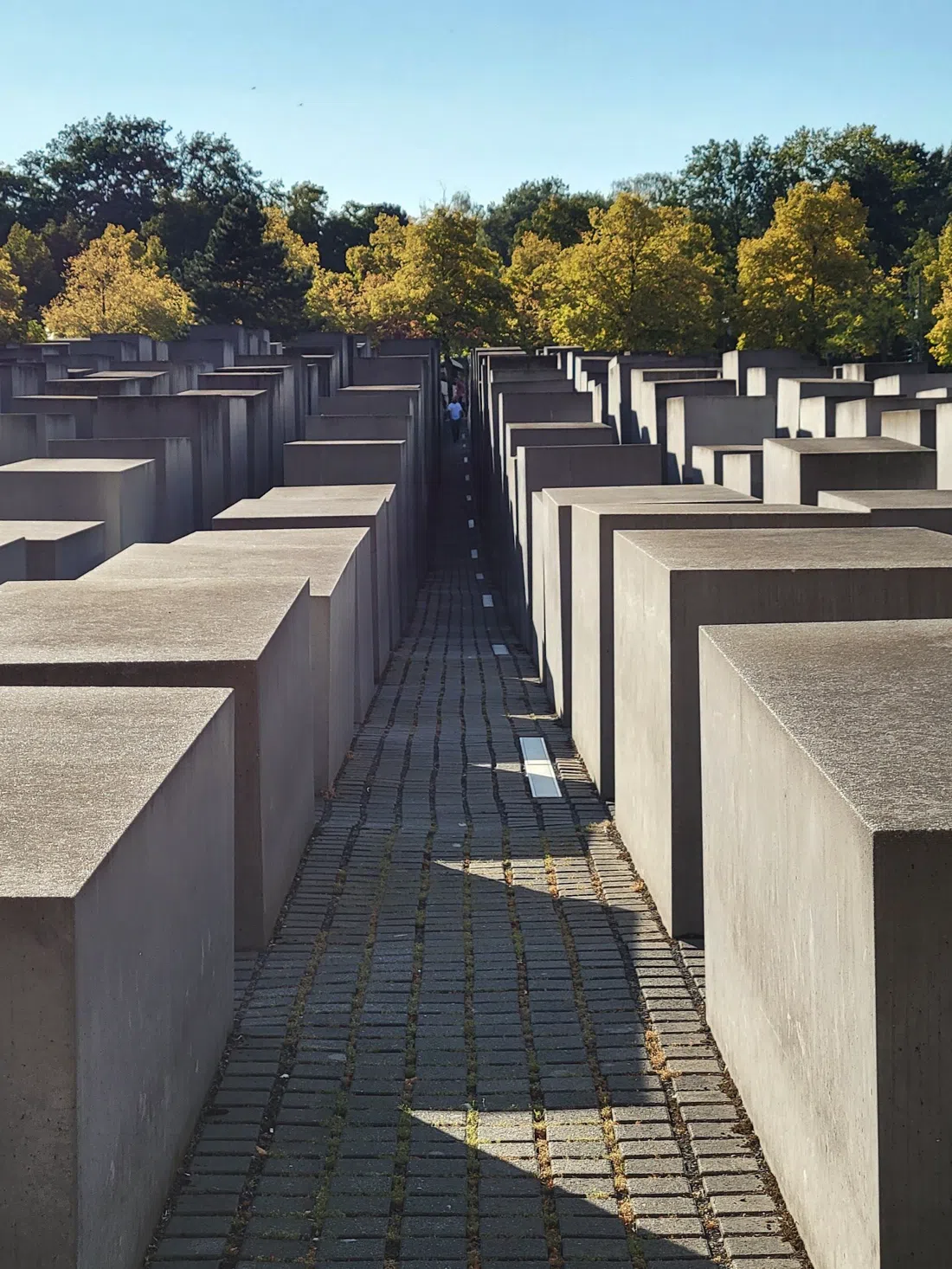
The Memorial to the Murdered Jews of Europe — Field of Stelae (Mitte, one block south of the Brandenburg Gate) is a full city block of 2,711 grey concrete slabs, set in a strict grid on ground that rolls underneath them like a slow swell. There is no gate, no ticket desk and no opening hour. It is open twenty-four hours a day, it costs nothing, and there is no door policy to fail.
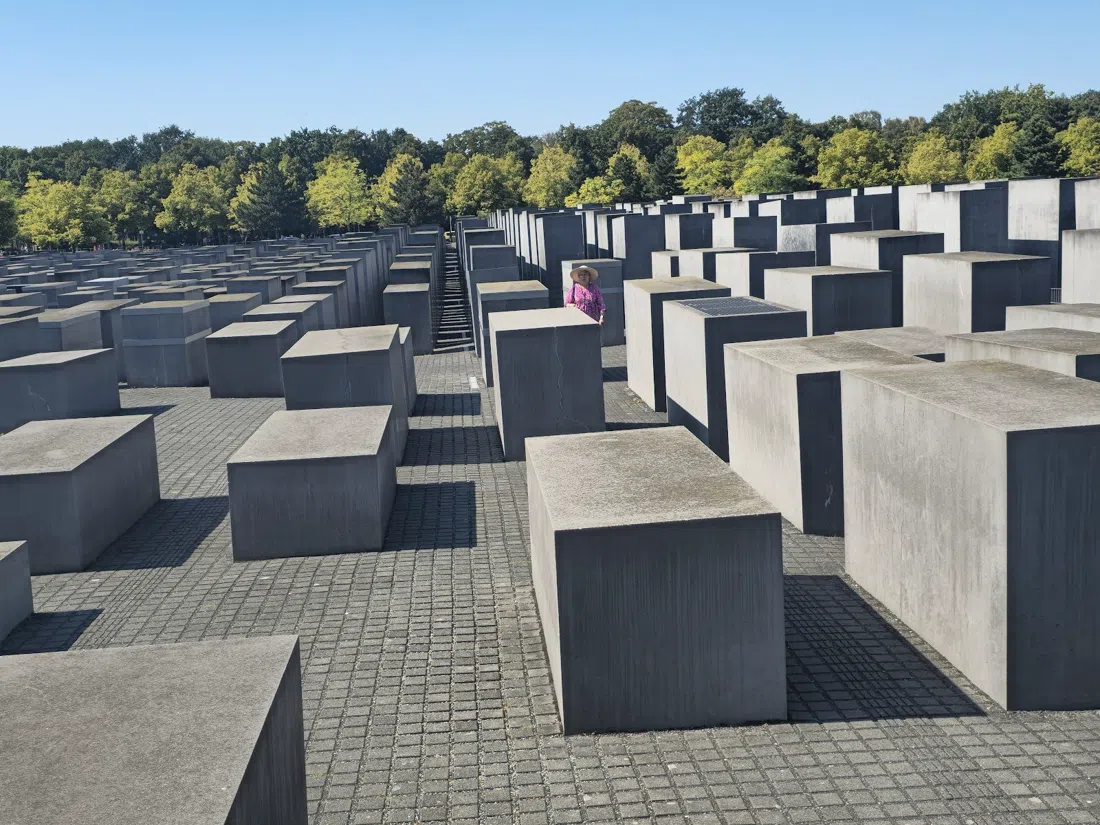
The design withholds almost everything a monument usually offers. No names are carved anywhere. No dates, no inscriptions, no figures, no explanation on the site itself. What it gives you instead is a physical experience you cannot get from a photograph: walk in at a corner where the stones are ankle-high, keep going in a straight line, and within half a minute the paving has sunk, the slabs have grown past your shoulders, and every sightline except the one down your own narrow lane has closed. People disappear and reappear at crossings. Sound goes strange. That disorientation is the point of the place, and it is why the standard three-minute walk along the edge tells you nothing.
Do not skirt it. Go into the middle, stop, and stand still for a couple of minutes before you come out. Plenty of visitors treat it as a photo backdrop and children run the lanes; the site staff intervene only at the edges of decency. You are not required to perform solemnity, but you will get more out of it if you stop moving.
The room beneath the stones
The part most people miss is directly underneath. Ort der Information (the information centre below the southeastern corner of the field, Mitte) is where the abstraction above ground acquires names, families, letters and addresses. It is the counterweight the field deliberately refuses to be, and going up into the stones afterwards is a different walk entirely.
Entry is free. The audio guide costs €3 (€2 reduced, and the same reduced rate for school groups). Since 1 May 2026, when it reopened after a renovation closure that ran from 12 January to 30 April, it has been open Tuesday to Sunday, 10:00 to 18:00, with last admission at 17:15. It is closed on Mondays. That closure is the most common trip-up in the whole quarter, because the outdoor field never closes, so people assume the whole site works the same way. If you have one morning in this part of the city and it is a Monday, plan around it.
Allow an hour inside as a floor, ninety minutes if you read properly. It is a small centre by floor area and a heavy one by content.
How long the visit takes
Walking through the field alone takes ten minutes. Walking through it the way it is meant to be walked (in, stop, out at a different corner, then a second pass) takes twenty-five to forty. Add the centre and you are at two hours. Add the three nearby memorials described below and you have a comfortable half-day that ends with a sit-down and a coffee.
The foundation that runs the site offers booked guided tours of the stele field for groups of up to 25 people: 45 minutes, €85 (€60 reduced), available in a long list of languages. For a family or a small group of friends that is expensive per head; for a class, a team or an extended family it is the most useful €85 you will spend here, because a guide gives the field the context the design withholds. There are also free public tours with no registration, on the first Sunday of the month at 14:00 in English and the third Sunday at 14:00 in German. No registration means no guaranteed place, so turn up fifteen minutes early and stand where the group gathers.
What it costs and when booking ahead matters
At the door, this is free. The field, the centre, and every memorial in the surrounding streets cost nothing. The only money in play is the €3 audio guide, a guided tour if you want one, and whatever you spend afterwards.
There is also a commercial guided option, which is a different product: a half-day or two-hour walk that threads the stele field into the wider story of the government quarter and the Wall. The honest case for it is that a good guide sequences the sites so the day has an argument rather than being a list, and the honest case against is that you can do the same route yourself with this article and a phone map, at zero cost, stopping when you want to. These walks run seven days a week and start from about 23 USD per person; across the bookable tours at this site there are 26,050 traveller reviews, with the top-rated one at 4.9 out of 5 from 10,224 reviews. Take that as evidence the format works for a lot of people, not as a reason to feel you must book one.
Where advance booking really matters is next door, at the Reichstag. See the route below.
Access, bags and the rules of the field
The field has a step-free paved perimeter and the lanes between the slabs are hard-surfaced, so a wheelchair or a pram can cross it, but the gradients are real and they are the reason the place works. After rain the paving is slick and water pools in the low centre; in a hard frost it is worse. Sensible shoes, and be careful climbing on the stones, which people do constantly and which the site asks you not to.
The centre is stricter, because it is an enclosed public building. There is airport-style security screening at the door, a free cloakroom, and a bag limit of roughly 55×40×20 cm. No suitcases at all, so do not plan this as a stop between your hotel and the station with luggage in tow. Booked groups are given scheduled priority entry, which is why walk-up individuals sometimes queue at the door while a party of twenty-five files past. That is the system working as designed.
The three memorials two minutes away
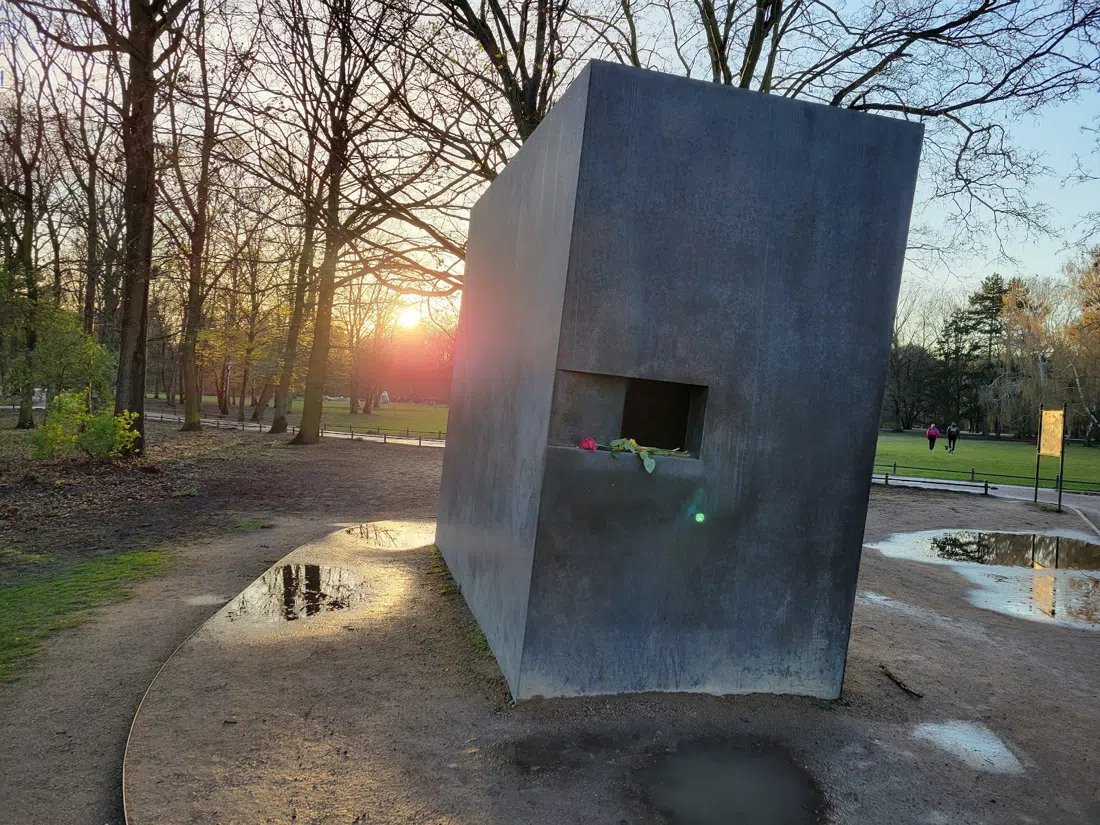
Directly across Ebertstraße, in the edge of the Tiergarten, stands the Memorial to Homosexuals Persecuted under Nazism (Tiergarten). It is a single dark concrete block with a small window, and behind the window a film loops. Exactly one person at a time can look in, which makes it useless for a group in a hurry and strong for anyone willing to wait their turn. The film is swapped every couple of years, so it rewards a second visit on a later trip.
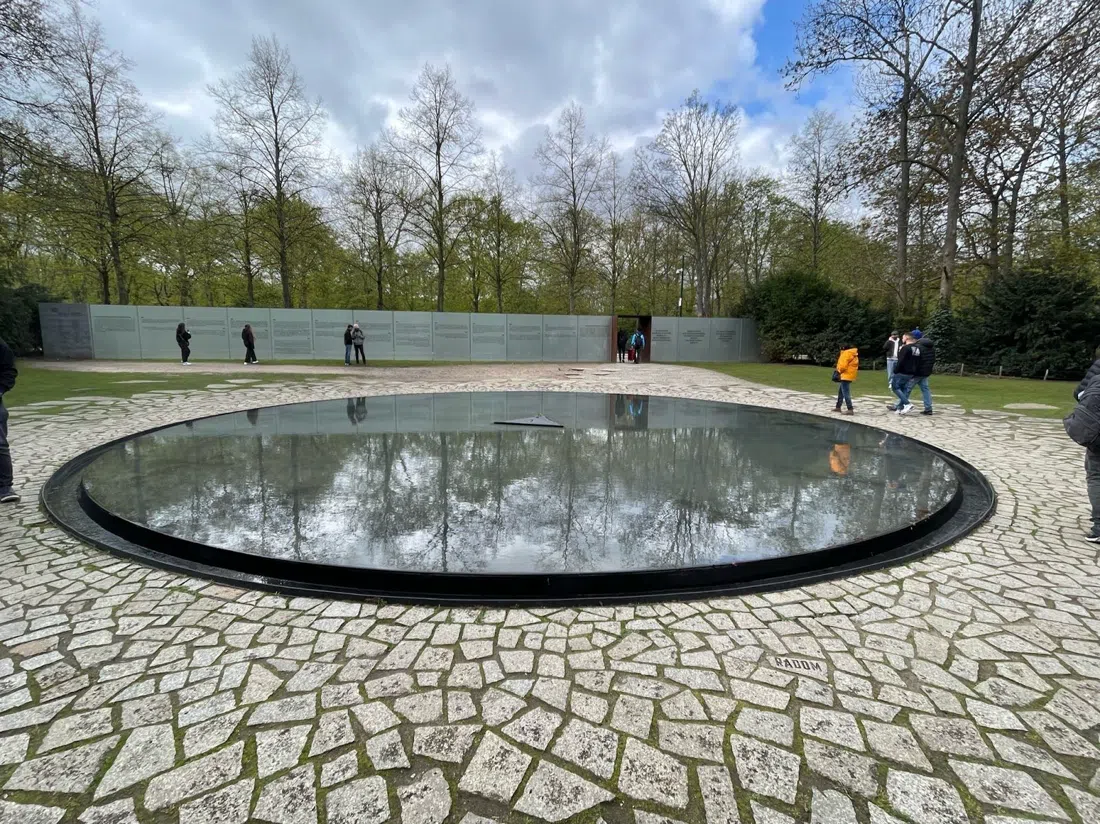
A few minutes north, on the other side of the park, the Memorial to the Sinti and Roma of Europe Murdered under National Socialism (Tiergarten, beside the Reichstag) is the most affecting of the outlying sites. A dark circular pool, a violin playing continuously, and the Reichstag reflected in the water. It is open around the clock, but the ring of stones only holds a couple of dozen people before the quiet breaks, so a large group has to take it in shifts. There is a long-running dispute over a proposed rail tunnel beneath it; if you are promising a group a visit, check the foundation's notices first.
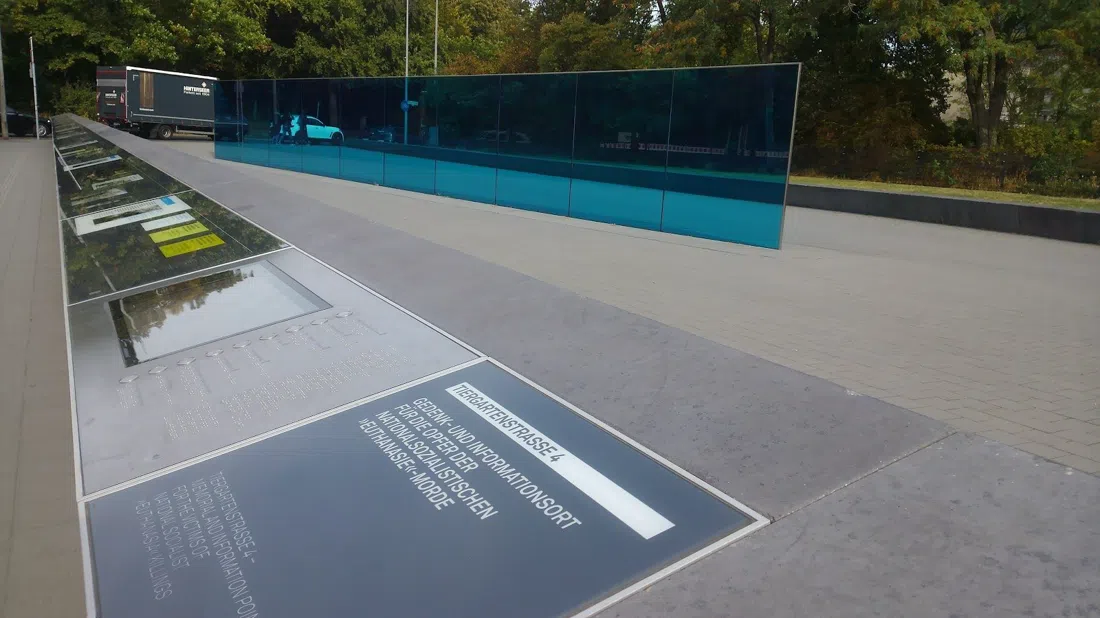
South of the park, the Memorial and Information Point for the Victims of National Socialist 'Euthanasia' Killings (Tiergartenstraße 4, Tiergarten) marks the address from which the T4 murder programme was administered. It is outdoor, unstaffed, free and open day and night, and a group can stand along the full length of its blue glass wall without blocking anyone. It is the least visited of the three central memorials and the one that most changes how you read the others, because it is about who decided, and where they sat.
A route that makes the day hold together
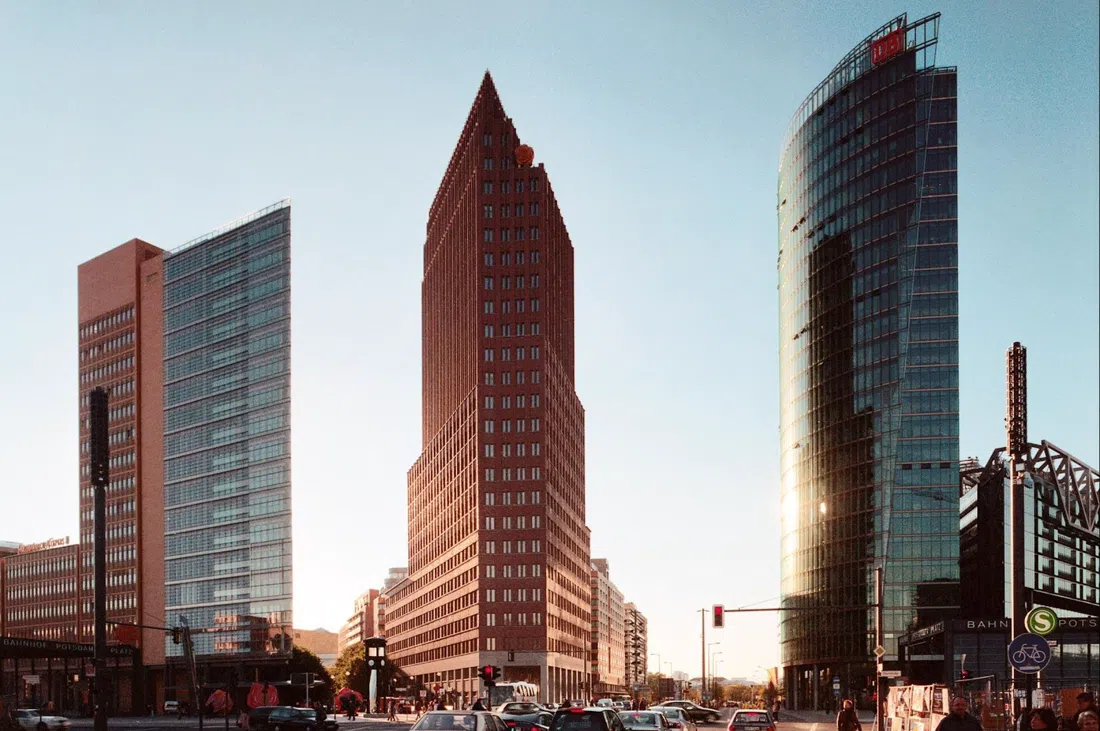
Start high. Panoramapunkt, Kollhoff Tower (Potsdamer Platz) is the only easy place to look down on the stele field, and from above the wave in the paving finally makes sense: you can see that the ground moves more than the stones do. Daily 10:00 to 19:00 with the last ascent at 18:30, café 11:00 to 18:00, around €9 to €16 depending on ticket type; buy online to skip the lift queue. The terrace stands roughly on the line of the old Wall strip, which is worth a minute of orientation. Wheelchair users are limited to three at a time on the 24th floor.
From there it is ten minutes on foot to Tiergartenstraße 4, then across to the stele field and down into the centre. Afterwards, detour two minutes to the Führerbunker Information Board (In den Ministergärten, Mitte), kerbside on a quiet residential street, a single board over a car park. It is deliberately anticlimactic, installed in 2006 so the spot could never become a shrine, and it only works if you know that before you arrive. A group of twenty-five will fill the pavement, so brief people first.
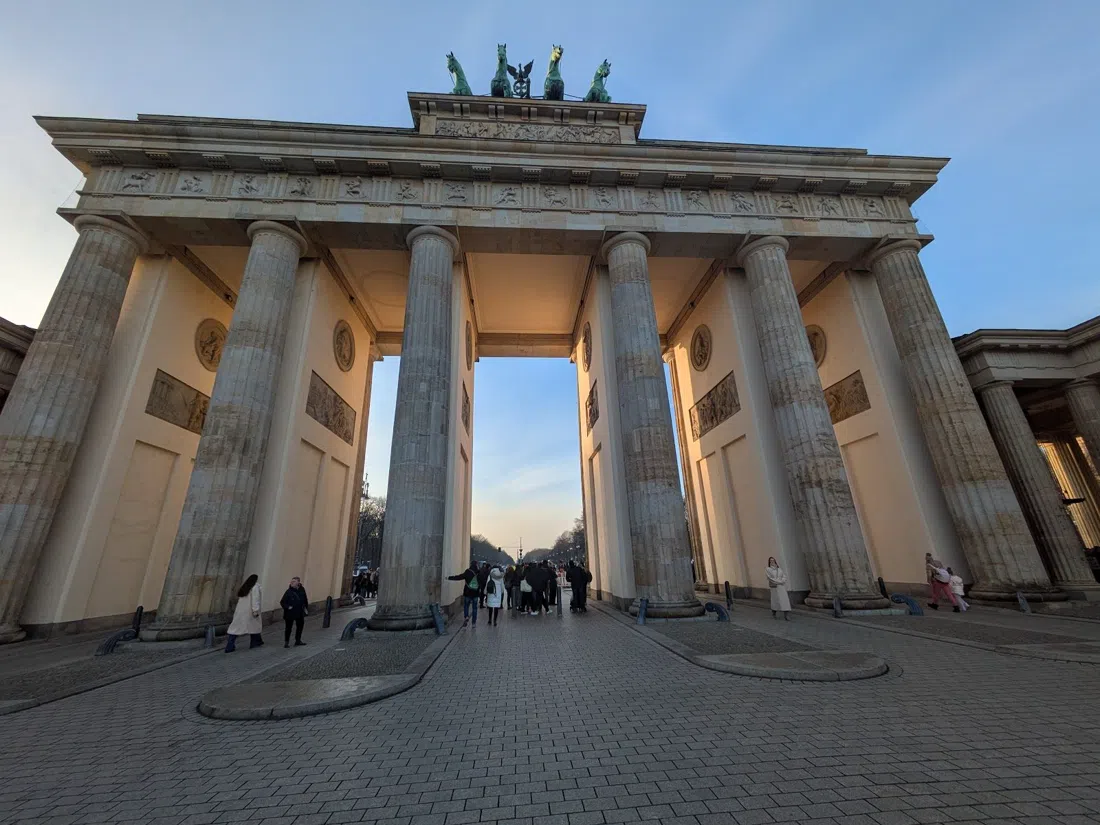
Then the Homosexuals memorial, then north to the Brandenburg Gate and the Room of Silence (Pariser Platz, Mitte). The square absorbs thousands of people; the Room of Silence, tucked into the gate's northern wing, holds very few and asks for silence, so groups go in a handful at a time. It opens daily, roughly 11:00 to 18:00 in summer and shorter in winter, and it is the only place on the square where you can sit down and let the last two hours settle.
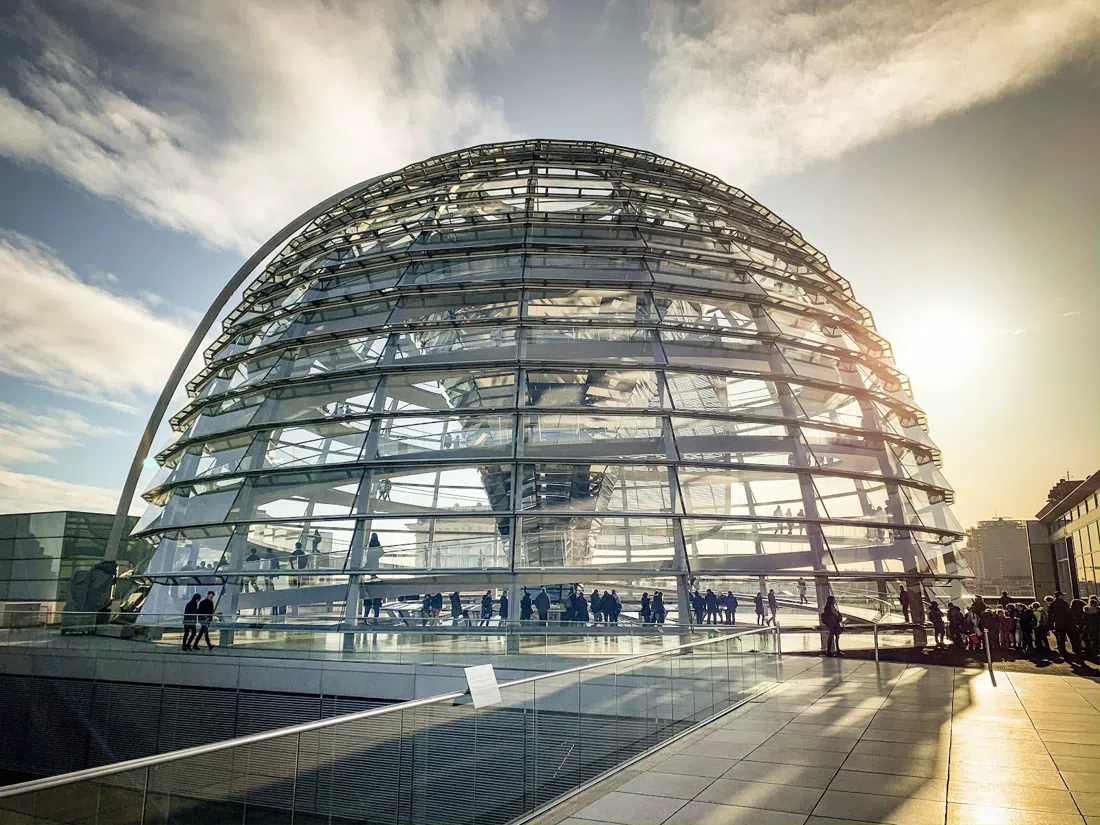
If you want the view over all of it, the Reichstag Dome (Platz der Republik, Tiergarten) is free but every visitor must register in advance with the exact passport or ID details they will carry; group visits go through the Bundestag visitors' service. It is open daily 08:00 to midnight with last entry at 22:00, booking opens three months ahead, and summer late-morning slots go within days. Note two maintenance closures in 2026, 28 September to 2 October and 19 to 30 October, during which the roof terrace stays open.
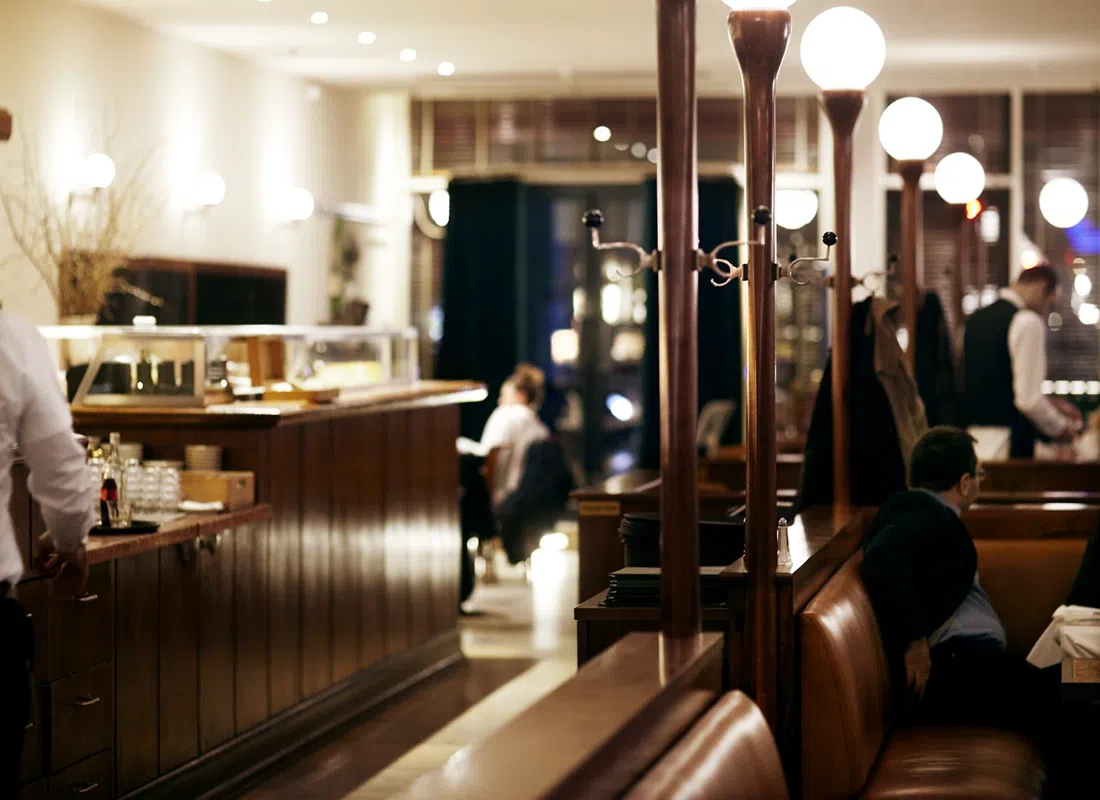
Finish at Einstein Unter den Linden (Mitte), five minutes from the stelae and the standard debrief stop for guided walks. Monday to Friday from 08:00, Saturday from 10:00 to 22:00, Sunday 10:00 to 18:00; coffee and cake runs roughly €5 to €12, full meals more. Walk-ins are fine, but book for parties over six. Eat here rather than on the memorial's steps, which staff will ask you not to do.
Where the story continues
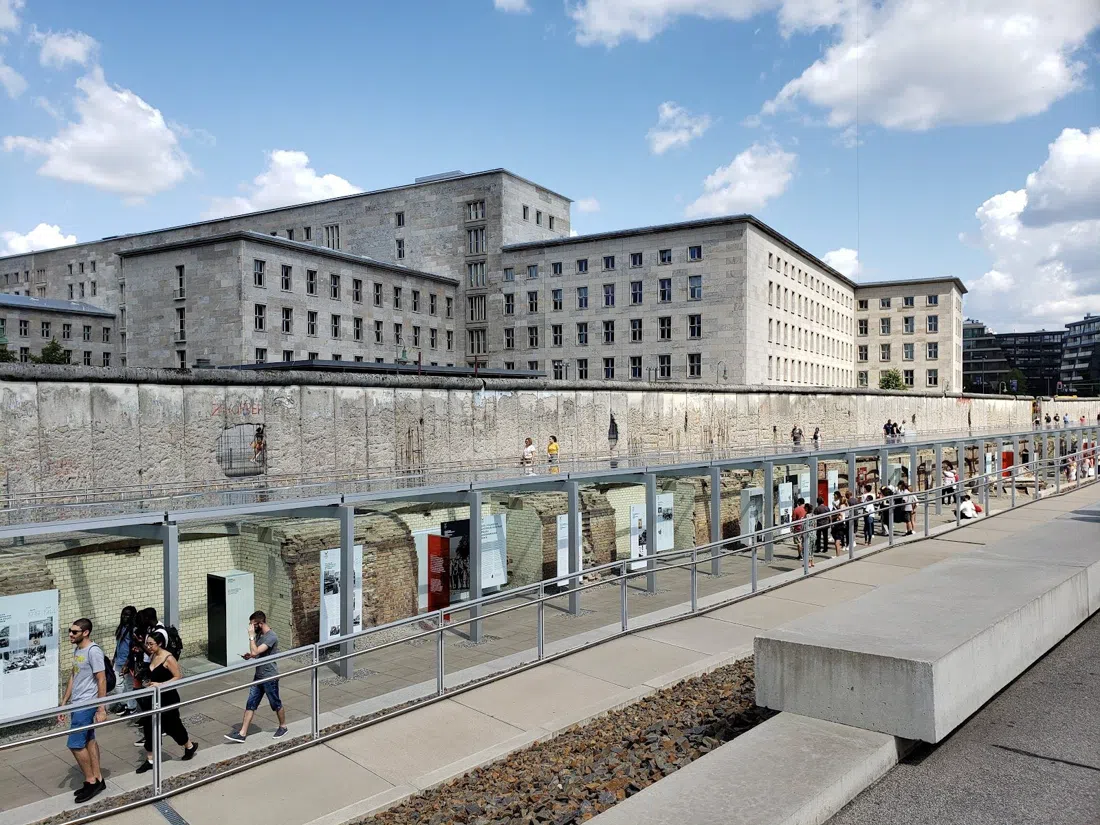
The field is about the murdered. It says nothing about who did it, which is why Topography of Terror Documentation Center (Niederkirchnerstraße, on the Mitte–Kreuzberg edge) is the natural second stop. It stands on the site of the Gestapo and SS headquarters, open daily 10:00 to 20:00, free, no timed tickets, with the outdoor trench along the surviving stretch of Wall open until dusk. Large groups are absorbed without friction. Pair it with the stelae and the day reads as a whole rather than half an argument.
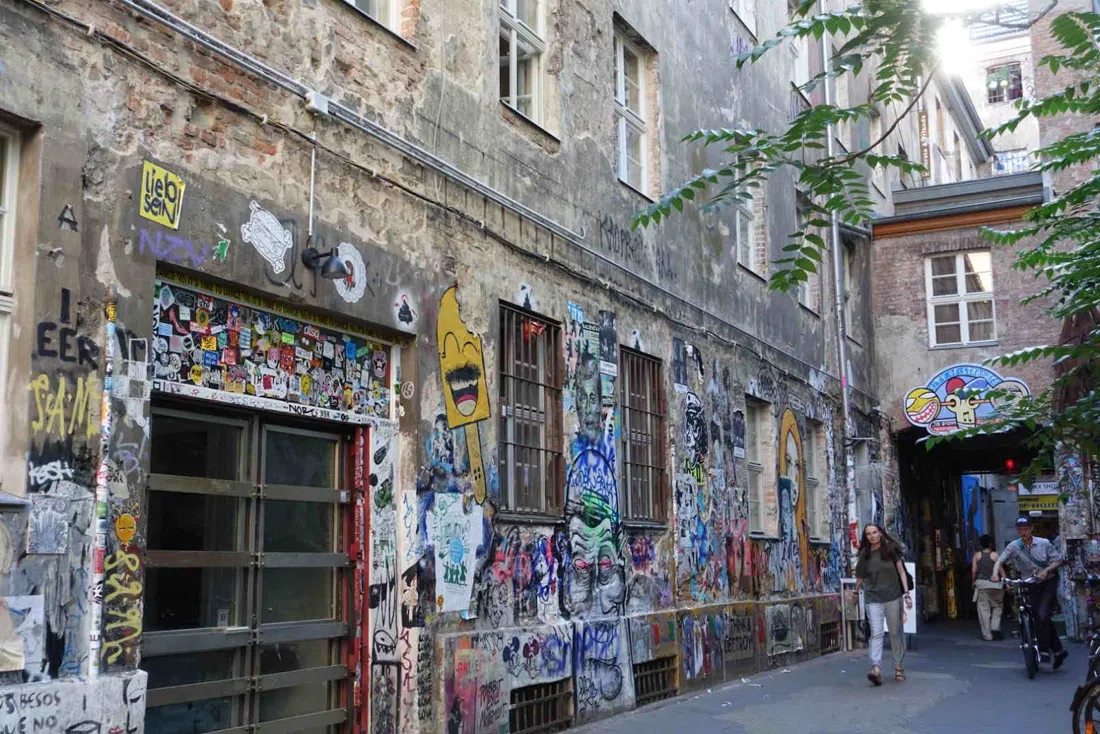
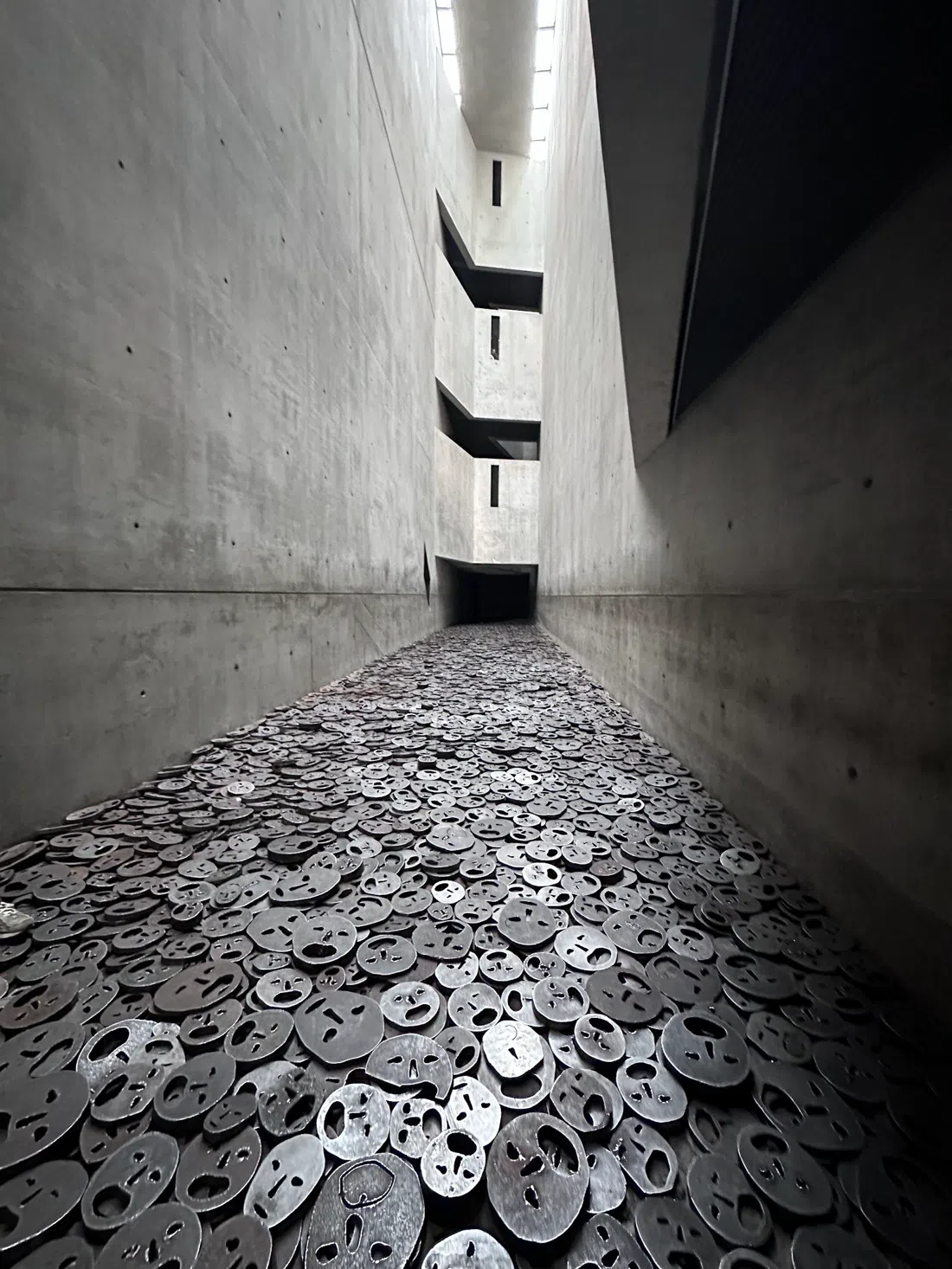
For the life rather than only the killing, Jewish Museum Berlin (Kreuzberg) gives you two thousand years of German-Jewish history, which is exactly what visitors say the field leaves them wanting. Tuesday to Sunday 10:00 to 18:00, closed Mondays except Monday public holidays, and closed on Rosh Hashanah and Yom Kippur; the core exhibition is free, temporary shows are €10 (€4 reduced), and groups should pre-book a time slot. Museum Blindenwerkstatt Otto Weidt (Mitte, just off Hackéscher Markt) tells the opposite scale of story: one brush-factory owner who hid his blind and deaf Jewish workers. Monday to Friday 09:00 to 18:00, weekends and holidays 10:00 to 18:00, free, and the rooms are small, so a large group must split.
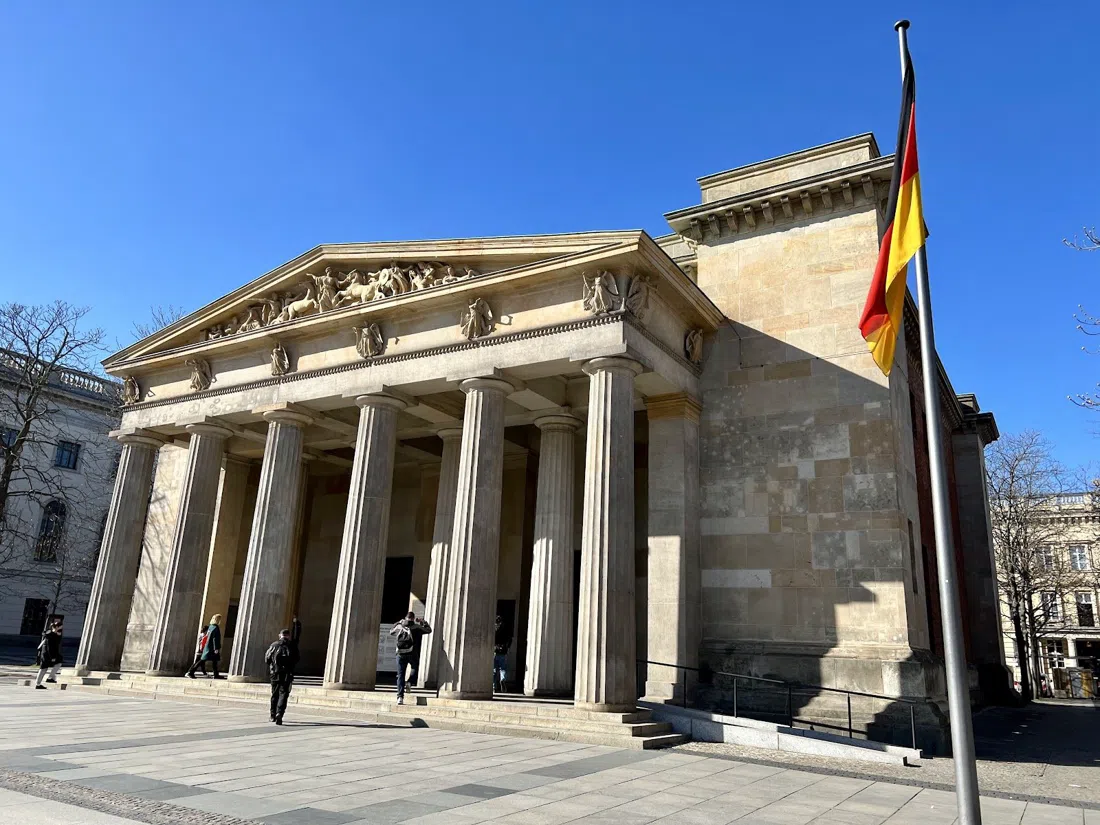
Two short stops complete the picture. Neue Wache — Central Memorial of the Federal Republic of Germany (Unter den Linden, Mitte), daily 10:00 to 18:00 and free, is one sculpture in one empty room; its contested dedication to the 'victims of war and tyranny' is a sharp counterpoint to the specificity of the Holocaust memorial, and worth arguing about afterwards. The Empty Library (Bebelplatz, Mitte) marks the 1933 book burning: a glass plate in the paving with white empty shelves below. It is nearly invisible in daylight glare, so go after dark, when the chamber glows up through the square. More on both in the wider Berlin guide.
Best time to go
Early morning is the best hour in the field, roughly between 07:00 and 09:00, when you can be alone in the middle of it and the light runs low along the lanes. Late afternoon is the second-best for the same reason. Midday in summer is the worst: hard overhead light flattens the slabs and the site is at its busiest.
At night the field is lit and legal to walk, and it is a completely different place: warmer stone, colder air, very few people. It is also enclosed and blind at every crossing, so go with someone rather than alone if that matters to you.
By day of the week, the only hard rule is Monday, when the information centre is closed and only the outdoor sites are available. For the centre itself, arrive at opening or after about 16:00; booked groups hold scheduled priority entry, so the mid-morning is when walk-up queues build behind them. The first Sunday of the month at 14:00 gets you a free English tour of the field with no registration. In winter the days are short and the wet paving is slippery, but the field in low grey light and fog is the version photographers actually want.
Is it worth it
Yes, and the reason is that it is not a sight. It is twenty minutes of physical experience that does something no museum display achieves, and it costs nothing. Visitors who come away unmoved are almost always the ones who walked the edge, photographed the corner and left. The field does not work from outside.
It suits solo travellers and couples best, because the design isolates you and that is the intended state. Thoughtful older children and teenagers do well with it too, with an adult who has explained what it is beforehand; younger kids will treat it as a maze, which is worth knowing before you arrive. Groups are entirely welcome outdoors and need to organise themselves indoors, where the centre, the Room of Silence and the small museums all take people in batches. Anyone with limited mobility can do the field and everything except the tighter interiors comfortably. The only people it does not suit are those on a tight schedule who want a monument they can tick in five minutes.
Practical notes
Getting there is easy. Brandenburger Tor (S-Bahn and U-Bahn) leaves you three minutes north of the field; Potsdamer Platz leaves you five minutes southeast and is the right stop if you are starting at the tower. Everything in this article except the Jewish Museum and the small Mitte museum is within a twenty-minute walk of the stelae, and the walking is flat.
Budget almost nothing. The field, the information centre, both outlying memorials, the T4 site, the bunker board, the Room of Silence, the Topography of Terror, the Neue Wache, the Bebelplatz plate, the Jewish Museum core exhibition and the small Mitte museum are all free. The audio guide is €3, the tower €9 to €16, a coffee and cake €5 to €12, a booked foundation tour €85 for up to 25 people, and a commercial guided walk starts from about 23 USD per person. A full day here costs under €30 unless you want it to cost more.
Cards are accepted almost everywhere, but carry €20 to €30 in cash for audio guides, small counters and kiosks. Leave the luggage at the hotel, because the centre's security will not take a suitcase. If you want to be inside the field at first light, staying in Mitte or around Potsdamer Platz puts you ten minutes away on foot. Compare rates with a Berlin hotel search before you fix the dates, since the government quarter and the eastern districts price very differently for the same walk.
And give yourself somewhere to go afterwards. The field leaves most people quiet for half an hour, and a table, a coffee and a conversation is a better next hour than another monument.