
Berlin doesn't retire its Cold War into glass cases the way other capitals retire their wars. It surfaces mid-street: a strip of cobbles marking where the Wall ran through a bakery's old delivery route, a radio tower on a spoil-heap hill still listening to nothing, a filing cabinet's worth of a stranger's life pulled out of a shredder bag and pieced back together by hand. This trail links the physical remains of two intelligence services — East Germany's Ministry for State Security and the American and British listening posts ranged against it — into a route you can actually walk, in an order that respects both the history and your feet.
Inside the Ministry
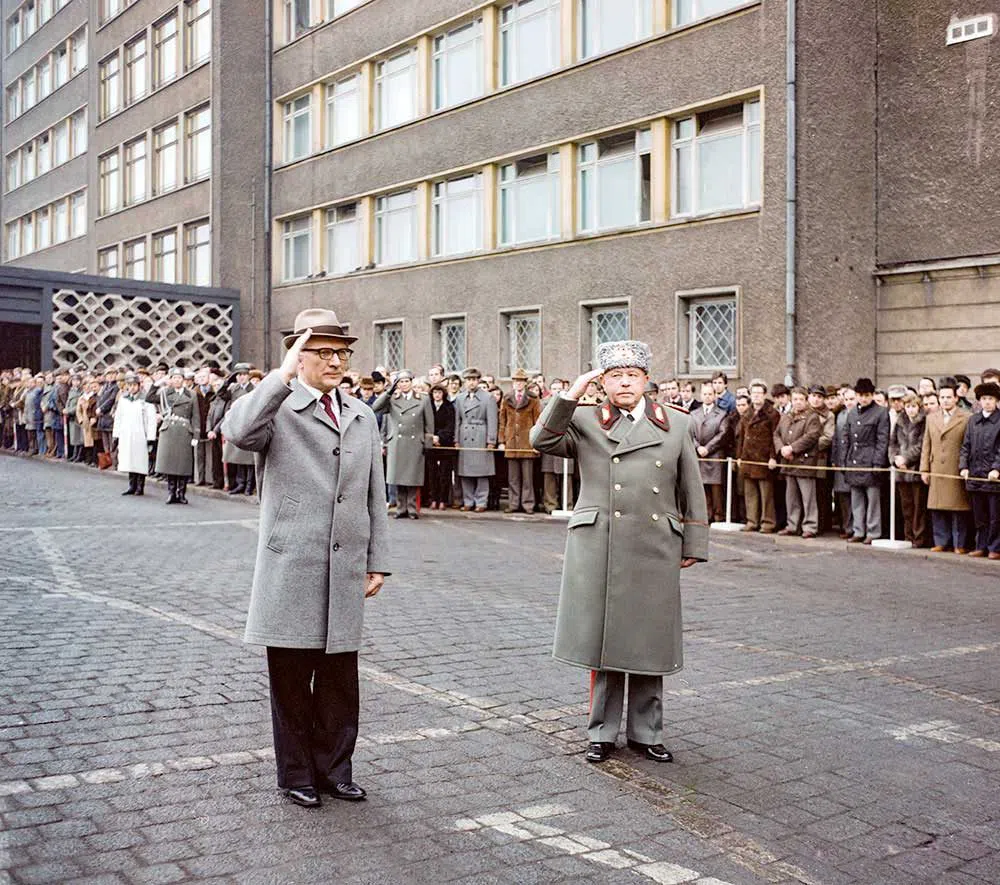
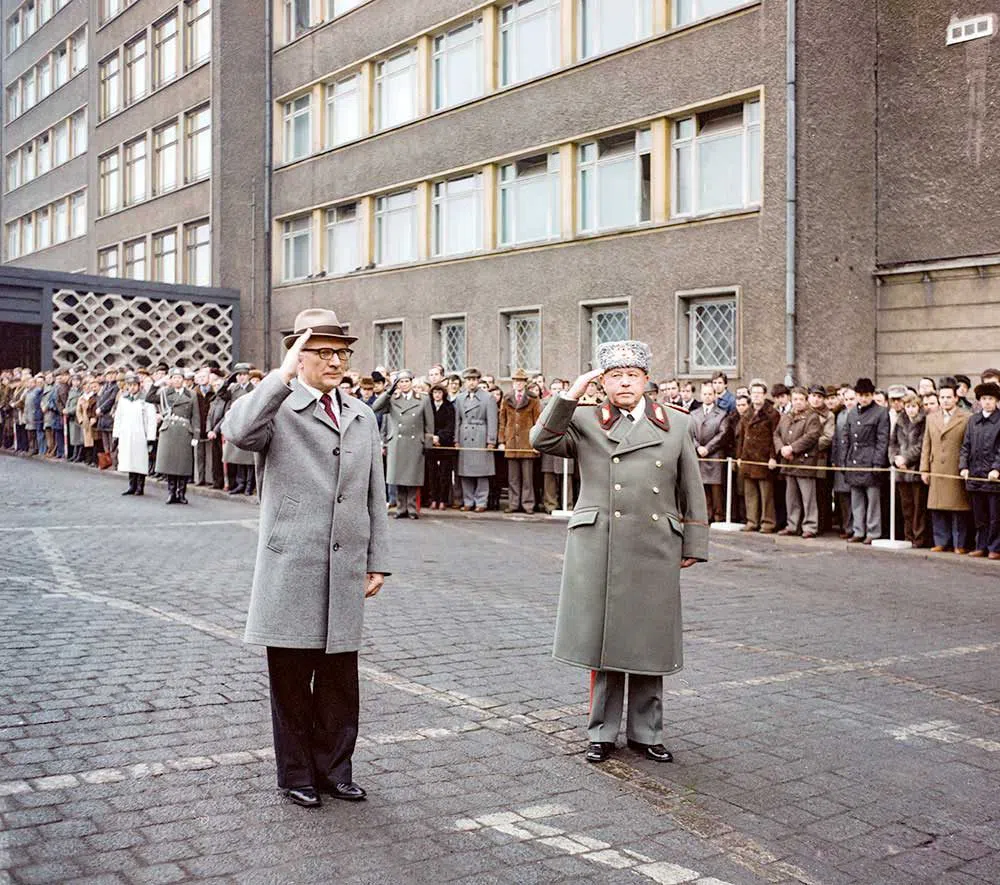
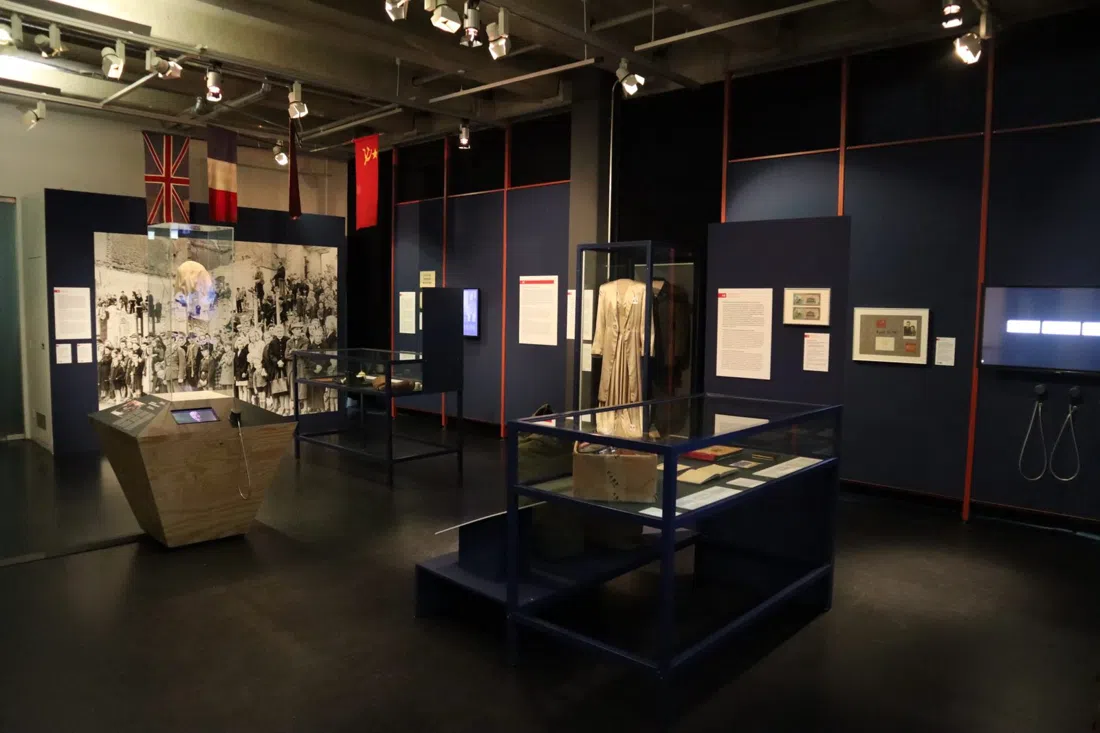
Start where the Stasi started: at its own front door. The Stasi Museum (Lichtenberg), formally the Forschungs- und Gedenkstätte Normannenstraße, occupies the actual former Ministry for State Security headquarters — not a reconstruction, not a themed building nearby, but the offices Erich Mielke worked from until the complex was stormed by protesters in January 1990. The permanent exhibition is dense rather than dramatic: surveillance technology, forged passports, the bureaucratic apparatus of watching eleven million people, laid out with the flat affect of an organisation that saw itself as entirely rational. Public guided tours ("Around the Museum") run Monday, Wednesday, Friday and Saturday, and the museum takes private group bookings on top of that — worth arranging ahead if you're travelling with more than four or five people, since the building wasn't designed with tour groups in mind and the corridors are narrow. Entry is €6 standard, €4.50 concession, which makes it one of the cheapest serious history museums in the city.
Hohenschönhausen is the harder stop, and it should come after Normannenstraße, not before — the museum gives you the institution; the prison gives you what the institution did with it. The Stasi Prison Memorial Berlin-Hohenschönhausen (Gedenkstätte Berlin-Hohenschönhausen) sits in what was, until 1990, a blank spot on East Berlin's own city maps: a remand prison so secret that neighbours weren't told what it was. Tours are led by former political prisoners or historians who worked directly with them, and that authorship matters — this isn't a curated narrative at a remove, it's testimony. Groups are welcome and advance booking is essential for them; the standard tours already run near capacity most days. Tickets are €9 standard, €5 concession, €2.50 for students. Go in the morning if you can; it's not a site that sits well after a long day of other sightseeing.
What the Border Actually Looked Like
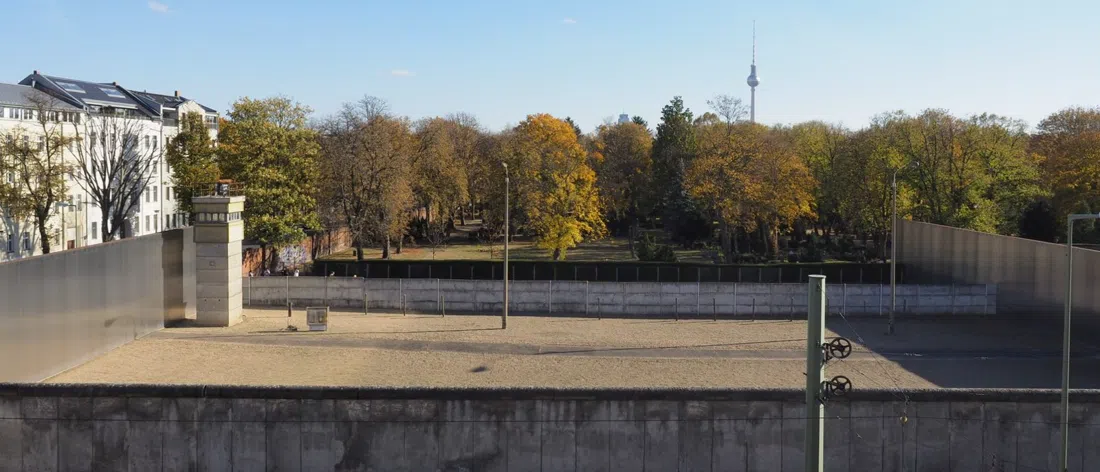
Everything the Stasi and the border guards were protecting comes down, physically, to the Wall — and the clearest place to see what the apparatus actually consisted of, rather than what it symbolised, is the Berlin Wall Memorial (Gedenkstätte Berliner Mauer) on Bernauer Straße, Mitte. This is the one preserved cross-section of the full border system: the outer wall, the death strip, the inner wall, the watchtower, the raked sand that would show footprints, all still standing on the site where East German guards shot people trying to cross in the Wall's first weeks. It's free, outdoors, effectively open around the clock, and it's the single stop on this trail that needs no ticket and no booking — you can bring a group of any size and simply walk it, though the Foundation does run bookable guided tours for schools and larger parties who want commentary rather than the free audio guide.
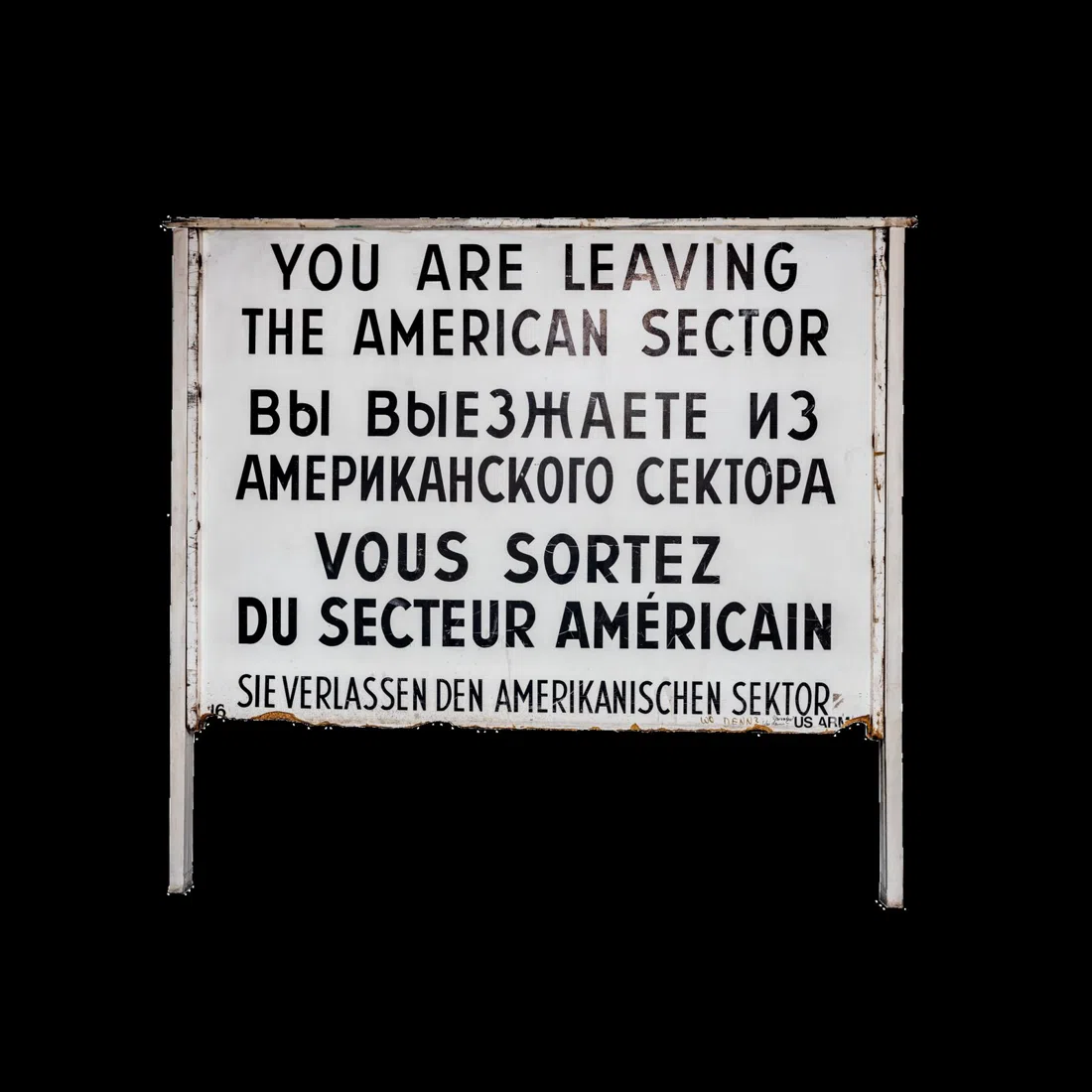
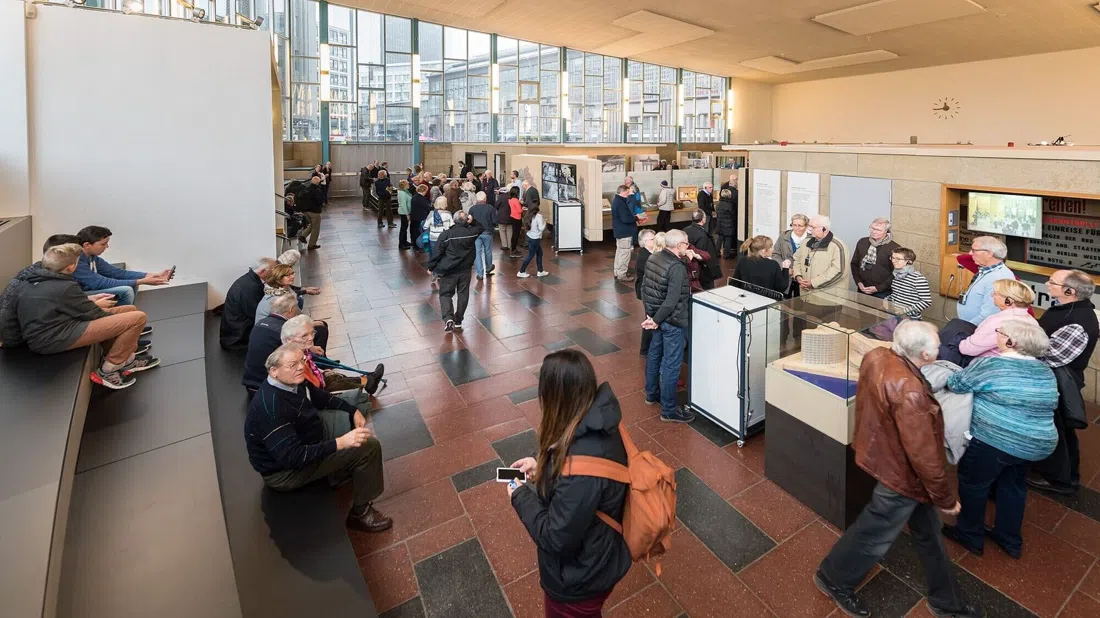
Come south into Mitte for the two venues that flank the most famous crossing point. The Tränenpalast (Palace of Tears), by Friedrichstraße station, was the actual departure hall where westbound visitors said goodbye to East German family — under the eyes of Stasi border guards working the booths that still stand inside. It's free, which removes the usual friction of coordinating tickets for a group, and guided tours can be booked on top of the self-guided visit. A few hundred metres away, the Mauermuseum – Museum Haus am Checkpoint Charlie covers the crossing point itself and the escape attempts staged around it — hidden compartments in cars, homemade gliders, the full inventiveness of people trying to get from one Berlin to the other. It's open 365 days a year, 10am to 8pm, which makes it the most schedule-flexible stop on the whole trail and a sensible one to slot in on a day when everything else is closed. Entry is €14.50. One thing worth knowing before you plan around it: the separate outdoor "BlackBox Kalter Krieg" exhibit that used to sit alongside it at the junction closed permanently in January 2026 and passed to the Berlin Wall Foundation — it's gone, but the indoor Mauermuseum itself is unaffected and still the one to visit.
Listening In
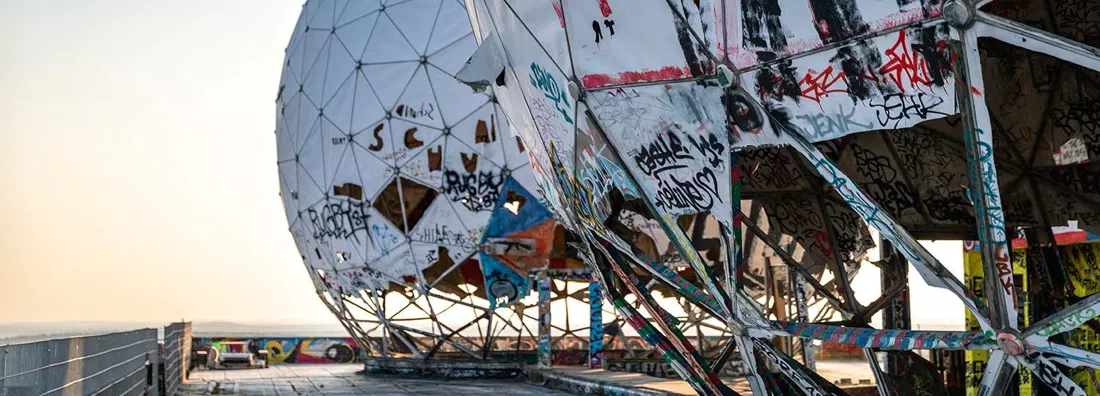
The espionage trail isn't only about the East. The Western services were doing exactly the same work from the other side of the city, and the best surviving evidence of it is on a hill that shouldn't exist. Teufelsberg Field Station (Grunewald) sits on top of roughly 12 million cubic metres of Berlin's own wartime rubble, piled over an unfinished Nazi military college the Allies decided was easier to bury than demolish. On top of that hill, the US Army and NSA built a signals intelligence station that listened to Warsaw Pact air, radio and telephone traffic through the Cold War's full run. The radomes are still there, tagged floor to ceiling with street art now, and the site runs dedicated "Declassified" history tours alongside separate street-art-focused tours — worth being specific about which one you're booking if the history is the point. A shuttle bus runs up from the S-Bahn, which matters more than it sounds like it should; it's a genuine climb otherwise. General entry runs €10-20; guided tours add roughly €20 on top.
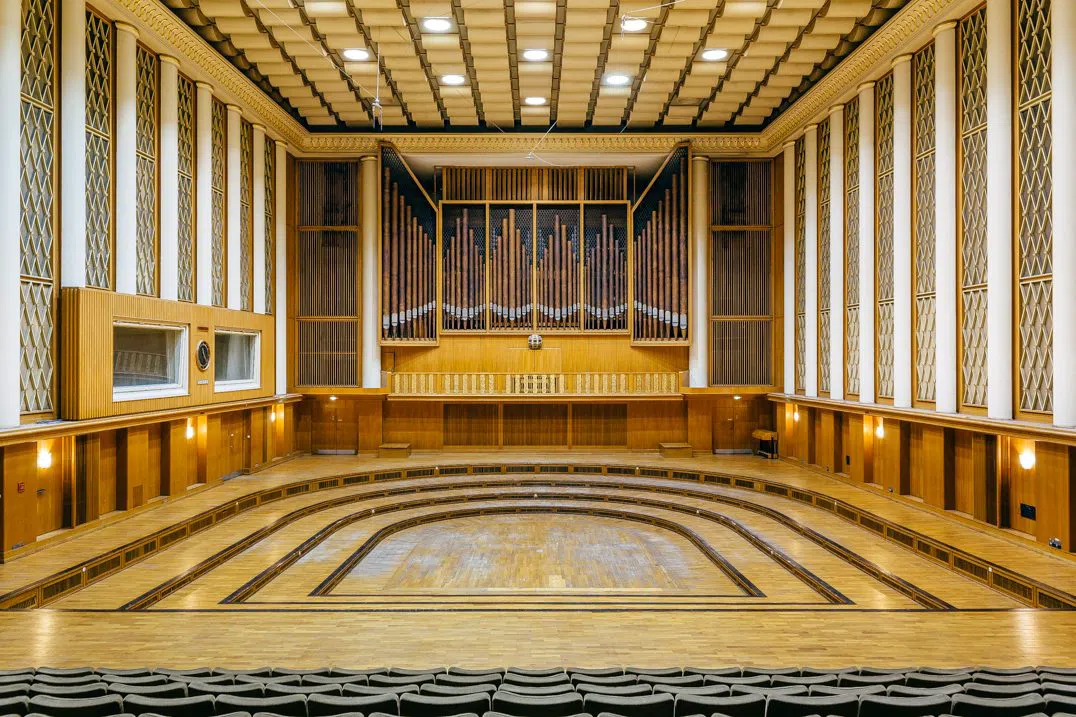
Less visited, and worth it for exactly that reason, is Funkhaus Berlin on Nalepastraße, in Oberschöneweide by the Spree. This was the GDR's state broadcast and signals complex — the nerve centre for East German radio, and by extension a building deeply wired into the state's communications apparatus. It runs public tours twice a month, but groups of ten or more can arrange their own tour time outside that public schedule, which is the more practical route if you're organising a party rather than joining strangers. Tours are €19 standard, €15 concession. This is the stop to add once you've already done Checkpoint Charlie and want something the tour buses haven't found yet — the building itself, all polished GDR-modernist wood and brass, is reason enough to go even before the history lands.
Tradecraft, a Tunnel, and an Exchange
For the mechanics of spying itself — the gadgets, the dead drops, the actual tradecraft rather than its institutions — go to the Deutsches Spionagemuseum (German Spy Museum) near Potsdamer Platz. It's interactive in a way none of the memorial sites are, built around laser mazes and code-breaking stations alongside the genuine artefacts, and it's the right stop to balance a day that's otherwise heavy with memorials. It uses dynamic, timed-entry ticketing that scales well for groups — book your slot ahead rather than turning up, since walk-up availability isn't guaranteed. Pricing moves with demand, roughly €8-20.
For a real fragment of an actual operation, go to Zehlendorf and the AlliiertenMuseum (Allied Museum) — Berlin Spy Tunnel. This holds a genuine segment of the tunnel dug for Operation Gold, the joint CIA-MI6 project that tapped Soviet military telephone lines running under East Berlin, before the KGB — tipped off by their own mole inside MI6 — let the operation run for nearly a year anyway to protect the source. You walk into an actual piece of it. Entry is free, and while large groups don't strictly need to book, giving the museum prior notice is appreciated and makes the visit smoother.
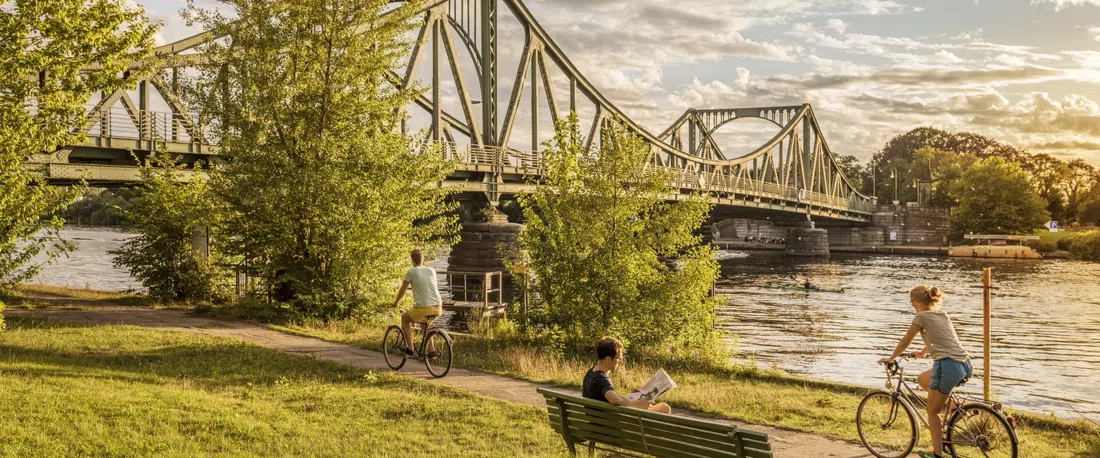
Close the operational history at Glienicker Brücke (Bridge of Spies), out on the Wannsee border with Potsdam. This is the actual bridge where U-2 pilot Gary Powers, shot down over Soviet territory, was exchanged for Soviet agent Rudolf Abel in 1962 — and where several further swaps happened after. There's no museum here and nothing to book; it's a public bridge, free to walk, and it works best as a deliberate stop on a walking or driving day rather than a destination in its own right. Go for the view back over the Havel as much as the history — it's a genuinely handsome spot that happens to have carried an enormous amount of Cold War weight.
Filling In the Ordinary
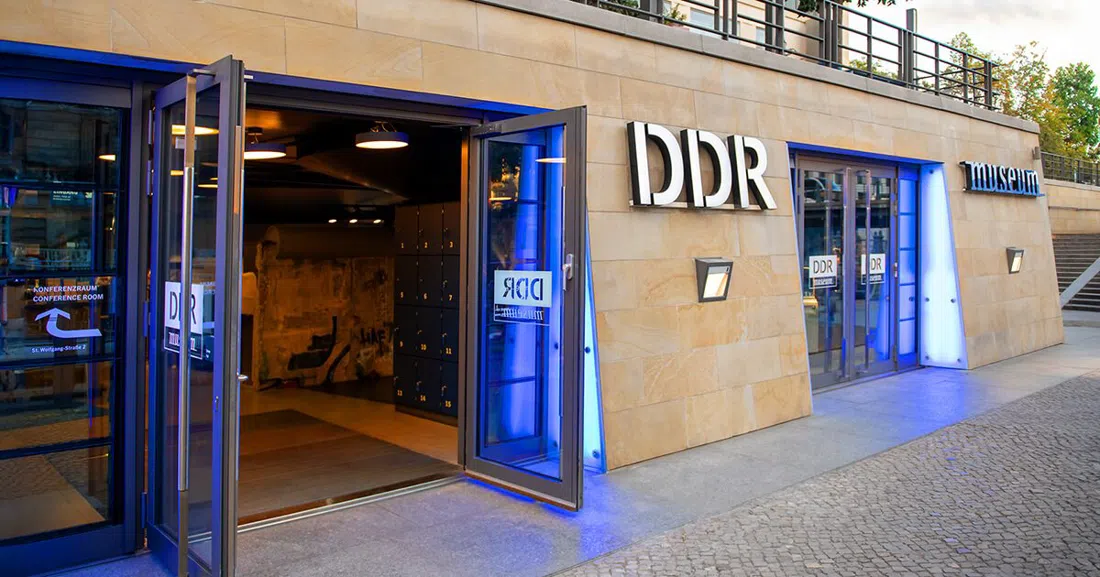
Two stops aren't espionage-specific but earn their place by giving the trail proportion. The DDR Museum in Mitte, by the Spree, covers everyday life under the GDR state rather than its intelligence apparatus directly — the flats, the cars, the queues — and it's a useful pacing break between the two memorial sites, which are heavy going back to back. It takes groups of ten or more by appointment (email [email protected] ahead), with a discounted group rate of €8 per person against €13.50 standard entry. And the East Side Gallery in Friedrichshain, the longest remaining stretch of the Wall, turned over to muralists in 1990, isn't about espionage at all — but it's the physical border the whole trail sits against, it's free, it's open 24 hours, and larger groups can book guided thematic tours if they want the murals read rather than just photographed.
If You'd Rather Walk It With Someone Who Knows the Order
Self-navigating this trail rewards planning, because the sites don't cluster — Hohenschönhausen and Normannenstraße are east, Teufelsberg is deep west, Glienicker Brücke is further out again. If that logistics puzzle isn't what you're after, Original Berlin Tours runs a dedicated "Cold War Berlin: Espionage & the Divided City" walking tour, built for groups with daily public departures as well as private and custom bookings for parties who want their own guide and pace. It threads the central sites — the Wall remnants, Checkpoint Charlie's surroundings, the border story — into a single narrated afternoon rather than a self-driven itinerary. Public tours run from roughly €15-20 per person, with private group rates available on request. It's a sensible add-on rather than a replacement for the museums that need their own dedicated visit — Hohenschönhausen and Teufelsberg in particular reward the time a walking tour can't give them.
Getting Around, Paying, and Timing It
The sites split roughly into three clusters: central Mitte (Tränenpalast, Mauermuseum, DDR Museum, the Spy Museum), east Berlin (Stasi Museum and Hohenschönhausen in Lichtenberg, Funkhaus in Oberschöneweide, East Side Gallery in Friedrichshain), and the far west and southwest (Teufelsberg in Grunewald, AlliiertenMuseum in Zehlendorf, Glienicker Brücke on the Potsdam border). Berlin's U-Bahn and S-Bahn cover all of them, but the western cluster genuinely needs a half-day of its own — don't try to bolt Teufelsberg onto the end of a Checkpoint Charlie morning. A day ticket on the BVG network covers the whole system including the S-Bahn out to Wannsee and Grunewald, and it's cheaper than paying per journey once you're doing more than three or four legs in a day.
Cash still matters more here than in most Western European capitals — several of the smaller sites and shuttle buses, Teufelsberg's included, run more smoothly with cash on hand even where cards are technically accepted, so carry some euros rather than assuming contactless everywhere. Booking ahead matters most for Hohenschönhausen, where tours fill, and for the Spy Museum's timed slots; the free sites — Bernauer Straße, Tränenpalast, the Spy Tunnel, East Side Gallery, Glienicker Brücke — are far more forgiving of a spontaneous schedule. Budget two full days minimum to do the trail properly without rushing Hohenschönhausen or Teufelsberg, and expect to spend somewhere in the €60-100 per person range across entry fees and tours if you take the guided options rather than self-navigating everything. For where to base yourself while you're working through it, a central Mitte or Friedrichshain location keeps you within reach of both clusters — start your planning at Berlin hotel search, and for the wider city beyond this trail, the Berlin guide covers what else the city offers around it.